Gas station attendant filling up car next to fuel price sign
1344×768 · AVIF · CC BY 4.0
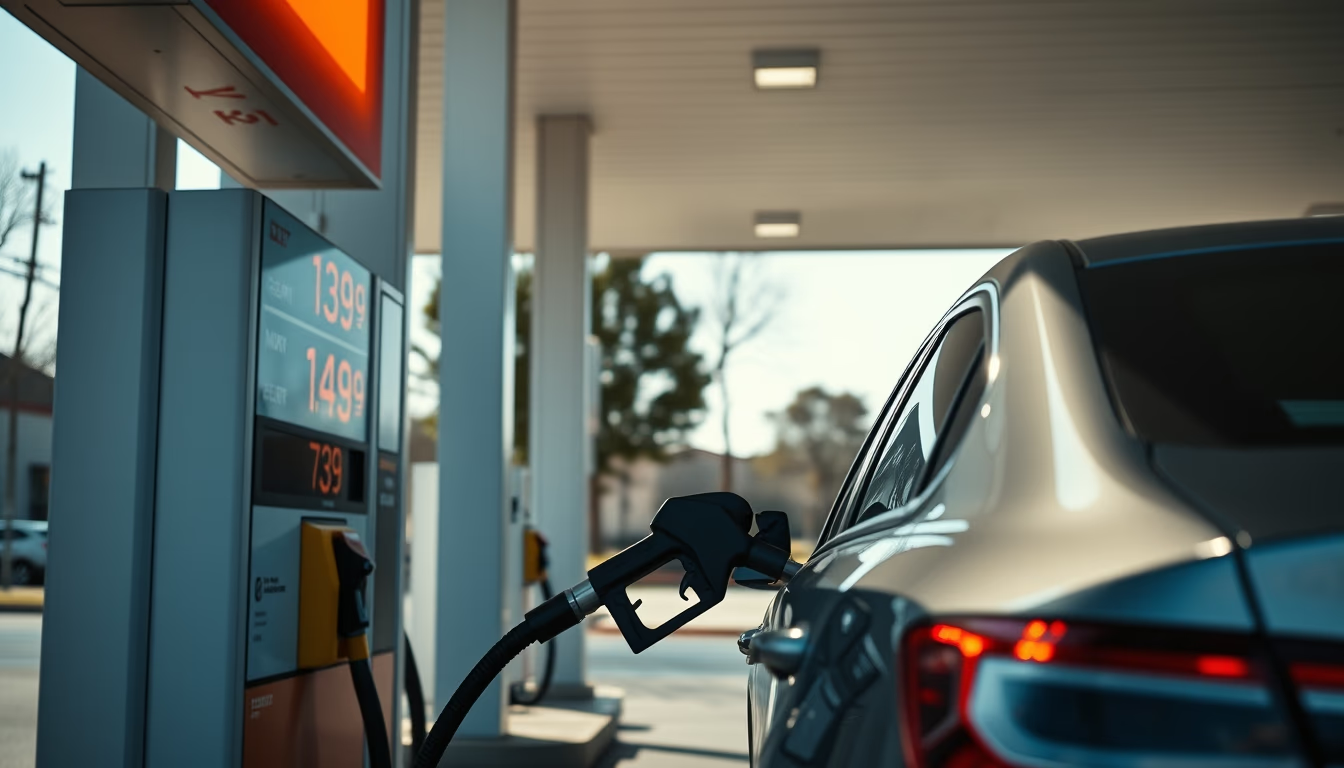
Gas station attendant fills a car next to a fuel price sign, depicting a common daily scene in Brazil.
About this subject
In Brazil, refueling vehicles is a routine activity that reflects economic and social dynamics. The gas station attendant, responsible for filling cars, checking tire pressure, and monitoring oil and water levels, is a traditional figure at Brazilian fuel stations. Unlike many countries where drivers pump their own gas, in Brazil the attendant service is mandatory by law at unbranded stations and common at others, ensuring formal employment and safe handling of fuels.
The price sign next to the vehicle displays fuel costs, which in Brazil fluctuate frequently due to state and federal taxes, international oil prices, and distribution logistics. For example, the price of a liter of regular gasoline can vary significantly between states and even neighborhoods within the same city. The image captures a moment of high demand, possibly during peak hours when station activity intensifies.
The scene is typical of Brazilian urban areas, where fuel stations often occupy busy corners. The attendant's uniform, usually a polo shirt and dark pants, symbolizes personalized service. Besides refueling, these professionals guide customers on payment methods, which include cash, credit/debit cards, and loyalty apps. Thus, refueling is more than a simple purchase; it is a moment of social and economic interaction.
Interestingly, the profession of gas station attendant dates back to the 1920s, when the first stations emerged in Brazil. Today, there are over 40,000 fuel stations nationwide, generating around 500,000 direct jobs. Regulations require mandatory training in handling flammable materials and first aid. The image, with its symmetric composition and midday light, highlights the routine of this essential worker for urban mobility.
Frequently Asked Questions
Why is a gas station attendant mandatory in Brazil?
The requirement aims to ensure safety when handling flammable fuels and to create formal jobs. The law mandates attendants at unbranded stations, but most stations keep the service in practice.
How are fuel prices determined in Brazil?
Prices are influenced by international oil prices, state (ICMS) and federal (PIS/Cofins) taxes, logistics costs, and distribution/retail margins. Petrobras also adjusts refinery prices.
What is the difference between regular and premium gasoline?
Regular gasoline has a minimum octane rating of 87 (AKI), while premium (aditivada) contains detergents that help clean the fuel injection system. Premium can prevent deposits but does not increase power.
Direct URL
https://pub-c7d6a6ea828543ac903a74a341ccb2e1.r2.dev/imagens/gas-station-attendant-filling-up-car-next-to-fuel-price-sign-symmetric-bright-midday-2.avifHow to credit
Include a visible link back to UtilizAí. Copy one of the snippets below:
<a href="https://xn--utiliza-eza.com/en/midia/imagens/gas-station-attendant-filling-up-car-next-to-fuel-price-sign-symmetric-bright-midday-2">Gas station attendant filling up car next to fuel price sign</a> by <a href="https://xn--utiliza-eza.com">UtilizAí</a>, licensed under <a href="https://creativecommons.org/licenses/by/4.0/">CC BY 4.0</a>.
[Gas station attendant filling up car next to fuel price sign](https://xn--utiliza-eza.com/en/midia/imagens/gas-station-attendant-filling-up-car-next-to-fuel-price-sign-symmetric-bright-midday-2) by [UtilizAí](https://xn--utiliza-eza.com), CC BY 4.0
License: CC-BY-4.0