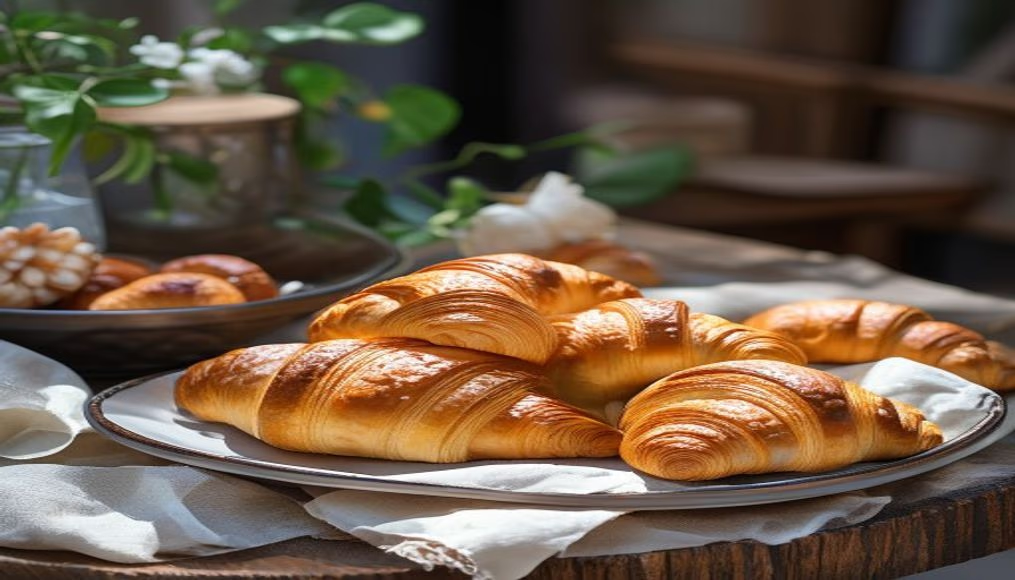
Fresh croissants on linen
1344×768 · AVIF · CC BY 4.0
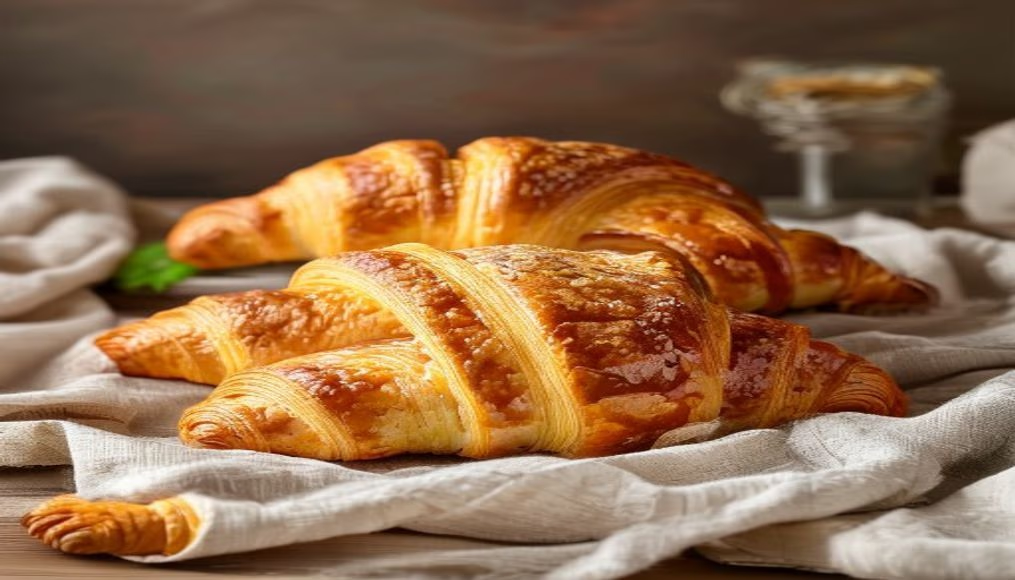
Croissants are flaky French pastries with a buttery flavor, widely enjoyed for breakfast globally.
About this subject
Croissants, though strongly associated with France, have Austrian origins. The kipferl, a sweet crescent-shaped bread, was common in Vienna in the 13th century. Legend says the croissant was created in 1683 to celebrate the defeat of the Ottomans, with its shape representing the crescent moon on the Turkish flag. The recipe reached France when Marie Antoinette, an Austrian princess, introduced the kipferl to the French court. However, the modern buttery laminated croissant was perfected by Parisian bakers in the 20th century.
The croissant dough is made with flour, butter, milk, sugar, and yeast. The key is lamination: the dough is repeatedly folded with butter between layers, creating hundreds of thin sheets. When baked, water in the butter evaporates, and steam separates the layers, resulting in a crispy texture and airy interior. A quality croissant has a golden, flaky surface and a strong butter flavor.
In Brazil, croissants are found in bakeries and cafeterias, often filled with cold cuts, cheeses, or sweets. Versions like ham and cheese or chocolate croissants are popular. At corporate breakfasts or brunches, they are a common presence. Their versatility allows for simple or sophisticated combinations.
A curiosity: the largest croissant ever made was 4.5 meters long and 40 cm wide, produced in France. Global croissant consumption is significant, with France producing about 1.5 billion units per year. The croissant is so iconic that in 1999 it was declared a French intangible cultural heritage, and its recipe is protected by appellation laws in some countries.
Frequently Asked Questions
What is the origin of the croissant?
The croissant originates from the Austrian kipferl, popularized in France by Marie Antoinette. The modern laminated version appeared in the 20th century.
What makes a croissant flaky?
The lamination technique with butter creates thin layers that separate during baking, causing flakiness.
Is a croissant healthy?
It is not considered healthy due to high butter and carbohydrate content, but can be consumed in moderation.
Direct URL
https://pub-c7d6a6ea828543ac903a74a341ccb2e1.r2.dev/imagens/fresh-croissants-on-linen-commercial-product-photography-v9.avifHow to credit
Include a visible link back to UtilizAí. Copy one of the snippets below:
<a href="https://xn--utiliza-eza.com/en/midia/imagens/fresh-croissants-on-linen-commercial-product-photography-v9">Fresh croissants on linen</a> by <a href="https://xn--utiliza-eza.com">UtilizAí</a>, licensed under <a href="https://creativecommons.org/licenses/by/4.0/">CC BY 4.0</a>.
[Fresh croissants on linen](https://xn--utiliza-eza.com/en/midia/imagens/fresh-croissants-on-linen-commercial-product-photography-v9) by [UtilizAí](https://xn--utiliza-eza.com), CC BY 4.0
License: CC-BY-4.0