French horn polished brass
1344×768 · AVIF · CC BY 4.0
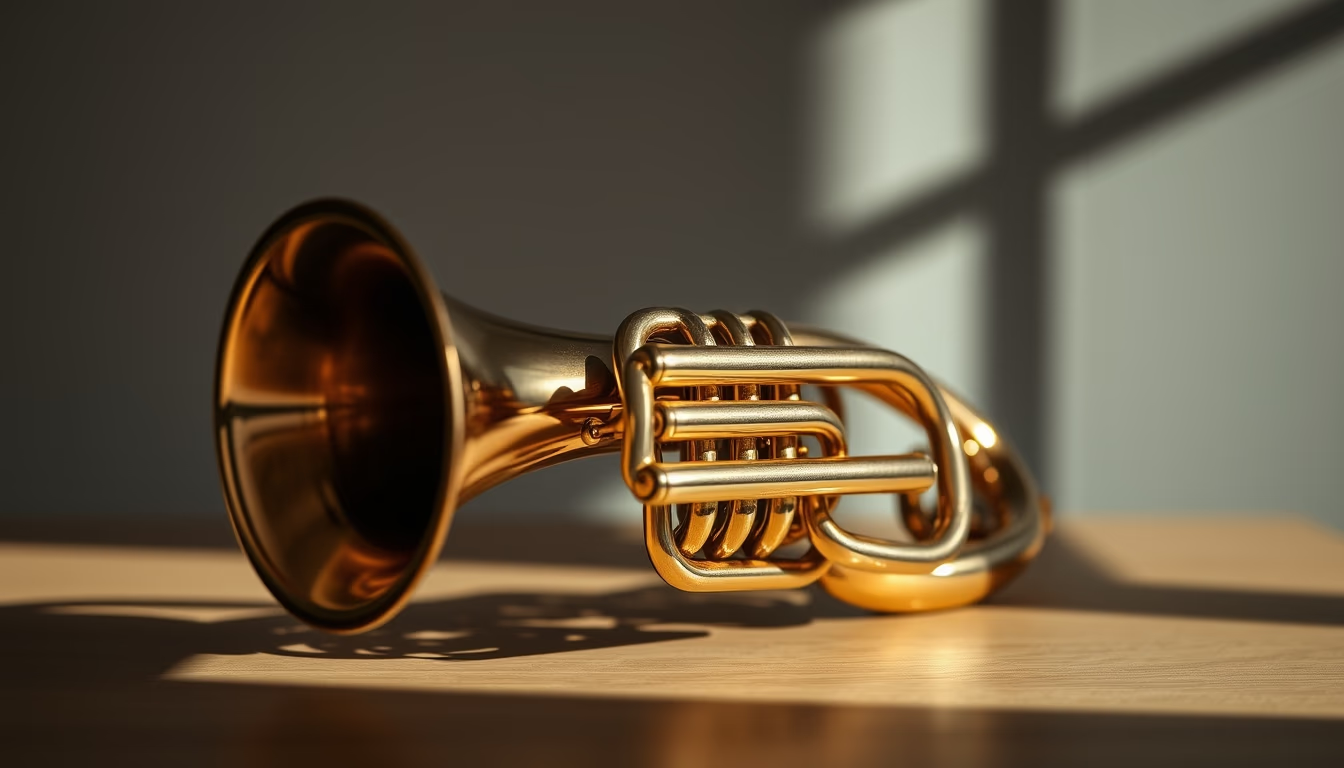
The French horn made of polished brass is a complex wind instrument, used in symphonic orchestras and bands.
About this subject
The French horn, often referred to simply as the horn, is a brass wind instrument known for its mellow and enveloping sound. Unlike other brass instruments such as the trumpet or trombone, the horn has a conical bore that gradually widens to the bell, resulting in a richer and more versatile tone. The most common modern instrument is the double horn, which combines the F and B-flat registers, giving the player greater flexibility and tonal precision.
Historically, the French horn evolved from hunting horns of the 17th century, used to communicate and enliven hunts in France. In the 19th century, with the addition of rotary valves, the instrument gained chromatic ability and became a permanent member of the symphony orchestra. Composers like Mozart, Brahms, and Mahler wrote iconic horn parts, exploring its capacity to express everything from heroic fanfares to lyrical melodies.
The construction in polished brass not only gives the instrument an elegant appearance but also influences sound projection. The polish helps reflect sound waves more evenly, contributing to a bright and clear timbre. Careful maintenance of the brass is essential to preserve sound quality and prevent oxidation.
Today, the French horn is indispensable in orchestras, wind bands, chamber groups, and even film scores, where it is often used to evoke nobility, adventure, or melancholy. Notable horn players include Dennis Brain, Hermann Baumann, and Radek Baborák, who have elevated the technique to virtuosic levels.
Frequently Asked Questions
How is the French horn played?
The French horn is played by vibrating the lips against the mouthpiece, while rotary valves are pressed to change the tube length and produce different notes. The player's right hand is placed inside the bell to adjust pitch and timbre.
What is the difference between a single and double horn?
A single horn has only one tonal register (usually F), while a double horn combines two registers (F and B-flat), offering greater flexibility and accuracy in both high and low notes. The double horn is standard in professional orchestras.
Why is it called the 'French' horn?
The name 'French horn' emerged in 18th-century England to distinguish the more advanced French hunting horn from the rudimentary horns used elsewhere. The term persisted, even though the modern instrument is used globally.
Direct URL
https://pub-c7d6a6ea828543ac903a74a341ccb2e1.r2.dev/imagens/french-horn-polished-brass-magazine-editorial-p0.avifHow to credit
Include a visible link back to UtilizAí. Copy one of the snippets below:
<a href="https://xn--utiliza-eza.com/en/midia/imagens/french-horn-polished-brass-magazine-editorial-p0">French horn polished brass</a> by <a href="https://xn--utiliza-eza.com">UtilizAí</a>, licensed under <a href="https://creativecommons.org/licenses/by/4.0/">CC BY 4.0</a>.
[French horn polished brass](https://xn--utiliza-eza.com/en/midia/imagens/french-horn-polished-brass-magazine-editorial-p0) by [UtilizAí](https://xn--utiliza-eza.com), CC BY 4.0
License: CC-BY-4.0