French horn polished brass
1344×768 · AVIF · CC BY 4.0
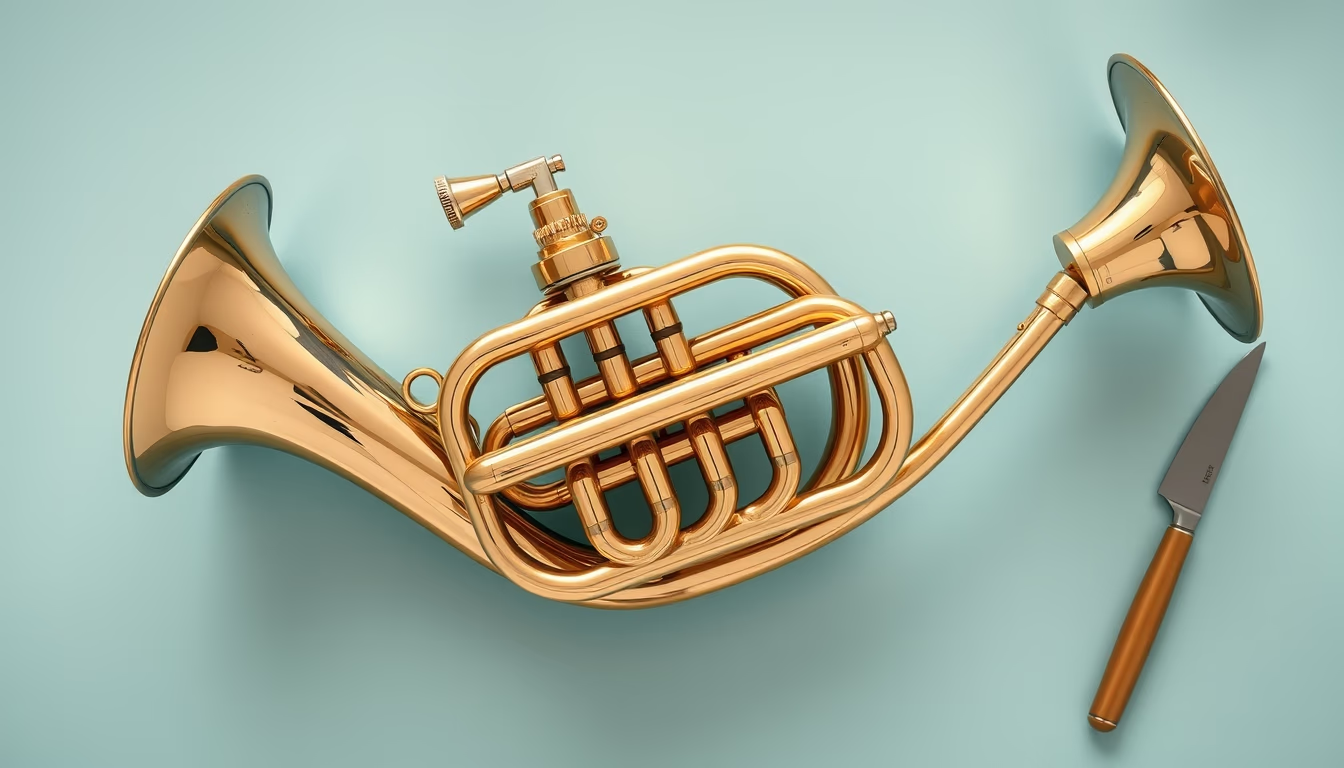
Polished brass French horn: one of the most versatile orchestral instruments, known for its mellow tone and wide harmonic range.
About this subject
The French horn, often simply called the horn, is a brass wind instrument distinguished by its coiled tubing and flared bell. Typically made of polished brass, its shiny surface not only looks elegant but also helps protect the metal. The instrument contains about 4 to 5 meters of tubing and uses rotary valves (or piston valves in some models) to direct air through additional coils, allowing the player to produce a wide chromatic range.
Historically, the horn evolved from hunting horns used in 17th and 18th century Europe. These early instruments, known as "cor de chasse" or natural horns, lacked valves and could only play notes in the harmonic series. The invention of valves in the 19th century transformed the horn into a fully chromatic instrument, enabling composers like Mozart, Beethoven, Richard Strauss, and Tchaikovsky to write expressive solos that showcase its warm, mellow voice.
A unique feature of the French horn is the insertion of the right hand into the bell to alter pitch and tone, a technique called hand stopping. This gives the horn a versatile sound spectrum, ranging from powerful, brassy blasts to soft, almost vocal pianissimos. In the orchestra, the horn often bridges the woodwind and brass sections, playing both harmonic support and lyrical melodies.
Playing the French horn is widely regarded as extremely challenging due to the sensitivity of the embouchure and the complexity of the harmonic series. Professional hornists spend years mastering breath control and lip precision. Modern horns are made from polished brass or lacquered brass, each offering slight tonal differences. The polishing process not only enhances visual appeal but also prevents corrosion, ensuring a clean and resonant sound over time.
Frequently Asked Questions
What is the difference between a French horn and a horn?
In modern usage, they refer to the same instrument. 'French horn' is a colloquial term, while 'horn' is the official name used in professional orchestral contexts.
Why is the French horn considered one of the most difficult instruments to play?
Because it requires precise embouchure control to hit the correct notes within a very close harmonic series, plus efficient breath support. The hand-stopping technique also demands extensive practice.
In which music genres is the French horn most commonly used?
It is a staple in symphony orchestras, concert bands, chamber music, and film scores. It occasionally appears in jazz, pop, and other genres, though less frequently.
Direct URL
https://pub-c7d6a6ea828543ac903a74a341ccb2e1.r2.dev/imagens/french-horn-polished-brass-isometric-flat-lay-p10.avifHow to credit
Include a visible link back to UtilizAí. Copy one of the snippets below:
<a href="https://xn--utiliza-eza.com/en/midia/imagens/french-horn-polished-brass-isometric-flat-lay-p10">French horn polished brass</a> by <a href="https://xn--utiliza-eza.com">UtilizAí</a>, licensed under <a href="https://creativecommons.org/licenses/by/4.0/">CC BY 4.0</a>.
[French horn polished brass](https://xn--utiliza-eza.com/en/midia/imagens/french-horn-polished-brass-isometric-flat-lay-p10) by [UtilizAí](https://xn--utiliza-eza.com), CC BY 4.0
License: CC-BY-4.0