Forbidden city beijing
1344×768 · AVIF · CC BY 4.0
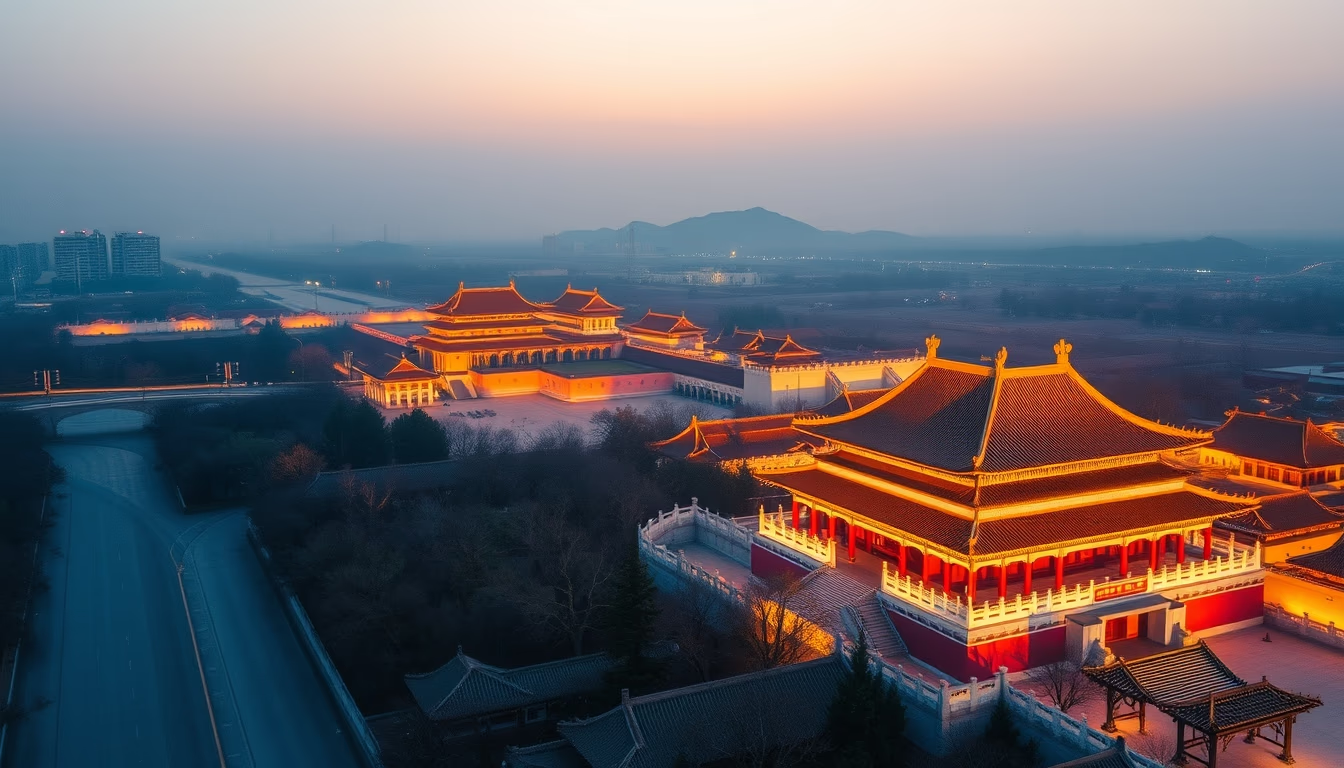
The Forbidden City in Beijing, an ancient symbol of Chinese imperial power, reveals its grandeur in an aerial view highlighting its palaces and symmetrical courtyards.
About this subject
The Forbidden City, located in the heart of Beijing, served as the imperial palace for the Ming and Qing dynasties for nearly 500 years, from 1420 to 1912. Construction began in 1406 under Emperor Yongle, requiring the labor of over one million workers. It is the world's largest collection of ancient wooden structures, featuring 980 buildings and approximately 8,700 rooms, though legend claims 9,999 rooms to reflect heavenly perfection.
The palace's design strictly follows feng shui and Chinese cosmology, with a north-south central axis and courtyards representing imperial hierarchy. The Meridian Gate is the main entrance, while the Hall of Supreme Harmony, the largest hall, hosted grand ceremonies. Dominant colors are red (fortune) and yellow (power), reserved for the emperor.
Since 1925, the Forbidden City has housed the Palace Museum, with a collection of over 1.8 million artifacts, including paintings, ceramics, and jade. It was declared a UNESCO World Heritage Site in 1987. Despite its fame, only about 30% of the complex is open to the public, and ongoing restoration efforts aim to preserve its fragile wooden structures.
Annual visitation reaches 16 million people, making it one of the most visited museums globally. The aerial view emphasizes the striking symmetry of the layout, revealing the grandeur that few emperors could behold in its entirety.
Frequently Asked Questions
How long did it take to build the Forbidden City?
Construction took 14 years, from 1406 to 1420, involving over one million workers.
What is the significance of the imperial gardens in the Forbidden City?
The gardens, such as the Imperial Garden and the Garden of Tranquil Longevity, provided leisure and meditation for emperors, combining landscaping with Taoist symbolism.
Why is the complex called the Forbidden City?
The name derives from the fact that access was strictly forbidden to commoners. Only the imperial family, high officials, and eunuchs could enter, under penalty of death.
Direct URL
https://pub-c7d6a6ea828543ac903a74a341ccb2e1.r2.dev/imagens/forbidden-city-beijing-aerial-drone-shot-p0.avifHow to credit
Include a visible link back to UtilizAí. Copy one of the snippets below:
<a href="https://xn--utiliza-eza.com/en/midia/imagens/forbidden-city-beijing-aerial-drone-shot-p0">Forbidden city beijing</a> by <a href="https://xn--utiliza-eza.com">UtilizAí</a>, licensed under <a href="https://creativecommons.org/licenses/by/4.0/">CC BY 4.0</a>.
[Forbidden city beijing](https://xn--utiliza-eza.com/en/midia/imagens/forbidden-city-beijing-aerial-drone-shot-p0) by [UtilizAí](https://xn--utiliza-eza.com), CC BY 4.0
License: CC-BY-4.0