Flying boat catalina
1344×768 · AVIF · CC BY 4.0

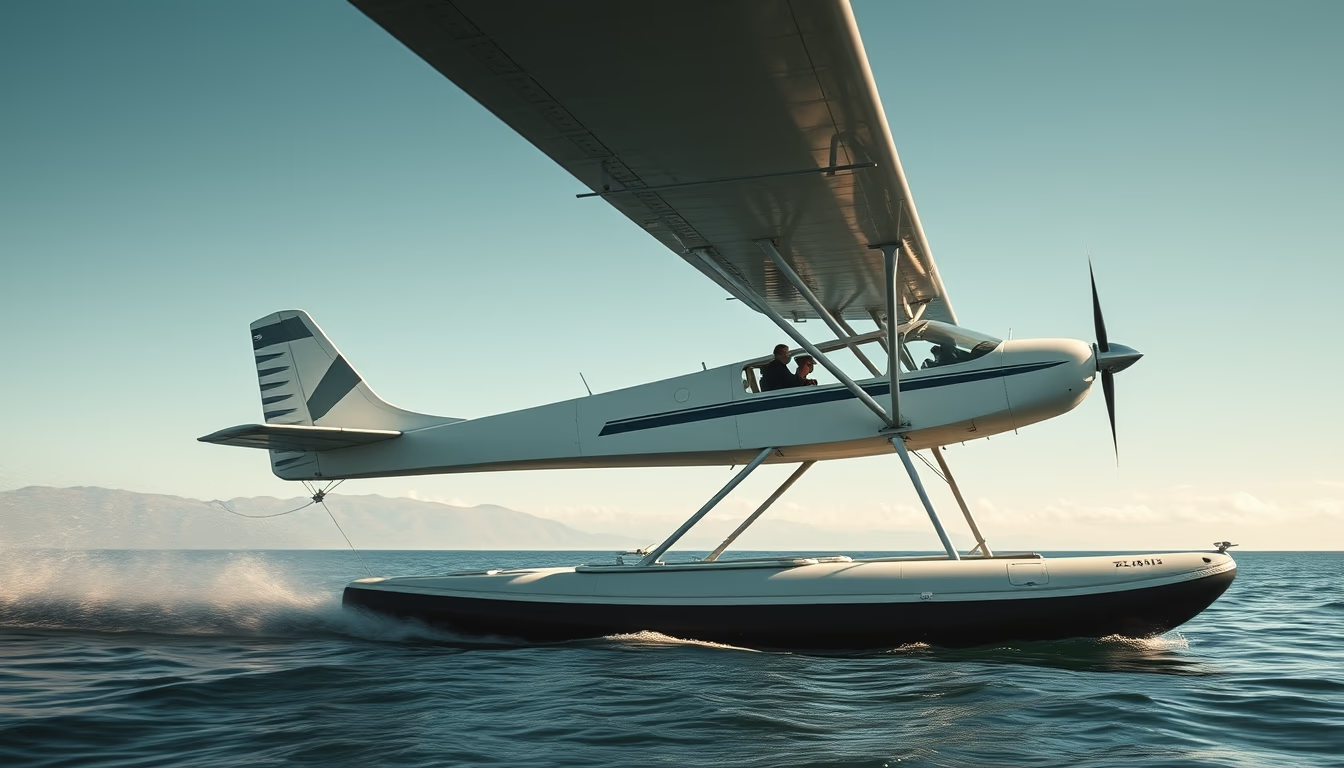
The Consolidated PBY Catalina is an iconic military flying boat from World War II, renowned for maritime patrol and rescue missions in the Pacific.
About this subject
The Consolidated PBY Catalina was one of the most versatile and widely used flying boats during World War II. Designed by the Consolidated Aircraft Corporation, its first flight took place in 1935, and it quickly became the backbone of maritime patrol, reconnaissance, anti-submarine warfare, and search and rescue missions, especially in the Pacific theater. Its ability to take off and land on water allowed operations in remote locations without paved runways, earning the nickname 'Catalina' from the British Royal Navy after the island off California.
The Catalina featured a robust structure with parasol wings and two Pratt & Whitney R-1830 Twin Wasp radial engines. Its impressive range of up to 4,000 km enabled long-range missions, such as the famous 'Black Cat' night attacks on Japanese ships. Beyond combat, the Catalina was crucial in air-sea rescue operations, saving hundreds of downed aircrews. Approximately 4,000 units were built between 1936 and 1945, serving air forces of various Allied nations.
After the war, many Catalinas were converted for civilian use, including cargo transport in remote areas and forest firefighting. Some examples still fly at air shows and museums, such as the iconic Catalina at the Museum of Flight in Seattle. The design also inspired civilian variants like the PBY-5A with retractable landing gear, combining amphibious capability. Today, the Catalina is remembered as an aeronautical engineering icon that blended efficiency and resilience during a critical historical period.
Notably, the Catalina was among the first aircraft to feature wing and propeller de-icing systems, improving safety in adverse weather. Its long exposure over calm waters, as captured in long-exposure photographs, highlights the elegance of its lines and unmistakable silhouette, which remains etched in aviation history.
Frequently Asked Questions
What was the primary role of the PBY Catalina in World War II?
The PBY Catalina was mainly used for maritime patrol, reconnaissance, anti-submarine warfare, and search and rescue missions, especially in the Pacific Ocean.
How many engines did the Consolidated PBY Catalina have?
It had two Pratt & Whitney R-1830 Twin Wasp radial engines, giving it a range of about 4,000 km.
Is the Catalina still used today?
Yes, some preserved examples fly at air shows and are used for forest firefighting, as well as displayed in museums like the Museum of Flight in Seattle.
Direct URL
https://pub-c7d6a6ea828543ac903a74a341ccb2e1.r2.dev/imagens/flying-boat-catalina-long-exposure-fresh4.avifHow to credit
Include a visible link back to UtilizAí. Copy one of the snippets below:
<a href="https://xn--utiliza-eza.com/en/midia/imagens/flying-boat-catalina-long-exposure-fresh4">Flying boat catalina</a> by <a href="https://xn--utiliza-eza.com">UtilizAí</a>, licensed under <a href="https://creativecommons.org/licenses/by/4.0/">CC BY 4.0</a>.
[Flying boat catalina](https://xn--utiliza-eza.com/en/midia/imagens/flying-boat-catalina-long-exposure-fresh4) by [UtilizAí](https://xn--utiliza-eza.com), CC BY 4.0
License: CC-BY-4.0