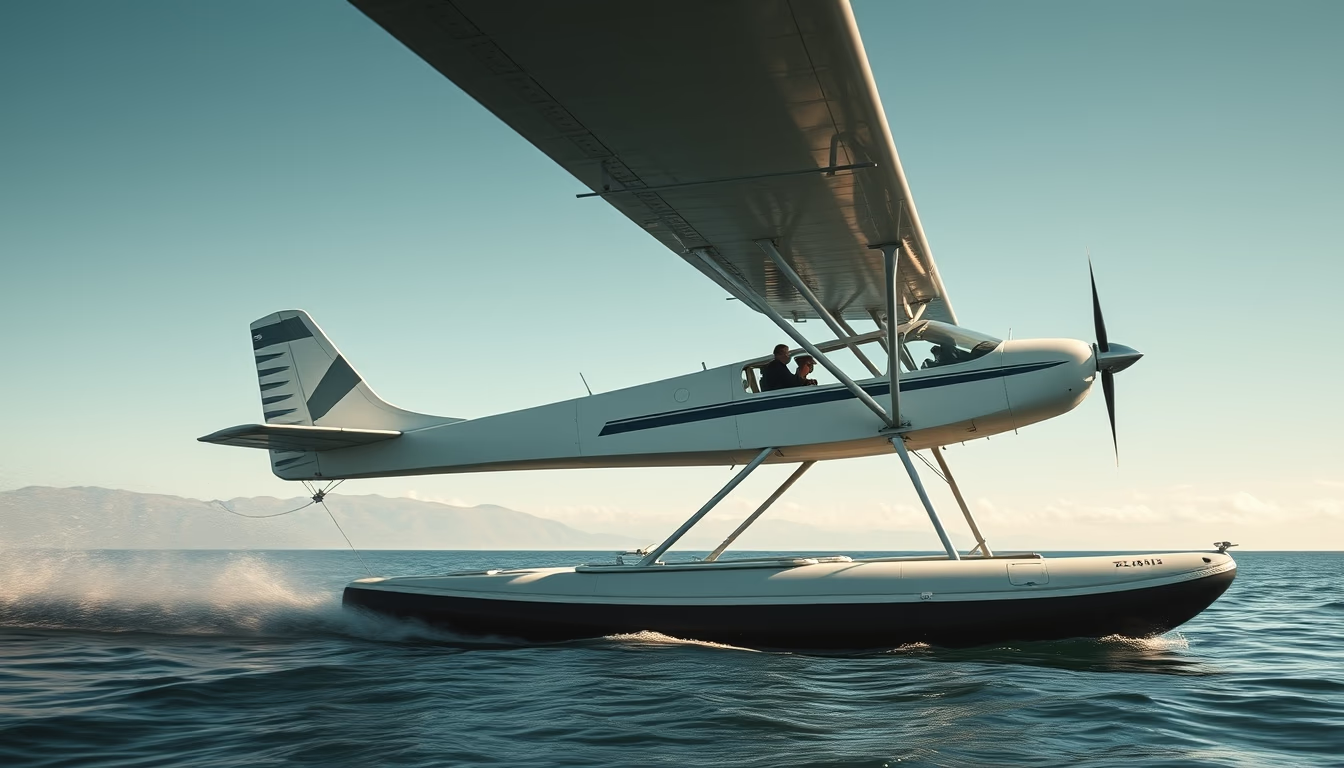
Flying boat catalina
1344×768 · AVIF · CC BY 4.0
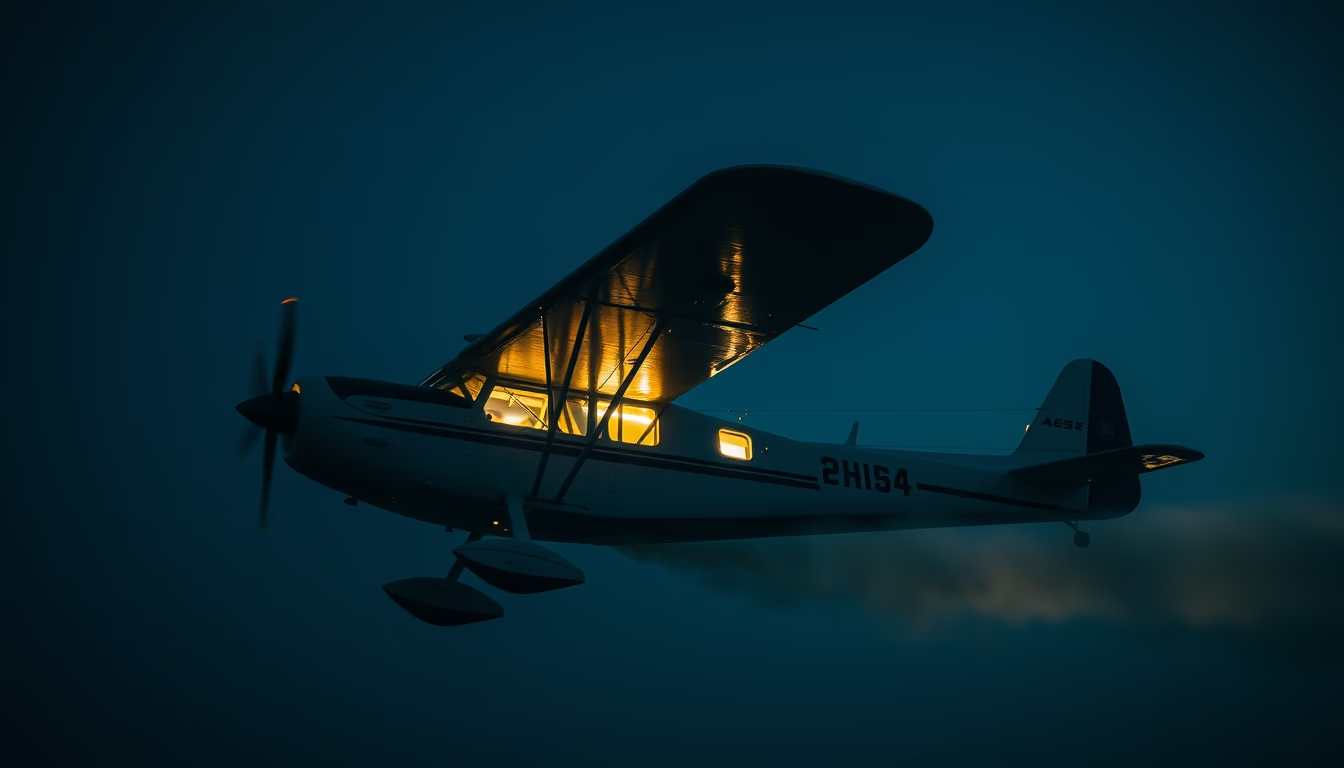
The Consolidated PBY Catalina was an American military flying boat widely used in World War II for maritime patrol, search and rescue, and bombing.
About this subject
The Consolidated PBY Catalina is one of the most iconic flying boats in aviation history. Developed by the Consolidated Aircraft Corporation in the 1930s, it entered service in 1936 and was produced in over 3,300 units. With its characteristic high wing and stabilizing floats, the Catalina could operate from water or land (amphibious version). Its range of up to 4,800 km allowed long endurance missions, making it crucial in the Pacific War for anti-submarine patrol and search and rescue.
During World War II, the Catalina was nicknamed 'Catalina' by the British Royal Air Force, after Santa Catalina Island in California. American pilots also called it 'Cat'. One of its most famous missions was the spotting of the German battleship Bismarck in 1941, leading to its sinking. Additionally, the Catalina rescued hundreds of downed pilots at sea, earning a reputation as a sturdy and reliable aircraft.
After the war, many Catalinas were converted for civilian use, such as cargo and passenger transport, aerial firefighting (dropping water), and even scientific research. The amphibious version allowed access to remote lakes and rivers, becoming popular in regions like the Amazon and Alaska. Today, dozens still fly at airshows and museums, keeping the legacy of this legendary flying boat alive.
Trivia: the Catalina was powered by Pratt & Whitney R-1830 Twin Wasp radial engines, the same used in the B-24 Liberator bomber. Its top speed was about 314 km/h, modest by contemporary standards, but its ability to loiter at low speeds made it excellent for patrol and rescue.
Frequently Asked Questions
How many crew did the PBY Catalina carry?
The typical crew was 7 to 9 people: pilot, co-pilot, navigator, radio operator, gunners, and a flight engineer. On rescue missions, it could carry additional passengers.
What was the armament of the Catalina?
The Catalina was armed with .30 or .50 caliber machine guns in bow and waist turrets, plus bombs or depth charges under the wings. Some variants carried torpedoes.
Where can I see a PBY Catalina flying today?
Catalinas are displayed at museums like the Smithsonian Air and Space Museum (USA) and the TAM Museum in Brazil. Several still fly at airshows, such as EAA AirVenture Oshkosh.
Direct URL
https://pub-c7d6a6ea828543ac903a74a341ccb2e1.r2.dev/imagens/flying-boat-catalina-fine-art-photography-fresh15.avifHow to credit
Include a visible link back to UtilizAí. Copy one of the snippets below:
<a href="https://xn--utiliza-eza.com/en/midia/imagens/flying-boat-catalina-fine-art-photography-fresh15">Flying boat catalina</a> by <a href="https://xn--utiliza-eza.com">UtilizAí</a>, licensed under <a href="https://creativecommons.org/licenses/by/4.0/">CC BY 4.0</a>.
[Flying boat catalina](https://xn--utiliza-eza.com/en/midia/imagens/flying-boat-catalina-fine-art-photography-fresh15) by [UtilizAí](https://xn--utiliza-eza.com), CC BY 4.0
License: CC-BY-4.0