Flamingo flock pink
1344×768 · AVIF · CC BY 4.0
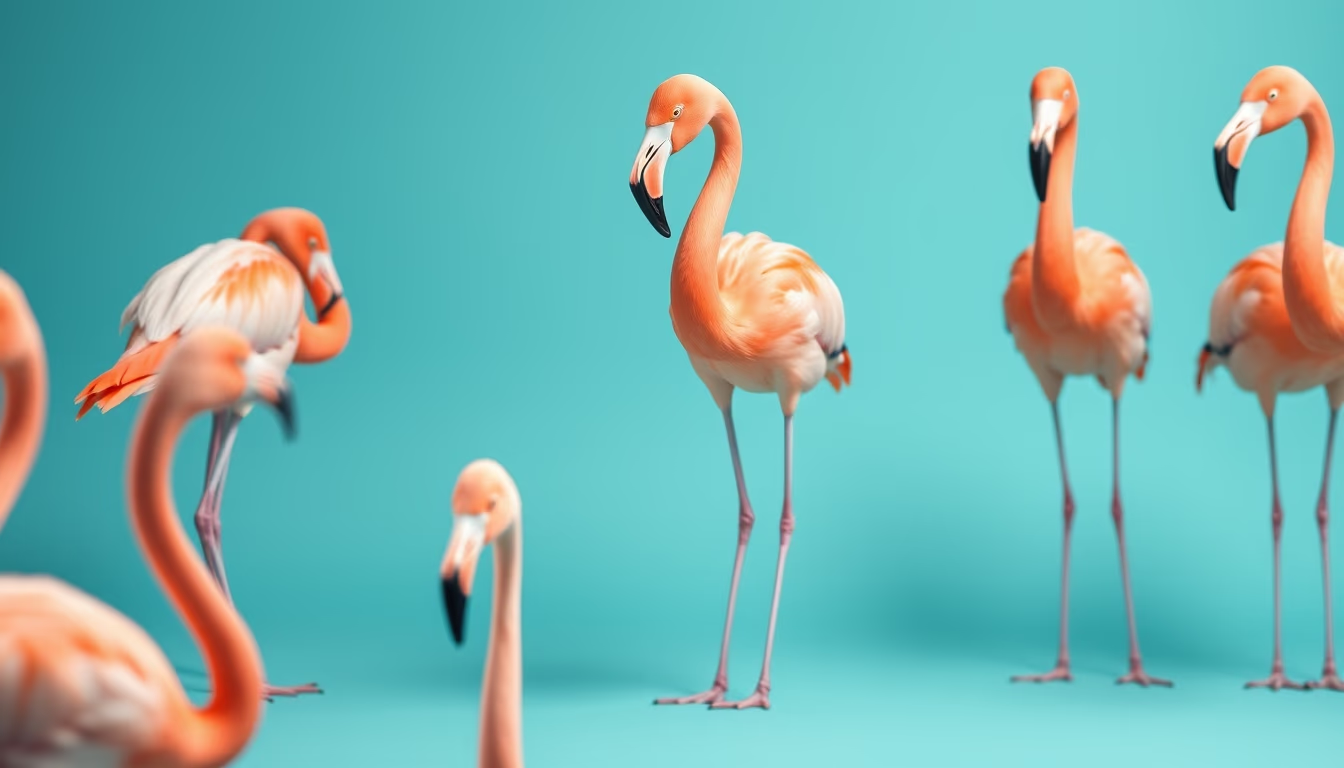
Flamingos are wading birds known for their vibrant pink plumage, a result of a diet rich in carotenoids.
About this subject
Flamingos are aquatic birds belonging to the family Phoenicopteridae, found in tropical and subtropical regions of South America, Africa, southern Europe, and Asia. Their characteristic pink coloration is not innate: chicks are born with gray or white feathers and acquire the pink hue by feeding on algae and crustaceans rich in carotenoids, such as spirulina and brine shrimp (Artemia). The intensity of the color varies with the availability of these pigments in the diet, serving as an indicator of health and physical condition for sexual selection.
These birds live in large colonies that can gather thousands of individuals, especially in salt lakes, estuaries, and coastal lagoons. In Brazil, the Chilean flamingo (Phoenicopterus chilensis) is the most common species, found in the Pantanal and Rio Grande do Sul. They have curved beaks adapted for filter-feeding in water, turning their heads upside down to capture small organisms.
The behavior of gathering in dense flocks, as seen in the image, primarily serves for protection against predators and feeding optimization. The synchrony of movements during feeding and flight is a visual spectacle. Interestingly, flamingos can sleep standing on one leg, an adaptation to conserve body heat, as they spend long periods in cold waters.
Frequently Asked Questions
Why are flamingos pink?
The pink plumage of flamingos comes from carotenoids in their diet, mainly algae and crustaceans like spirulina and brine shrimp (Artemia). The more of these pigments they consume, the more intense the color.
Where are flamingos found in Brazil?
In Brazil, the Chilean flamingo (Phoenicopterus chilensis) is the most common species, inhabiting the Pantanal and the coast of Rio Grande do Sul, occasionally appearing in other regions.
Do flamingos really sleep on one leg?
Yes, it is a common behavior. They alternate legs to minimize body heat loss while resting in cold waters or during long periods of standing.
Direct URL
https://pub-c7d6a6ea828543ac903a74a341ccb2e1.r2.dev/imagens/flamingo-flock-pink-commercial-product-photography.avifHow to credit
Include a visible link back to UtilizAí. Copy one of the snippets below:
<a href="https://xn--utiliza-eza.com/en/midia/imagens/flamingo-flock-pink-commercial-product-photography">Flamingo flock pink</a> by <a href="https://xn--utiliza-eza.com">UtilizAí</a>, licensed under <a href="https://creativecommons.org/licenses/by/4.0/">CC BY 4.0</a>.
[Flamingo flock pink](https://xn--utiliza-eza.com/en/midia/imagens/flamingo-flock-pink-commercial-product-photography) by [UtilizAí](https://xn--utiliza-eza.com), CC BY 4.0
License: CC-BY-4.0