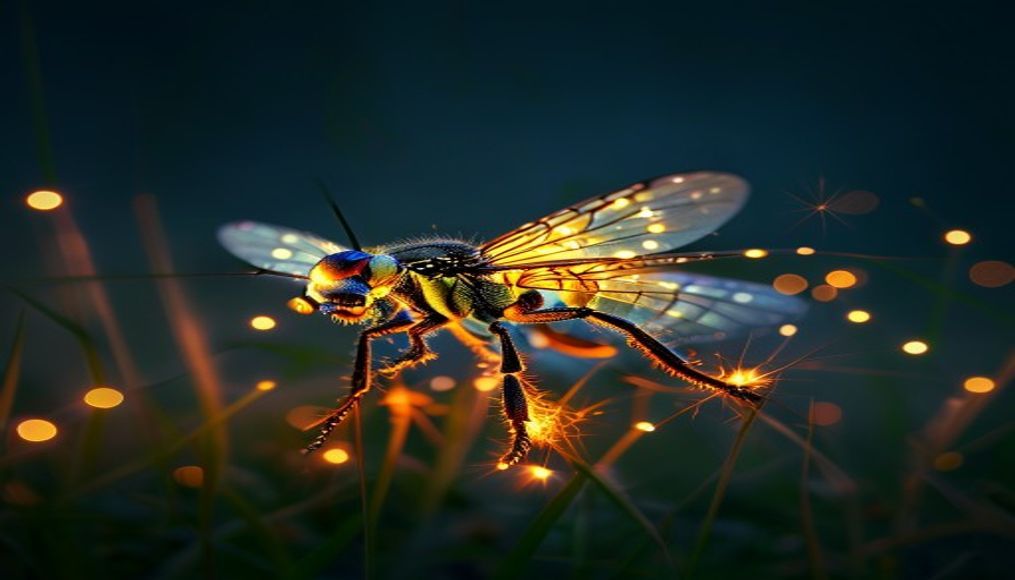
Firefly glowing night
1344×768 · AVIF · CC BY 4.0
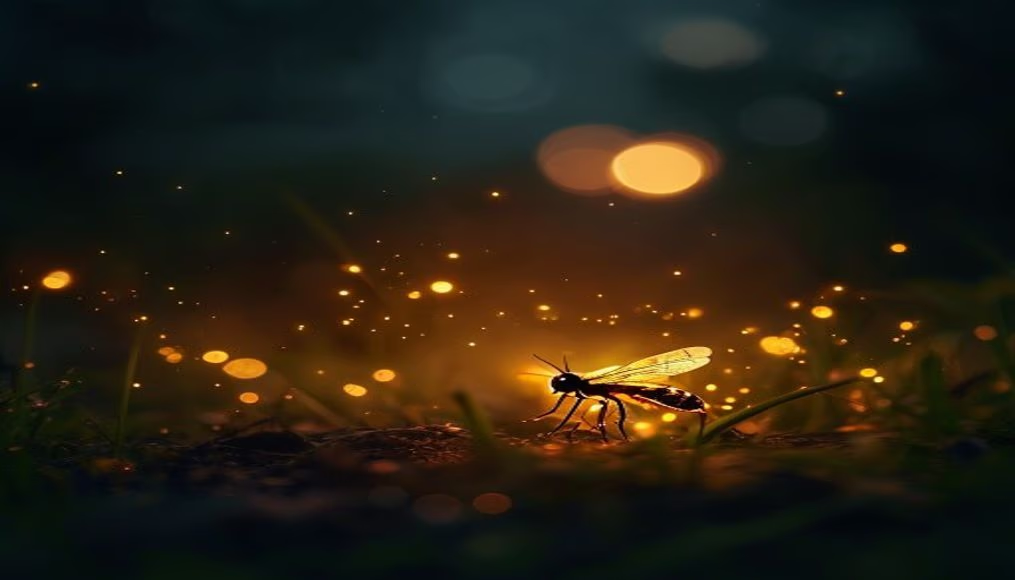
Fireflies are bioluminescent beetles that enchant nights worldwide with their glowing signals.
About this subject
Fireflies are beetles of the family Lampyridae, with over 2,000 species found on every continent except Antarctica. They are famous for their cold light production, a chemical reaction involving luciferin, oxygen, and the enzyme luciferase in specialized abdominal organs. This bioluminescence is primarily used for mating communication, with each species having a unique flash pattern. Some firefly larvae also glow to attract prey, such as snails and slugs. The life cycle includes egg, larva, pupa, and adult stages; larvae are often called glowworms and may last months to over a year, while adults live only a few weeks.
Fireflies thrive in humid environments like riverbanks, marshes, and tropical forests, though some adapt to drier areas. They are declining globally due to habitat loss, light pollution, and pesticides. Culturally, fireflies hold significance in many societies. In Japan, hotaru fireflies are symbols of love and departed spirits, celebrated in viewing festivals. In Brazil, they are common in rural areas and forests but becoming scarce in cities. Conservation efforts focus on preserving natural habitats and reducing artificial light at night.
Ecologically, fireflies are important predators as larvae, controlling snail and slug populations, and as indicators of healthy ecosystems. Their bioluminescence also inspires scientific research, including medical applications of luciferase in imaging and biosensors.
Frequently Asked Questions
Why do fireflies flash?
Fireflies flash primarily to attract mates. Each species has a unique flash pattern that helps males and females recognize each other.
What do fireflies eat?
Most adult fireflies feed on nectar and pollen, but some species do not feed at all. Larvae are predators, hunting snails, slugs, and other small invertebrates.
Are fireflies endangered?
Many firefly species are declining due to habitat loss, light pollution, and pesticides. Protecting wetlands and reducing artificial light at night are key conservation measures.
Direct URL
https://pub-c7d6a6ea828543ac903a74a341ccb2e1.r2.dev/imagens/firefly-glowing-night-minimalist-composition-p1.avifHow to credit
Include a visible link back to UtilizAí. Copy one of the snippets below:
<a href="https://xn--utiliza-eza.com/en/midia/imagens/firefly-glowing-night-minimalist-composition-p1">Firefly glowing night</a> by <a href="https://xn--utiliza-eza.com">UtilizAí</a>, licensed under <a href="https://creativecommons.org/licenses/by/4.0/">CC BY 4.0</a>.
[Firefly glowing night](https://xn--utiliza-eza.com/en/midia/imagens/firefly-glowing-night-minimalist-composition-p1) by [UtilizAí](https://xn--utiliza-eza.com), CC BY 4.0
License: CC-BY-4.0