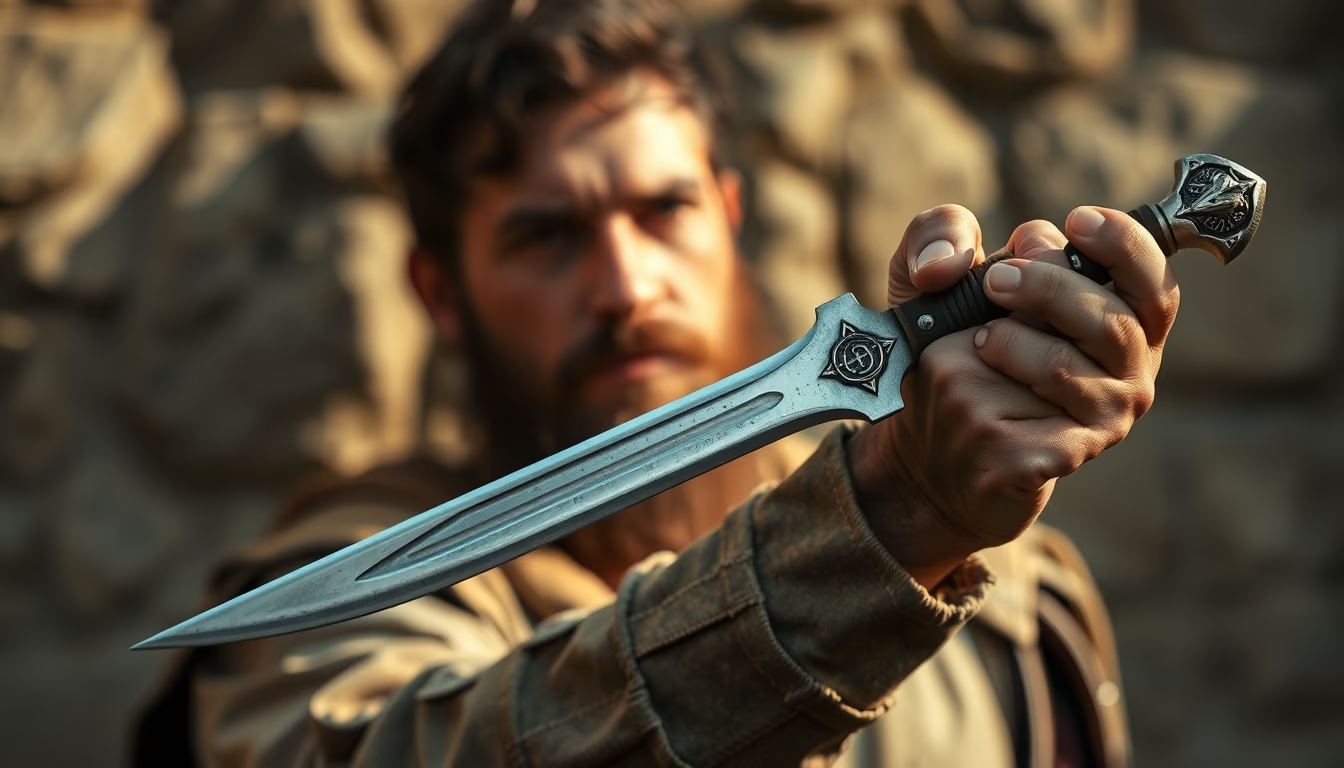
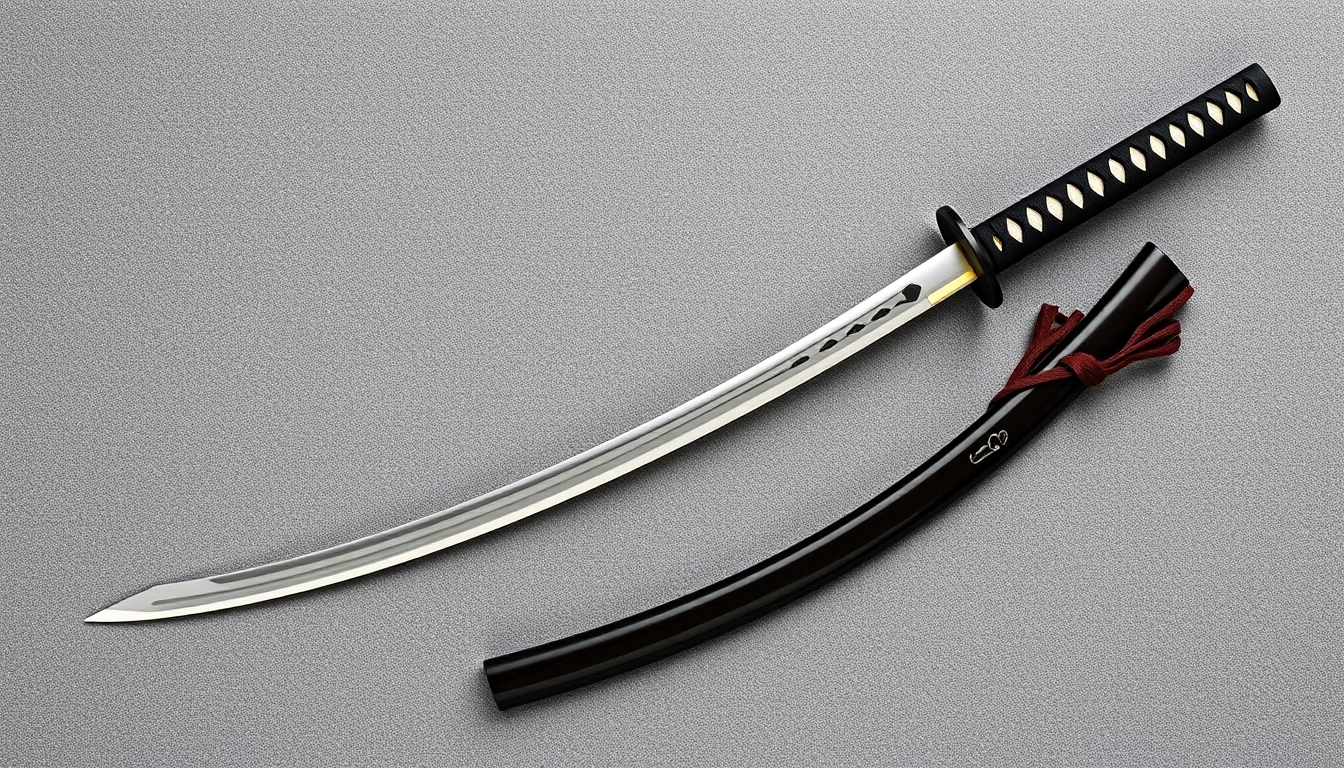
Falchion medieval curved
1344×768 · AVIF · CC BY 4.0
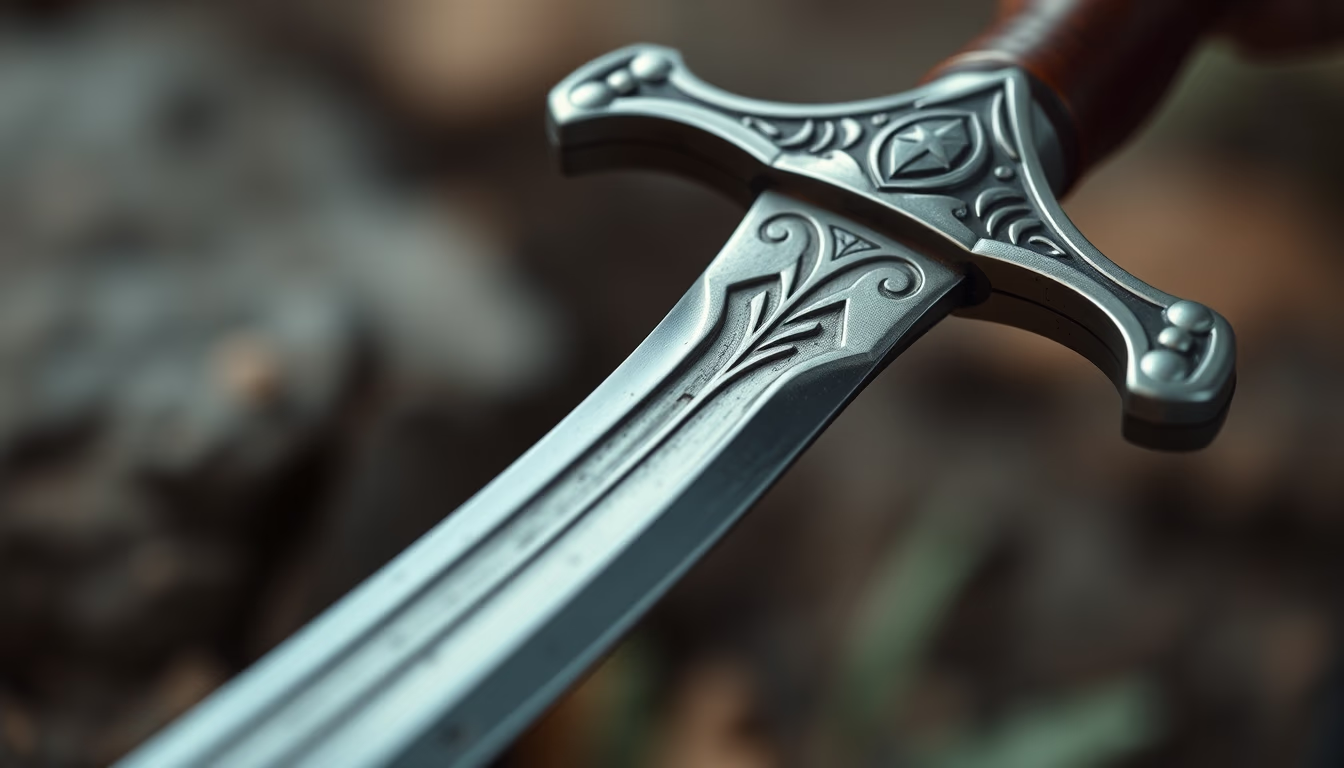
The medieval curved falchion was a one-handed sword popular in Europe between the 13th and 16th centuries, known for its efficient cutting design.
About this subject
The falchion is a medieval sword with a curved, single-edged blade designed primarily for powerful cutting. Unlike straight longswords, its blade widened toward the tip, concentrating mass to increase impact. This weapon was often used by infantry soldiers and knights as a secondary arm, being lighter than an axe or longsword.
Its origins date back to the 13th century, with examples found across Europe, especially in Germany and France. The curved shape resembled hunting knives or agricultural tools adapted for combat. It is believed that the falchion influenced later saber development, such as the Turkish kilij and Persian shamshir, though its construction was sturdier and less curved.
A historical curiosity: many falchions were forged using pattern welding techniques, combining steel strips to create strong, flexible blades. Despite its effectiveness, the falchion never fully replaced the longsword because its reduced reach and lack of a point made it less versatile for thrusting. However, it was feared for its cutting power, capable of cleaving limbs in a single blow.
Today, the falchion is recreated by artisan blacksmiths and appreciated in historical collections and medieval battle reenactments. Its curved blade and functional design continue to fascinate enthusiasts of ancient weapons.
Frequently Asked Questions
What is the difference between a falchion and a scimitar?
The falchion has a shorter, wider blade with less curvature than a scimitar. Additionally, the falchion is of European medieval origin, while the scimitar originates from the Middle East.
Was the falchion used by knights or common soldiers?
Both. Knights used it as a secondary weapon after breaking their lance, and infantry soldiers employed it because it was cheaper and easier to handle than a longsword.
How was the falchion manufactured in the Middle Ages?
It was forged from carbon steel, often using pattern welding to combine ductility and hardness. The edge was hardened separately, while the spine remained more flexible.
Direct URL
https://pub-c7d6a6ea828543ac903a74a341ccb2e1.r2.dev/imagens/falchion-medieval-curved-macro-closeup-fresh1.avifHow to credit
Include a visible link back to UtilizAí. Copy one of the snippets below:
<a href="https://xn--utiliza-eza.com/en/midia/imagens/falchion-medieval-curved-macro-closeup-fresh1">Falchion medieval curved</a> by <a href="https://xn--utiliza-eza.com">UtilizAí</a>, licensed under <a href="https://creativecommons.org/licenses/by/4.0/">CC BY 4.0</a>.
[Falchion medieval curved](https://xn--utiliza-eza.com/en/midia/imagens/falchion-medieval-curved-macro-closeup-fresh1) by [UtilizAí](https://xn--utiliza-eza.com), CC BY 4.0
License: CC-BY-4.0