Falchion medieval curved
1344×768 · AVIF · CC BY 4.0

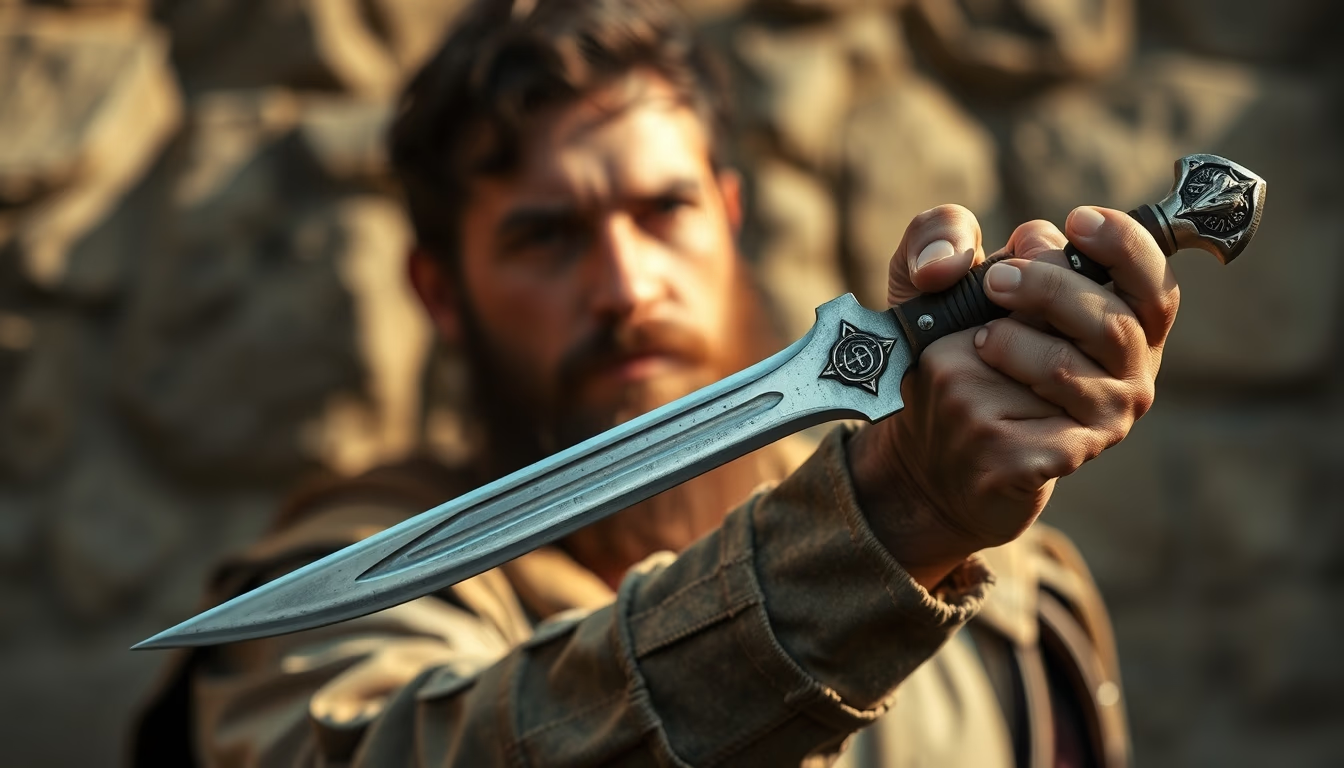
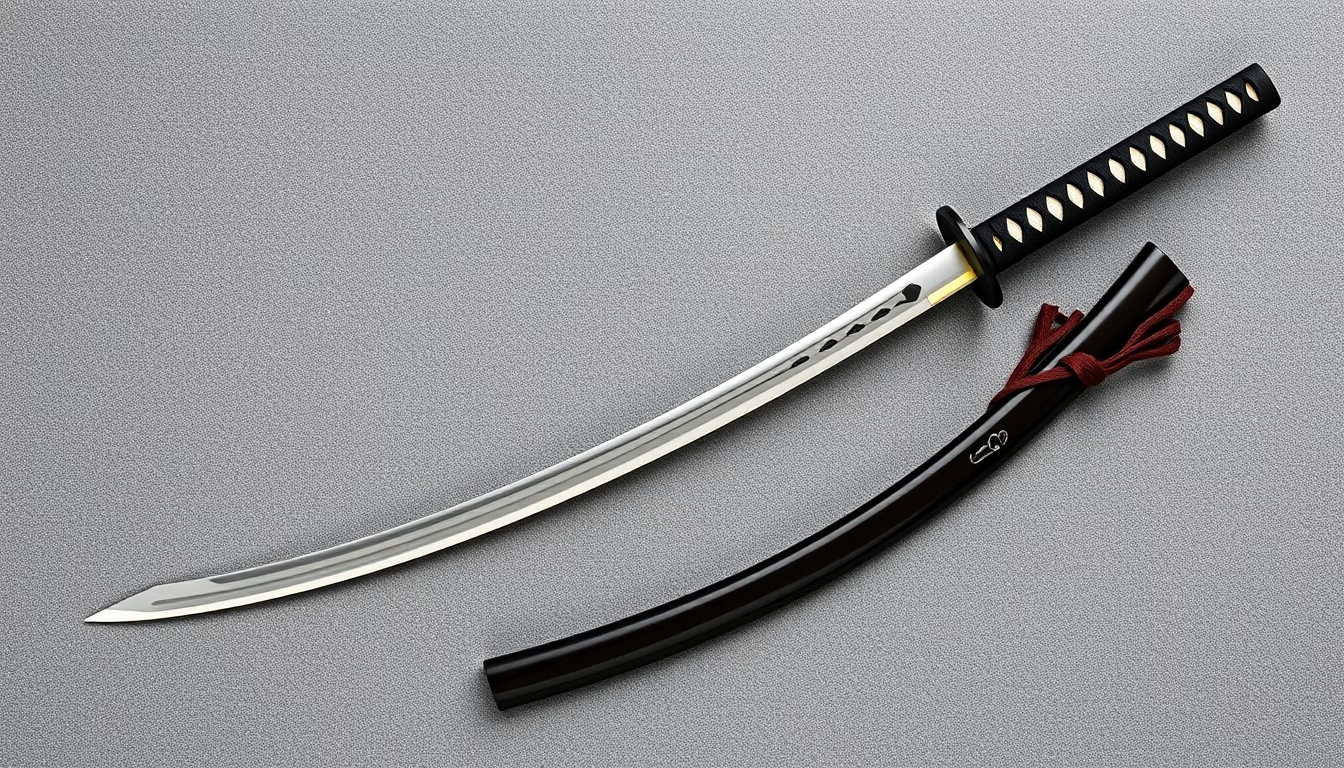
The medieval falchion is a single-edged curved sword used between the 11th and 16th centuries, known for its heavy cutting ability and popularity among European soldiers.
About this subject
The medieval falchion emerged in Europe around the 11th century, characterized by a curved, single-edged blade resembling a scimitar but with a sturdier build. Unlike double-edged longswords, the falchion focused on chopping, ideal for close-quarters combat where a powerful cut was decisive. Its etymological origin comes from Latin falx, meaning scythe, reflecting its design inspired by agricultural tools adapted for warfare.
Historically, the falchion was widely used by common soldiers, such as peasants and mercenaries, due to its simplicity of manufacture and lower cost compared to more complex swords. Regional variants included the German Messer and the Italian Storta, each with adaptations in hilt and guard shape. Although less effective against full plate armor, the falchion excelled in battles during the Hundred Years' War, where infantry tactics demanded fast, lethal cutting weapons.
A curious fact is that the falchion did not completely disappear with the end of the Middle Ages. Its design influenced later sabers, such as the cavalry saber of the 18th and 19th centuries. Some preserved examples in museums, like the Metropolitan Museum of Art in New York, show blades up to 70 cm long with complex patterns of tempering, indicating that despite being a weapon of war, it was also crafted with technical refinement.
Frequently Asked Questions
What is a medieval falchion?
It is a single-edged curved sword used in Europe between the 11th and 16th centuries, designed for powerful cuts and popular among common soldiers due to its low cost.
What is the difference between a falchion and a scimitar?
The falchion is European, with a shorter and wider blade, while the scimitar originates from the Middle East, with more pronounced curvature and typically lighter. Both are single-edged, but their use and construction differ.
Was the falchion effective against armor?
It was not the best option against full plate armor, as its cut could be stopped. Against mail or unarmored targets, it was extremely effective due to its concentrated impact.
Direct URL
https://pub-c7d6a6ea828543ac903a74a341ccb2e1.r2.dev/imagens/falchion-medieval-curved-long-exposure-fresh12.avifHow to credit
Include a visible link back to UtilizAí. Copy one of the snippets below:
<a href="https://xn--utiliza-eza.com/en/midia/imagens/falchion-medieval-curved-long-exposure-fresh12">Falchion medieval curved</a> by <a href="https://xn--utiliza-eza.com">UtilizAí</a>, licensed under <a href="https://creativecommons.org/licenses/by/4.0/">CC BY 4.0</a>.
[Falchion medieval curved](https://xn--utiliza-eza.com/en/midia/imagens/falchion-medieval-curved-long-exposure-fresh12) by [UtilizAí](https://xn--utiliza-eza.com), CC BY 4.0
License: CC-BY-4.0