Falchion medieval curved
1344×768 · AVIF · CC BY 4.0
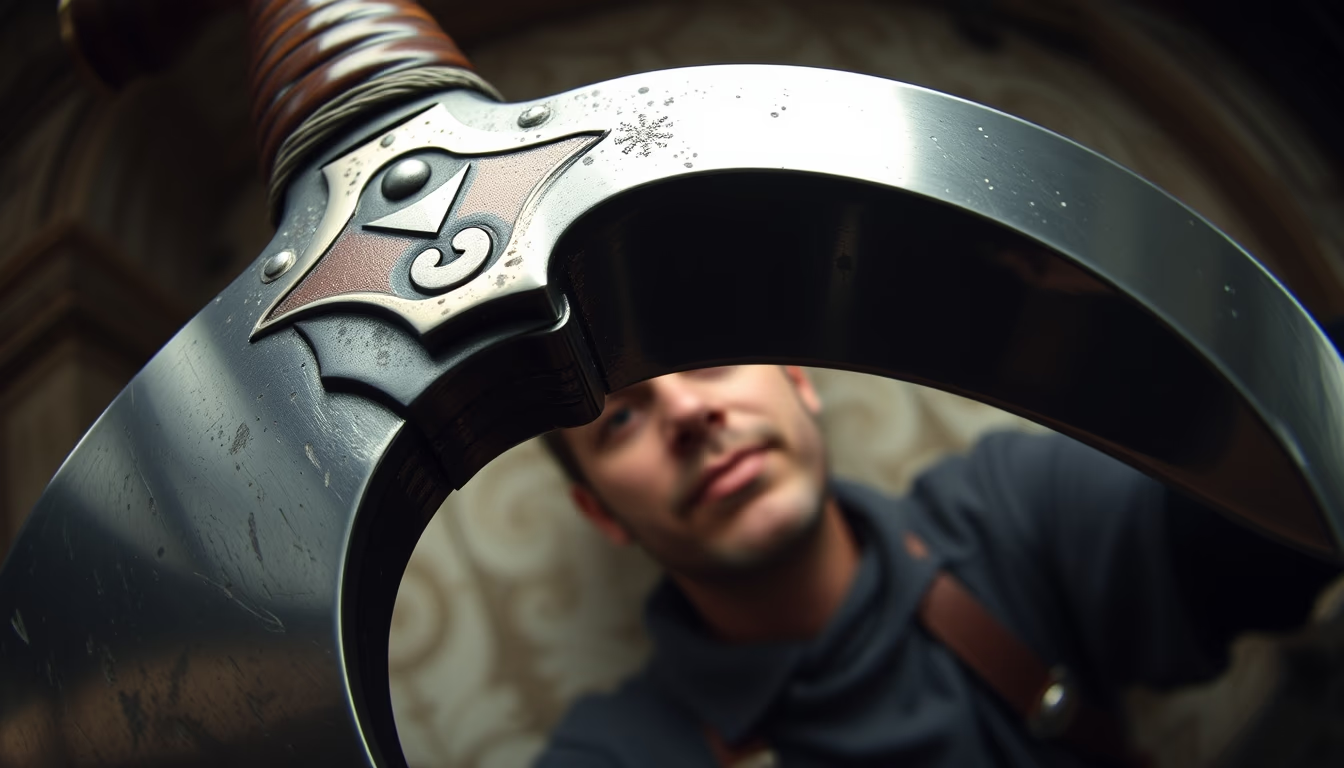
The falchion is a medieval sword with a curved blade and broad tip, popular in Europe between the 13th and 15th centuries for its efficient design.
About this subject
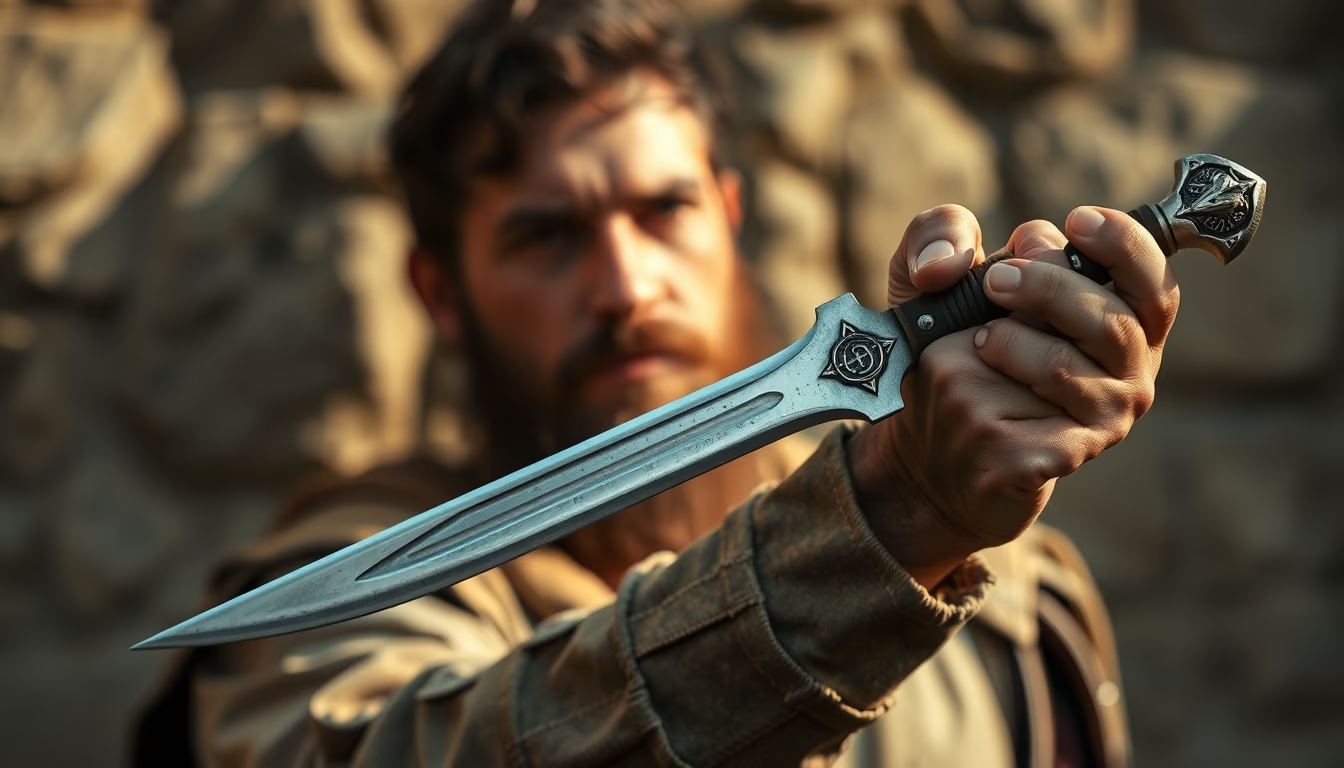
The falchion is a medieval sword of European origin, characterized by a curved blade, usually single-edged, with a broad tip. Unlike straight longswords, the falchion combined features of knives and swords, being lighter and more agile. Its shape resembled a mix between a scimitar and a cleaver, making it ideal for powerful slashing attacks. It emerged around the 13th century and was primarily used by infantry soldiers and less wealthy knights due to its lower production cost. The curved blade allowed more forceful strokes against mail armor, and the broad tip facilitated thrusts into vulnerable points.
Many falchions featured a straight back and a curved edge, creating a “false edge” at the top of the blade. This geometry increased mass at the front, enhancing impact. Although not as popular as the longsword, the falchion appears in various medieval illustrations, such as the Cantigas de Santa Maria and German manuscripts. Surviving examples, like the Conyers falchion (England), date to the 13th century and have blades up to 80 cm.
Interestingly, the falchion influenced the development of weapons like the saber and scimitar, though its lineage is independent. In popular culture, it appears in works like “The Lord of the Rings” (Boromir’s sword is inspired by a falchion) and in games like “Dark Souls”. Despite its effectiveness, it fell out of use with the advent of full plate armor, which required precise thrusts.
Today, the falchion is studied by historians and recreated by craftsmen, appreciated for its unique design and versatile functionality. Its curved, robust blade continues to fascinate medieval weapon enthusiasts.
Frequently Asked Questions
What is the difference between a falchion and a scimitar?
The falchion is European, with a wider and heavier blade, while the scimitar is of Oriental origin, usually thinner with a more pronounced curve. The falchion focused on powerful slashes; the scimitar prioritized speed.
Which social classes used the falchion?
Primarily infantry soldiers and lower-income knights, as it was cheaper than longswords. Wealthier nobles preferred higher-status weapons like the longsword or greatsword.
Are there any famous surviving falchions?
Yes. The Conyers Falchion (13th century, England) and the Thorpe Falchion (14th century, Denmark) are notable examples. Both are in museums and display the typical single-edged curved blade.
Direct URL
https://pub-c7d6a6ea828543ac903a74a341ccb2e1.r2.dev/imagens/falchion-medieval-curved-fish-eye-wide-angle-fresh14.avifHow to credit
Include a visible link back to UtilizAí. Copy one of the snippets below:
<a href="https://xn--utiliza-eza.com/en/midia/imagens/falchion-medieval-curved-fish-eye-wide-angle-fresh14">Falchion medieval curved</a> by <a href="https://xn--utiliza-eza.com">UtilizAí</a>, licensed under <a href="https://creativecommons.org/licenses/by/4.0/">CC BY 4.0</a>.
[Falchion medieval curved](https://xn--utiliza-eza.com/en/midia/imagens/falchion-medieval-curved-fish-eye-wide-angle-fresh14) by [UtilizAí](https://xn--utiliza-eza.com), CC BY 4.0
License: CC-BY-4.0