Erhu chinese fiddle
1344×768 · AVIF · CC BY 4.0
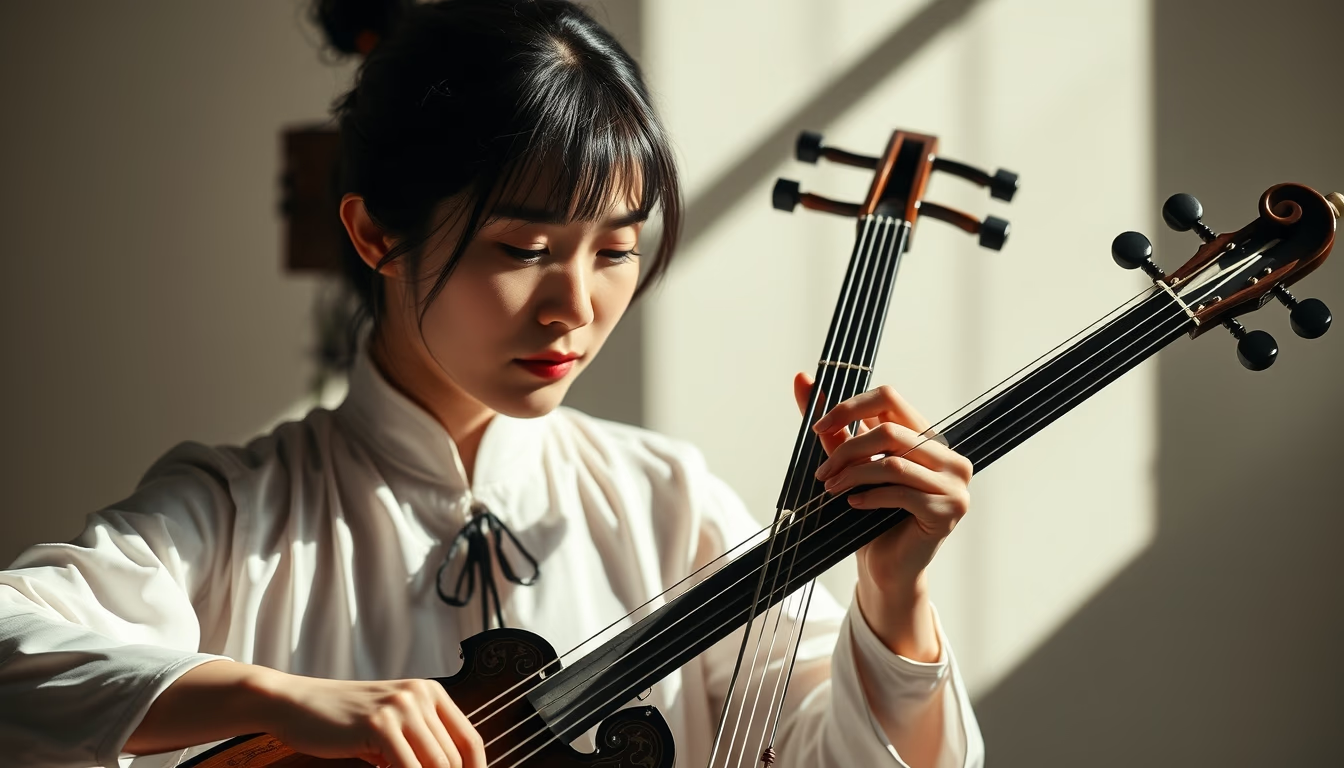
The Erhu is a Chinese two-stringed bowed instrument, renowned for its melancholic tone and versatility in traditional and contemporary music.
About this subject
The Erhu, often called the Chinese fiddle, is a two-stringed bowed instrument dating back to the Tang dynasty (7th to 10th century). Its origins trace back to instruments of Central Asian nomads, such as the huqin. Unlike Western violins, the Erhu has only two strings and a fretless fingerboard, demanding great precision from the player for accurate pitch. The resonator is typically covered with python skin, giving it a distinctive timbre that is both nasal and sweet.
In classical Chinese music, the Erhu plays a central role in string ensembles like jiangnan sizhu and traditional orchestras. Pieces such as "Moon Reflection on the Second Spring" and "Galloping Horse" are emblematic of its repertoire. During the 20th century, musician and composer Liu Tianhua revolutionized Erhu technique, expanding its expressive range and establishing formal teaching methods. Today, the Erhu is also used in film scores and fusions with jazz and electronic music.
Construction of the Erhu is handcrafted and varies by region in China. It is made from hardwoods like rosewood or sandalwood, and the bow, made of horsehair, is fixed between the two strings, unlike the violin's independent bow. This unique feature allows very subtle glissandos and vibratos. The Erhu is played vertically, supported between the knee and waist, with the left hand sliding along the fingerboard without fret markers, requiring intensive training for accurate intonation.
Culturally, the Erhu symbolizes the soul of Chinese music, capable of expressing both joy and deep sorrow. In 2011, it was listed as an Intangible Cultural Heritage of China. Despite its long history, the instrument continues to evolve, with luthiers experimenting with new materials like carbon fiber and contemporary musicians such as pop star Jay Chou incorporating the Erhu into pop songs, bringing it to new global audiences.
Frequently Asked Questions
What is the difference between the Erhu and the violin?
The Erhu has only two strings, a frettless fingerboard, and the bow is fixed between the strings rather than separate. Its sound is more nasal and high-pitched, and it is played vertically resting on the knee.
Is the Erhu difficult to learn?
Yes, due to the lack of frets, the player needs a well-trained ear for pitch accuracy. Posture and bow control also require years of practice. It typically takes at least 5 years to reach an intermediate level.
What musical genres use the Erhu?
Traditionally in Chinese classical and folk music, but it now appears in film scores (e.g., 'Crouching Tiger, Hidden Dragon'), jazz, rock, and contemporary Chinese pop, such as in works by Jay Chou.
Direct URL
https://pub-c7d6a6ea828543ac903a74a341ccb2e1.r2.dev/imagens/erhu-chinese-fiddle-magazine-editorial-p0.avifHow to credit
Include a visible link back to UtilizAí. Copy one of the snippets below:
<a href="https://xn--utiliza-eza.com/en/midia/imagens/erhu-chinese-fiddle-magazine-editorial-p0">Erhu chinese fiddle</a> by <a href="https://xn--utiliza-eza.com">UtilizAí</a>, licensed under <a href="https://creativecommons.org/licenses/by/4.0/">CC BY 4.0</a>.
[Erhu chinese fiddle](https://xn--utiliza-eza.com/en/midia/imagens/erhu-chinese-fiddle-magazine-editorial-p0) by [UtilizAí](https://xn--utiliza-eza.com), CC BY 4.0
License: CC-BY-4.0