Enzyme catalysis 3d
1344×768 · AVIF · CC BY 4.0
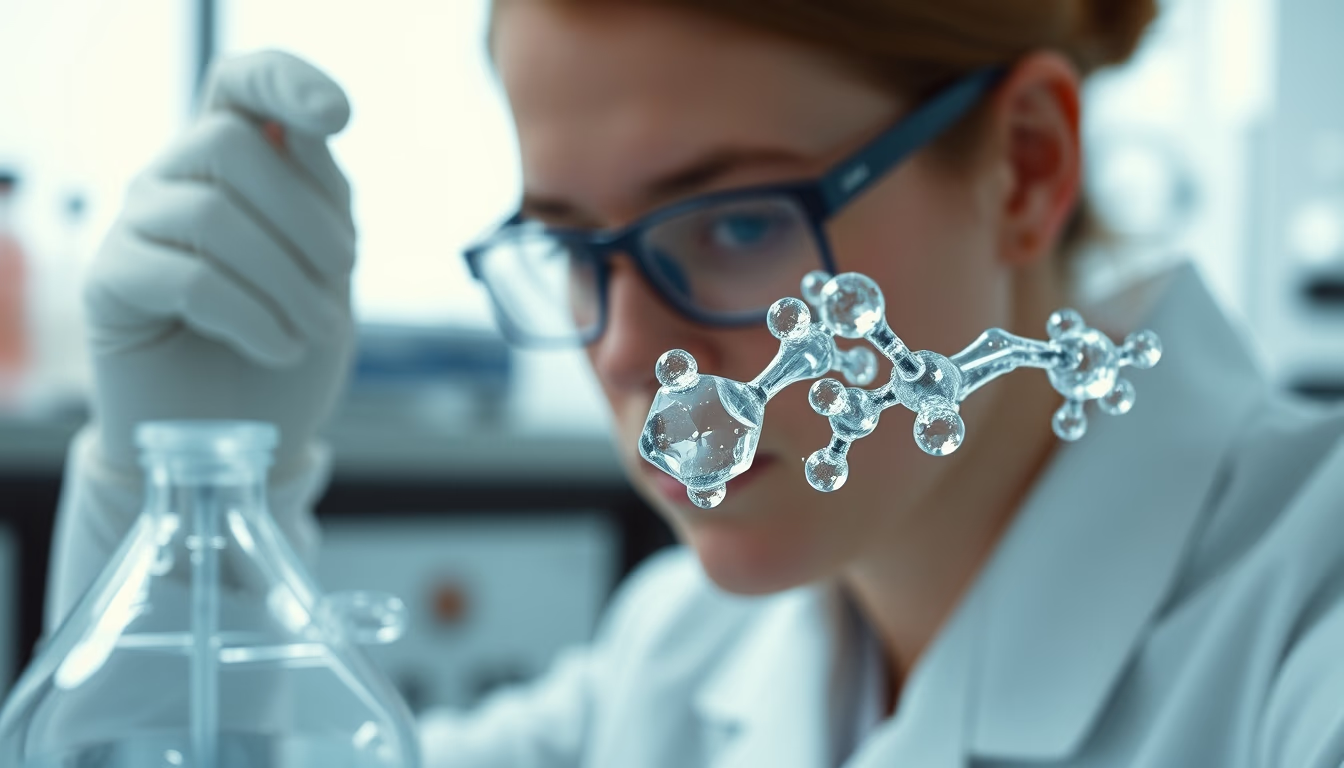
Enzyme catalysis accelerates vital chemical reactions in living organisms, with enzymes acting as highly specific and efficient biocatalysts.
About this subject
Enzymes are globular proteins that act as biological catalysts, lowering the activation energy required for a chemical reaction. They bind to substrates in a region called the active site, where catalysis occurs. The lock-and-key model, proposed by Emil Fischer, suggests the active site is complementary to the substrate; the induced-fit model, by Daniel Koshland, argues that the enzyme undergoes conformational changes upon substrate binding. This specificity allows each enzyme to work on a single type of molecule or a restricted group of substrates.
Enzyme catalysis is essential for metabolic processes such as digestion, cellular respiration, and photosynthesis. For example, salivary amylase hydrolyzes starch into maltose in the mouth, while lactase breaks down lactose in the intestine. Over 5,000 different enzymes have been identified in the human body, each with a particular function. They operate under moderate temperature and pH conditions, unlike traditional industrial catalysts that require high pressures and temperatures.
Factors such as temperature, pH, substrate concentration, and the presence of inhibitors affect enzyme activity. Most human enzymes have an optimal pH range between 6 and 8, but stomach pepsin acts at pH 2. Inhibitors can be competitive, binding to the active site, or non-competitive, altering the enzyme's conformation. This knowledge is crucial for drug development, such as protease inhibitors in HIV treatments.
In biotechnology, enzymes are used in food production, such as cheese making with renin, and in the textile industry to remove impurities. Enzymes from extremophiles, like Taq DNA polymerase from thermophilic bacteria, enable the polymerase chain reaction (PCR), revolutionizing molecular genetics. Immobilizing enzymes on solid supports allows their reuse, reducing costs. With advances in protein engineering, artificial enzymes can be designed to catalyze non-natural reactions, expanding sustainable horizons.
Frequently Asked Questions
How do enzymes accelerate chemical reactions?
Enzymes reduce the activation energy required for a reaction by stabilizing the transition state. They bind to the substrate at the active site and form the enzyme-substrate complex, facilitating bond breaking or formation.
What happens if an enzyme denatures?
Denaturation alters the enzyme's three-dimensional structure, inactivating the active site. This can occur due to excessive heat, extreme pH, or chemical agents, preventing catalysis.
Are enzymes reusable after catalysis?
Yes, enzymes are not consumed in reactions and can catalyze multiple cycles. Each enzyme molecule can process thousands of substrates per second, depending on the enzyme and conditions.
Direct URL
https://pub-c7d6a6ea828543ac903a74a341ccb2e1.r2.dev/imagens/enzyme-catalysis-3d-lo-fi-disposable-camera-p5.avifHow to credit
Include a visible link back to UtilizAí. Copy one of the snippets below:
<a href="https://xn--utiliza-eza.com/en/midia/imagens/enzyme-catalysis-3d-lo-fi-disposable-camera-p5">Enzyme catalysis 3d</a> by <a href="https://xn--utiliza-eza.com">UtilizAí</a>, licensed under <a href="https://creativecommons.org/licenses/by/4.0/">CC BY 4.0</a>.
[Enzyme catalysis 3d](https://xn--utiliza-eza.com/en/midia/imagens/enzyme-catalysis-3d-lo-fi-disposable-camera-p5) by [UtilizAí](https://xn--utiliza-eza.com), CC BY 4.0
License: CC-BY-4.0