Enzyme catalysis 3d
1344×768 · AVIF · CC BY 4.0
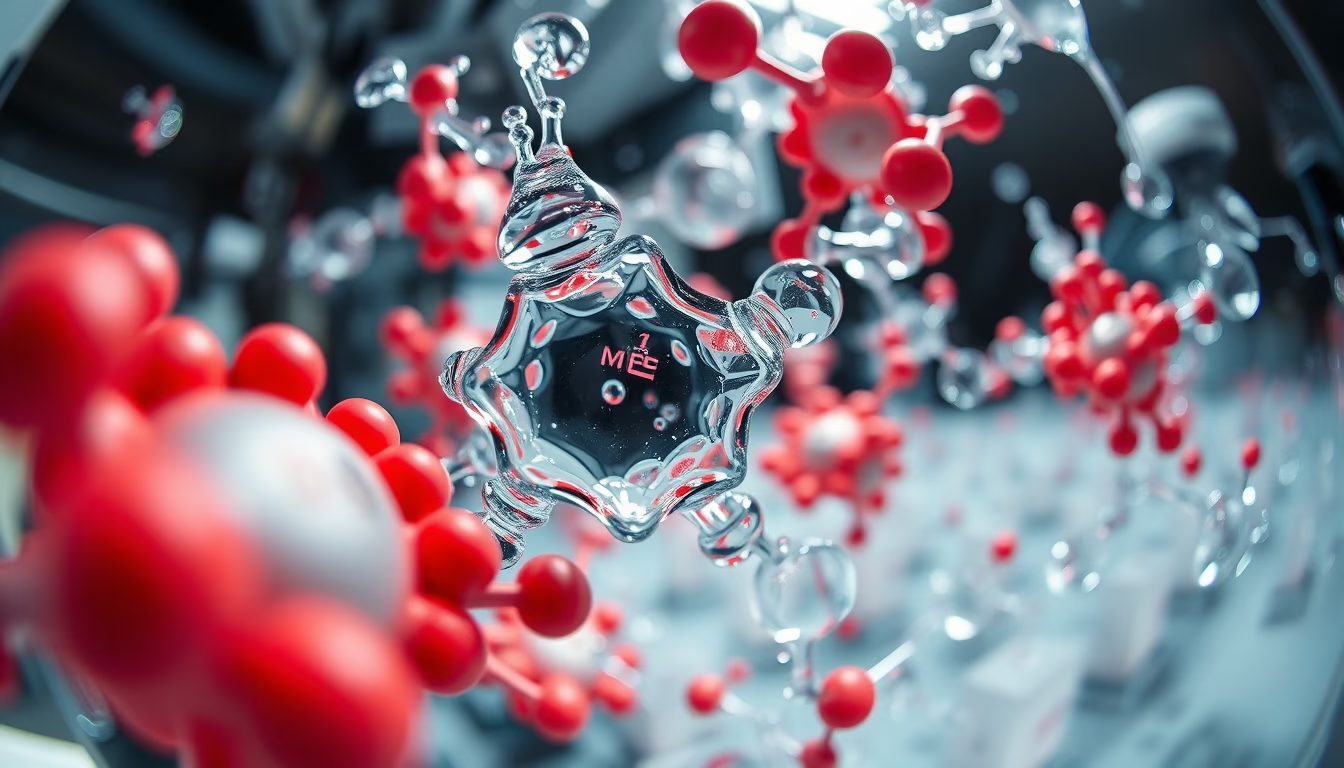
Enzymes catalyze chemical reactions with molecular precision; 3D models reveal their mechanisms.
About this subject
Enzymes are specialized proteins that accelerate chemical reactions without being consumed. They lower the activation energy required for a reaction, enabling vital metabolic processes to occur in seconds or milliseconds. This efficiency stems from each enzyme's unique three-dimensional structure, featuring an active site that binds specifically to the substrate, much like a key fitting into a lock. Understanding enzyme catalysis is crucial for everything from food digestion to DNA replication.
Three-dimensional visualization of enzymes, obtained through techniques such as X-ray crystallography and cryo-electron microscopy, has revolutionized biochemistry. These 3D models reveal the exact arrangement of amino acids, hydrogen bonds, and cofactors involved in catalysis. For instance, lysozyme, an antibacterial enzyme found in tears, had its structure solved in the 1960s, showing how it cleaves bacterial cell walls. Today, molecular simulation software uses these structures to predict interactions and design enzyme inhibitors used as drugs, such as HIV antivirals.
Beyond biology, enzymes are valuable industrial tools. In biofuel production, amylases and cellulases break down starch and cellulose into fermentable sugars. In detergents, proteases remove protein stains. In medicine, recombinant enzymes treat inherited disorders like Gaucher disease. 3D modeling accelerates enzyme engineering for improved thermostability or activity in organic solvents, expanding biotechnological applications.
Frequently Asked Questions
How do enzymes accelerate chemical reactions?
Enzymes lower the activation energy of the reaction by stabilizing the transition state. The active site binds the substrate, orienting molecules and favoring product formation.
What is a 3D model of an enzyme and how is it created?
A 3D model of an enzyme is a computational representation of the protein's spatial structure. It is primarily created by X-ray crystallography or cryo-electron microscopy, which map atomic positions.
Where is enzyme catalysis applied in industry?
In the food industry, enzymes are used to produce syrups, beer, and cheese. In pharmaceuticals, to synthesize antibiotics and drugs. In biofuels, to convert biomass into ethanol.
Direct URL
https://pub-c7d6a6ea828543ac903a74a341ccb2e1.r2.dev/imagens/enzyme-catalysis-3d-fish-eye-wide-angle-p9.avifHow to credit
Include a visible link back to UtilizAí. Copy one of the snippets below:
<a href="https://xn--utiliza-eza.com/en/midia/imagens/enzyme-catalysis-3d-fish-eye-wide-angle-p9">Enzyme catalysis 3d</a> by <a href="https://xn--utiliza-eza.com">UtilizAí</a>, licensed under <a href="https://creativecommons.org/licenses/by/4.0/">CC BY 4.0</a>.
[Enzyme catalysis 3d](https://xn--utiliza-eza.com/en/midia/imagens/enzyme-catalysis-3d-fish-eye-wide-angle-p9) by [UtilizAí](https://xn--utiliza-eza.com), CC BY 4.0
License: CC-BY-4.0