English horn rare
1344×768 · AVIF · CC BY 4.0
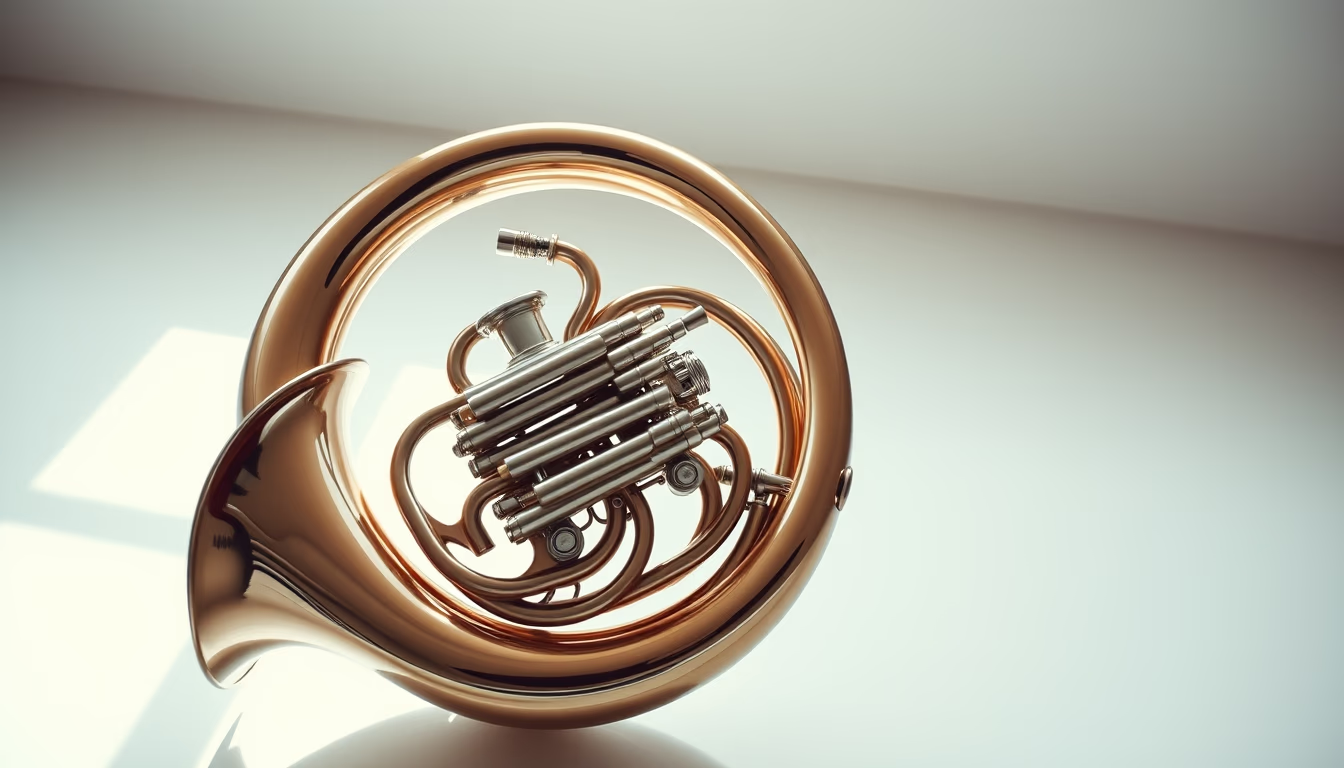
The English horn, a double-reed woodwind instrument, is known for its velvety tone and relative scarcity in orchestras.
About this subject
The English horn, also known as the cor anglais, is a double-reed woodwind instrument pitched in F, a fifth below the oboe. Despite its name, it did not originate in England: it developed in France during the 18th century as a tenor oboe, and the name likely derives from the French 'cor anglé' (angled horn), referring to its original curved shape. With a conical bore ending in a pear-shaped bell, its sound is deeper and fuller than the oboe's, possessing a nostalgic, melancholic quality.
In the symphony orchestra, the English horn is used primarily as a solo instrument or to color lyrical passages. Composers such as Hector Berlioz, Richard Wagner, and Dmitri Shostakovich exploited its timbre to evoke pastoral or dramatic scenes. The most famous solo is in the second movement of Antonín Dvořák's New World Symphony, where an English horn melody expresses longing and hope. Its rarity stems from high cost and technical difficulty: it requires refined breath control and embouchure, and the solo repertoire is limited compared to the oboe.
Outside the orchestra, the English horn appears in chamber music, film scores (such as in The Lord of the Rings), and occasionally experimental jazz. As a transposing instrument, the written music sounds a fifth lower. Its handcrafted construction from grenadilla or rosewood, with metal keys, contributes to the high price and the scarcity of specialized players. Though less common, the English horn retains a cherished place in classical music for its unique ability to convey subdued emotion.
Frequently Asked Questions
Why is the English horn called English if it is not from England?
The name likely comes from the French 'cor anglé' (angled horn), referring to its original curved shape. The change to 'cor anglais' (English horn) may stem from a mistranslation or linguistic evolution.
What is the difference between an oboe and an English horn?
The English horn is larger, pitched a fifth lower (in F), and has a deeper, more velvety tone. It also features a pear-shaped bell, whereas the oboe has a narrower bell.
Which famous works feature an English horn solo?
The most famous is the solo in the second movement of Dvořák's New World Symphony. Other examples include Berlioz's Symphonie Fantastique and Richard Strauss's tone poem Till Eulenspiegel.
Direct URL
https://pub-c7d6a6ea828543ac903a74a341ccb2e1.r2.dev/imagens/english-horn-rare-minimalist-composition-p9.avifHow to credit
Include a visible link back to UtilizAí. Copy one of the snippets below:
<a href="https://xn--utiliza-eza.com/en/midia/imagens/english-horn-rare-minimalist-composition-p9">English horn rare</a> by <a href="https://xn--utiliza-eza.com">UtilizAí</a>, licensed under <a href="https://creativecommons.org/licenses/by/4.0/">CC BY 4.0</a>.
[English horn rare](https://xn--utiliza-eza.com/en/midia/imagens/english-horn-rare-minimalist-composition-p9) by [UtilizAí](https://xn--utiliza-eza.com), CC BY 4.0
License: CC-BY-4.0