Elephant herd at watering hole
1344×768 · AVIF · CC BY 4.0
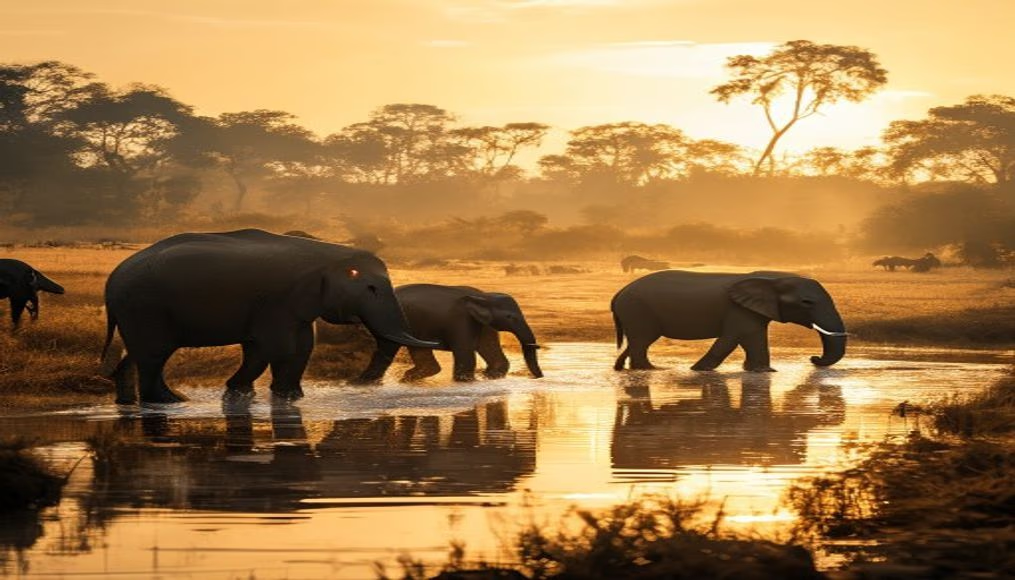
African elephant herds gather at watering holes during the dry season, a spectacle of social bonding and matriarchal hierarchy.
About this subject
African elephants (Loxodonta africana) are the largest land animals on Earth, and their seasonal movements in search of water are essential for the species' survival. During the dry season, which varies across sub-Saharan Africa, watering holes become critical meeting points. A typical herd is led by an experienced matriarch, usually the oldest female, who decides when and where to drink. These decisions rely on collective memory passed down through generations, allowing the group to locate water sources even in arid landscapes.
Behavior at watering holes reveals a complex social structure. Calves are protected in the center of the group, while adults form a safety perimeter. Elephants use their trunks to suck up to 10 liters of water at a time, then pour it into their mouths. Beyond drinking, they spray water over their bodies to cool down and ward off parasites. This bathing also strengthens social bonds, as individuals help each other reach deeper areas or care for calves that slip on muddy banks.
The presence of a herd at a watering hole attracts other animals, such as zebras, wildebeests, and waterbirds, creating a temporary ecosystem. However, competition for resources can cause tensions, especially with hippos or crocodiles. Females are highly protective and may become aggressive if they sense a threat to their calves. Adult males, in turn, often visit watering holes alone or in small groups, using the opportunity to reinforce their hierarchy through displays of strength.
Unfortunately, human pressure has reduced access to these water sources. Fences, roads, and agriculture fragment migratory routes, forcing elephants to compete for increasingly scarce watering holes. In protected areas like Chobe National Park in Botswana or Amboseli in Kenya, natural and artificial waterholes are monitored to ensure herds can hydrate without conflict with neighboring human populations.
Frequently Asked Questions
Why do elephants gather at watering holes during the dry season?
During the dry season, water sources become scarce, and watering holes are vital for hydration. Elephants, which need up to 200 liters per day, travel in herds to these sites, where social interaction and calf care also occur.
How does the matriarch decide when to go to the watering hole?
The matriarch uses her accumulated knowledge of water source locations and safety conditions. She observes environmental cues, such as the presence of other species or soil moisture, and coordinates the group's movement, usually at dawn or dusk to avoid extreme heat.
What threats do elephants face at watering holes?
Besides competition with other animals for space and water, elephants face risks such as predators (especially for calves) and human conflict. Habitat degradation and construction of barriers reduce access to these sites, increasing stress and mortality.
Direct URL
https://pub-c7d6a6ea828543ac903a74a341ccb2e1.r2.dev/imagens/elephant-herd-at-watering-hole-travel-photography-v10.avifHow to credit
Include a visible link back to UtilizAí. Copy one of the snippets below:
<a href="https://xn--utiliza-eza.com/en/midia/imagens/elephant-herd-at-watering-hole-travel-photography-v10">Elephant herd at watering hole</a> by <a href="https://xn--utiliza-eza.com">UtilizAí</a>, licensed under <a href="https://creativecommons.org/licenses/by/4.0/">CC BY 4.0</a>.
[Elephant herd at watering hole](https://xn--utiliza-eza.com/en/midia/imagens/elephant-herd-at-watering-hole-travel-photography-v10) by [UtilizAí](https://xn--utiliza-eza.com), CC BY 4.0
License: CC-BY-4.0