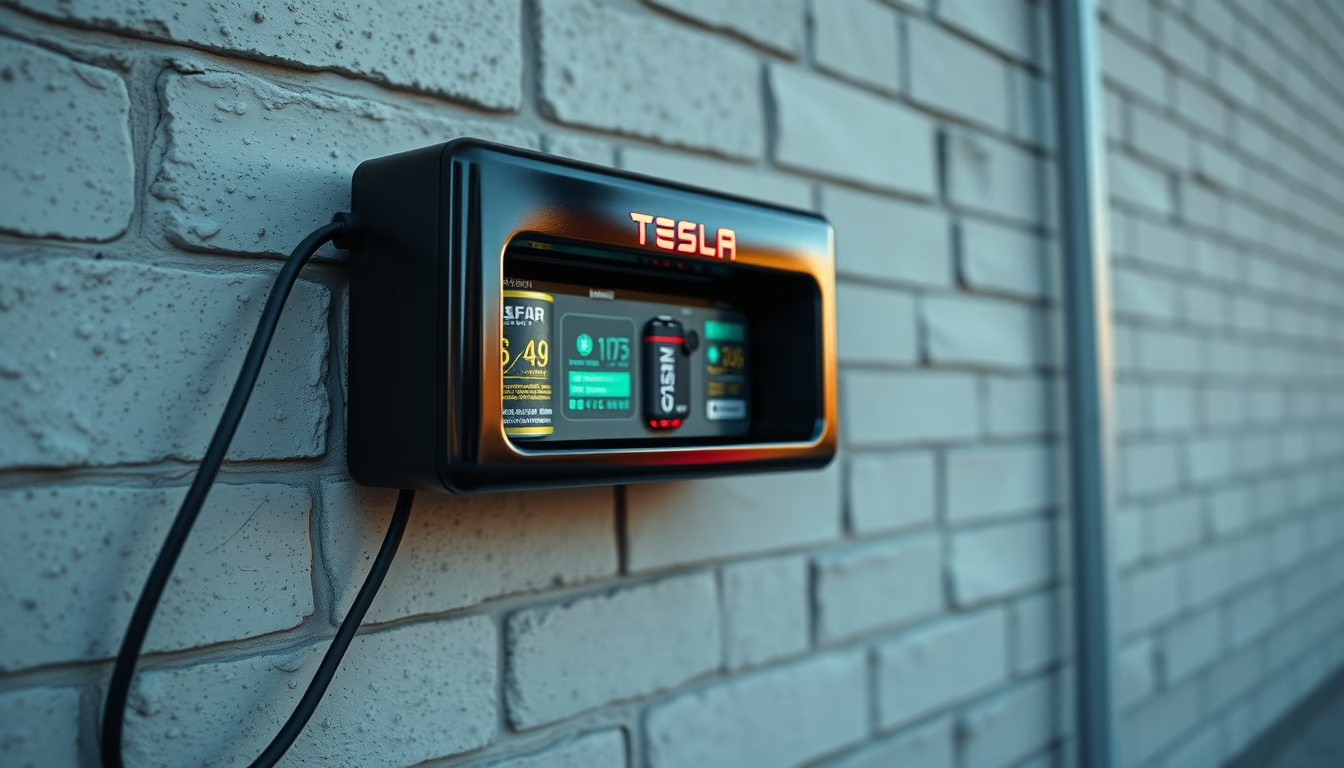
Electric scooter dock
1344×768 · AVIF · CC BY 4.0

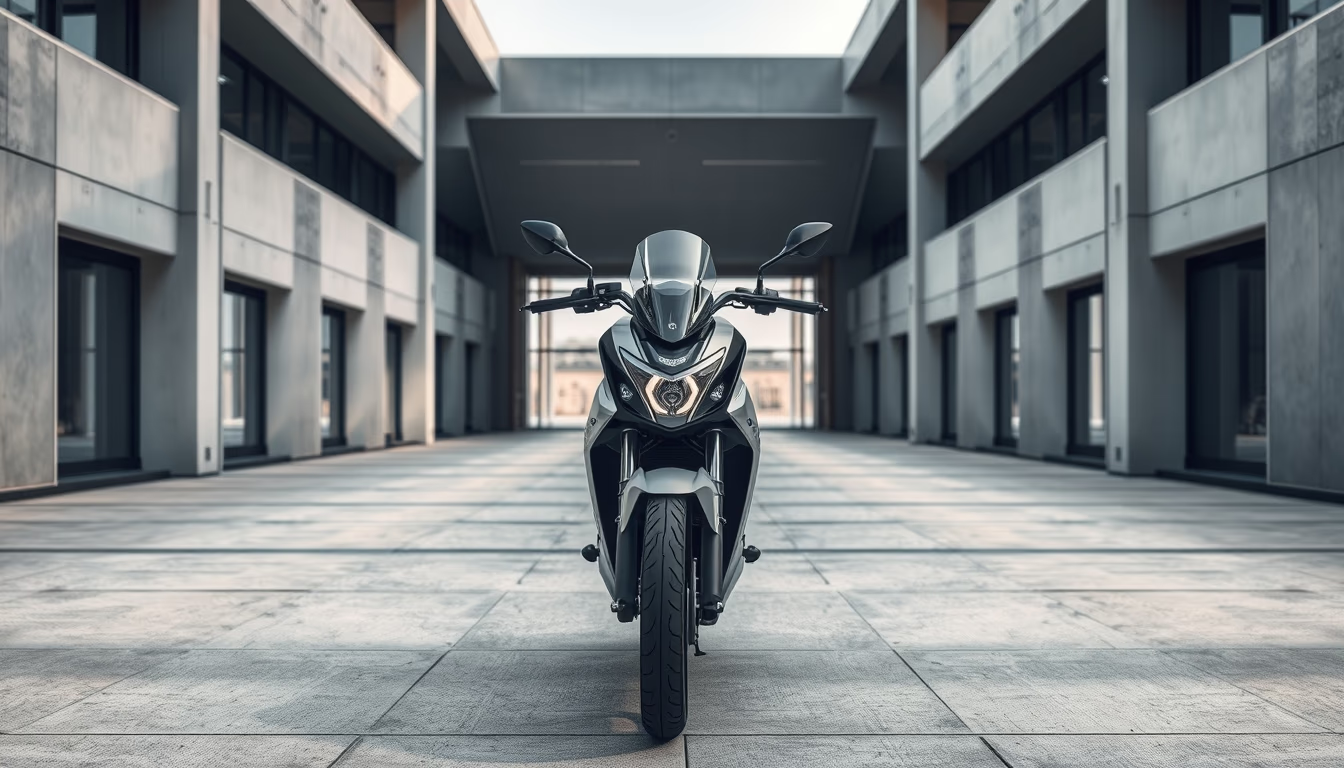
Electric scooter docks organize urban mobility, providing charging and orderly parking in smart cities.
About this subject
Electric scooter docks are physical structures installed on sidewalks, squares, and public transport terminals. They serve as fixed points where shared scooters can be parked and recharged, preventing disorderly abandonment that hinders pedestrian accessibility. Companies like Lime, Bird, and Grin use these docks in European and North American cities, while in Brazil adoption is still incipient but growing in capitals such as São Paulo and Rio de Janeiro. Dock technology varies: some have individual chargers connected to the power grid, others use swappable batteries replaced by operators. Implementing these points reduces vandalism and helps users locate vehicles. Data from the National Association of Public Transport indicates that cities with mandatory docks reduced sidewalk obstruction complaints by 40%. Docks also integrate micromobility systems with route apps and bike stations, promoting intermodality. In cities like Paris, the requirement for exclusive dock parking after 2023 eliminated scattered parking, improving urban coexistence. Modern models include solar panels for clean charging and sensors that report real-time availability. Expansion of these stations depends on public-private partnerships and tax incentives for scooter operators. In Brazil, the National Land Transport Agency (ANTT) regulation has not yet standardized docks, but pilot projects in Brasília and Recife test different formats. The installation cost for an eight-slot dock ranges from R$5,000 to R$15,000, including electrical infrastructure and signage. For the user, the main advantage is the guarantee of finding a charged scooter and avoiding extra fees for parking outside the designated area.
Frequently Asked Questions
How do electric scooter docks work?
Docks are exclusive parking spots with integrated charging systems. The user docks the scooter into a slot, which automatically starts charging and locks the vehicle. The app confirms proper parking and ends the rental without extra fees.
Where can I find scooter docks in Brazil?
In Brazil, docks are still rare. Pilot projects exist in Brasília (Setor Comercial Sul) and Recife (Bairro do Recife), plus some private initiatives in condominiums and universities in São Paulo and Rio de Janeiro. Most cities still use free-floating parking via geofencing.
What are the advantages of docks compared to free-floating parking?
Docks eliminate disorderly abandonment, improve pedestrian accessibility, reduce vandalism, and ensure scooters are charged. For operators, they lower manual repositioning costs. For cities, they organize public space and integrate micromobility with mass transit.
Direct URL
https://pub-c7d6a6ea828543ac903a74a341ccb2e1.r2.dev/imagens/electric-scooter-dock-travel-photography-p4.avifHow to credit
Include a visible link back to UtilizAí. Copy one of the snippets below:
<a href="https://xn--utiliza-eza.com/en/midia/imagens/electric-scooter-dock-travel-photography-p4">Electric scooter dock</a> by <a href="https://xn--utiliza-eza.com">UtilizAí</a>, licensed under <a href="https://creativecommons.org/licenses/by/4.0/">CC BY 4.0</a>.
[Electric scooter dock](https://xn--utiliza-eza.com/en/midia/imagens/electric-scooter-dock-travel-photography-p4) by [UtilizAí](https://xn--utiliza-eza.com), CC BY 4.0
License: CC-BY-4.0