Electric scooter city street
1344×768 · AVIF · CC BY 4.0
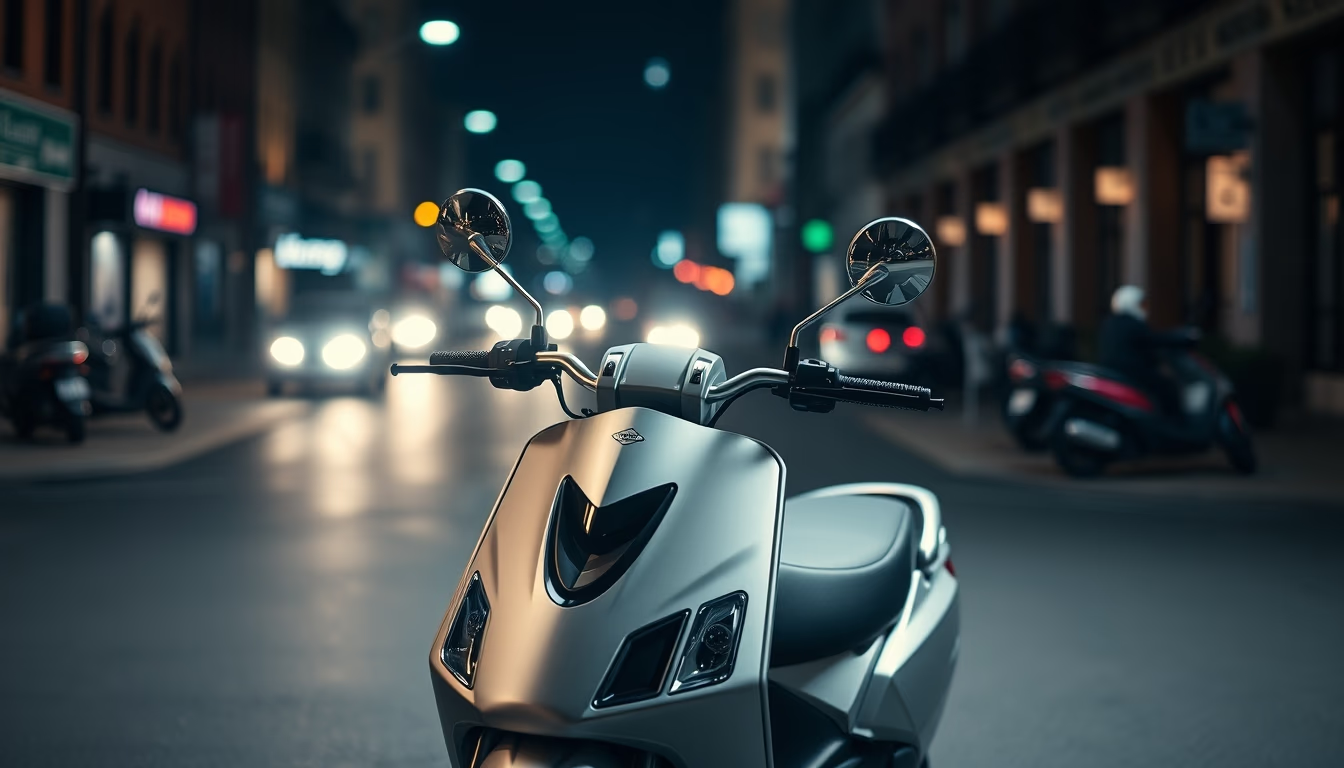
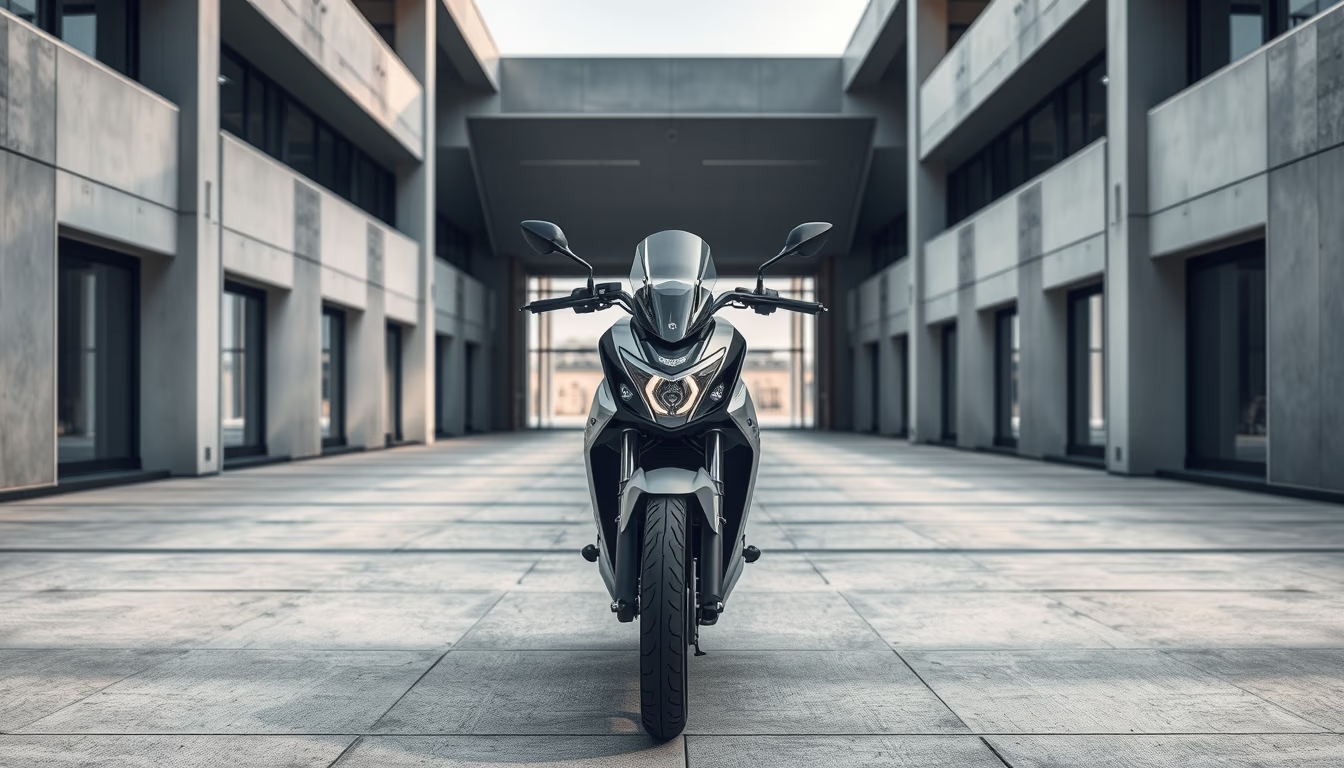
Electric scooters have become a common urban mobility option in cities worldwide, providing fast and sustainable short-distance transportation.
About this subject
Electric scooters emerged as a micromobility solution in the late 2010s, first gaining popularity in the United States and Europe. Companies like Lime, Bird, and Grinch expanded rapidly to dozens of countries, including Brazil. In São Paulo, the use of electric scooters was regulated by the city government in 2021, establishing speed limits (20 km/h on bike lanes and 6 km/h on sidewalks), mandatory helmets for minors under 18, and a ban on high-traffic roads. In Rio de Janeiro, since 2022, all riders must wear a helmet.
The adoption of electric scooters is linked to the need for alternatives to urban congestion and pollution. Studies indicate that each shared scooter can replace up to 10 car trips per week, reducing CO2 emissions. However, challenges persist, such as improper disposal of lithium-ion batteries and user safety. Data from Hospital das Clínicas in São Paulo shows that scooter-related accidents increased by 300% between 2020 and 2023, many involving collisions with vehicles or falls on uneven roads.
Brazilian urban infrastructure still needs adaptation. Cities like Curitiba and Brasília have invested in bike lanes and exclusive micromobility lanes. Compared to bicycles, scooters are lighter and easier to carry on public transport, but have lower range (about 20 to 40 km per charge). The trend is for sharing systems to integrate with ride-hailing apps, as already seen with Uber and Lime in some cities.
As of 2024, Brazil had over 50,000 electric scooters in sharing services, concentrated mainly in São Paulo, Rio de Janeiro, Belo Horizonte, and Porto Alegre. Regulations vary among municipalities, but there is pressure for standardization at state and federal levels. With increasing environmental awareness and the search for more efficient modes, electric scooters are expected to continue growing, provided they are accompanied by appropriate safety and maintenance policies.
Frequently Asked Questions
What is the maximum speed allowed for electric scooters in Brazil?
The speed limit varies by city. In São Paulo, it is 20 km/h on bike lanes and 6 km/h on sidewalks. In many other cities, the limit is 20 km/h on shared roads.
Do I need a license to ride an electric scooter?
No, no specific license is required for electric scooters in Brazil. However, in some cities like São Paulo, minors under 18 must wear a helmet by law.
Are electric scooters truly eco-friendly?
Yes, because they produce no local emissions and replace car trips, reducing CO2 output. However, improper battery disposal can cause environmental harm. Proper recycling is essential.
Direct URL
https://pub-c7d6a6ea828543ac903a74a341ccb2e1.r2.dev/imagens/electric-scooter-city-street-studio-editorial-portrait-p0.avifHow to credit
Include a visible link back to UtilizAí. Copy one of the snippets below:
<a href="https://xn--utiliza-eza.com/en/midia/imagens/electric-scooter-city-street-studio-editorial-portrait-p0">Electric scooter city street</a> by <a href="https://xn--utiliza-eza.com">UtilizAí</a>, licensed under <a href="https://creativecommons.org/licenses/by/4.0/">CC BY 4.0</a>.
[Electric scooter city street](https://xn--utiliza-eza.com/en/midia/imagens/electric-scooter-city-street-studio-editorial-portrait-p0) by [UtilizAí](https://xn--utiliza-eza.com), CC BY 4.0
License: CC-BY-4.0