Electric scooter city street
1344×768 · AVIF · CC BY 4.0
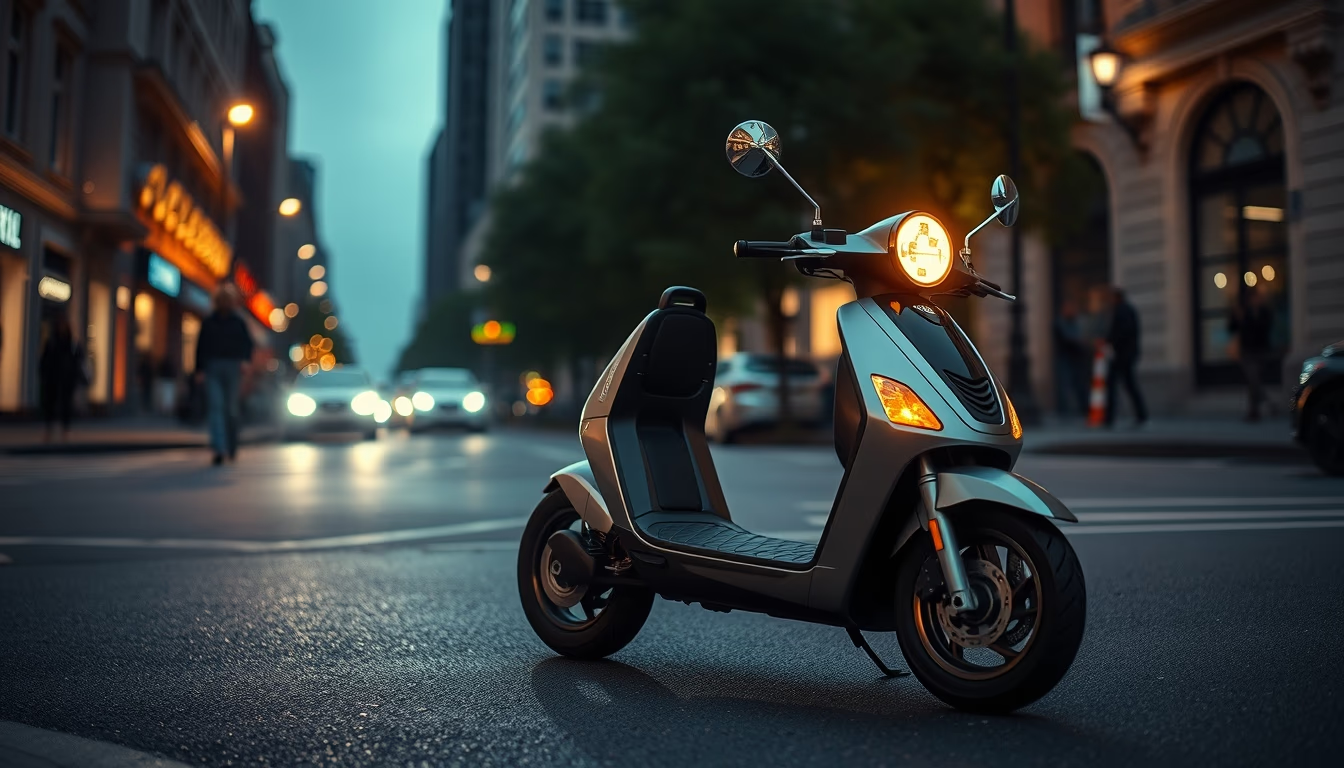
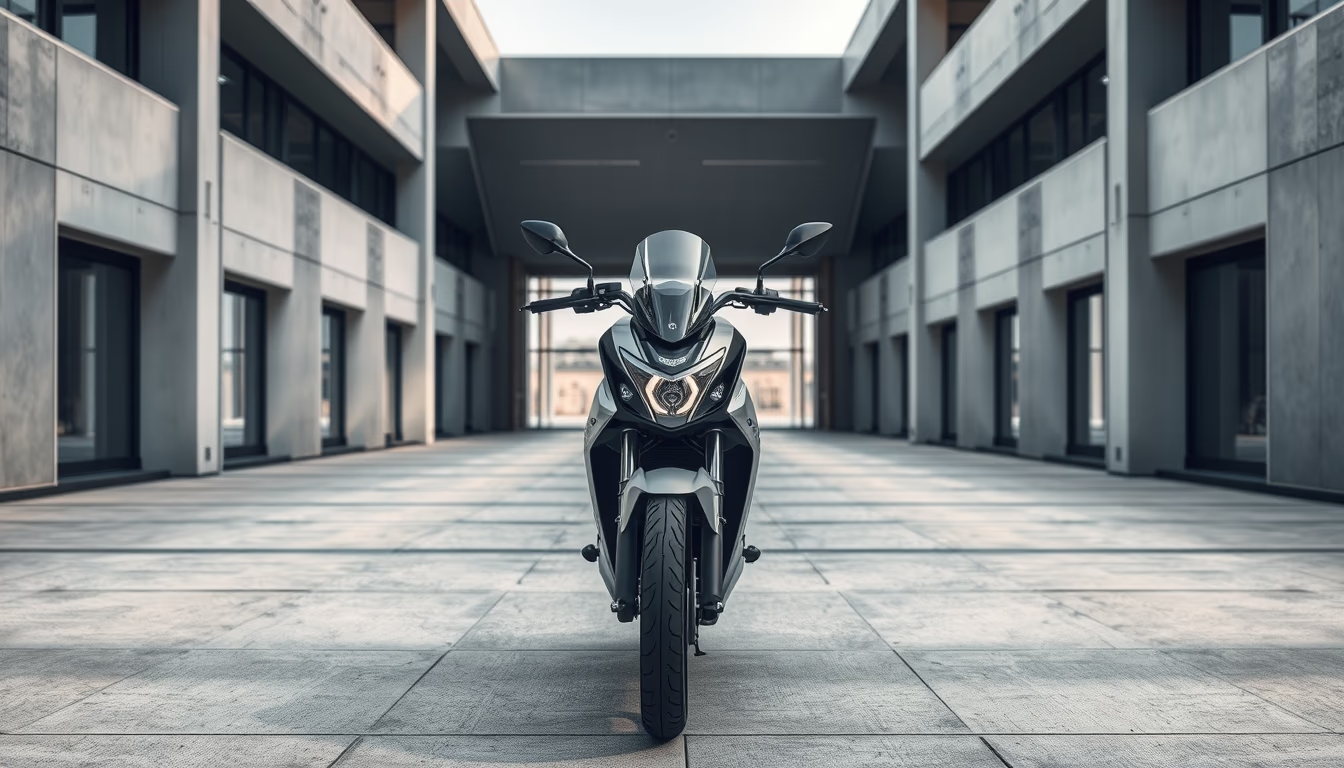
Electric scooters are reshaping urban mobility with convenience and sustainability, yet face regulatory and safety challenges in major cities worldwide.
About this subject
Electric scooters have become a fast and eco-friendly solution for short urban trips. In cities like São Paulo and Rio de Janeiro, usage surged after 2020, driven by ride-sharing apps. Unlike bicycles, scooters are easily portable and can be taken indoors or onto public transit. However, the lack of dedicated bike lanes and reckless riding often lead to conflicts with pedestrians and drivers. Most models feature 250, 500 W motors, 20, 40 km range, and a 25 km/h speed limit under Brazilian regulations (CONTRAN Resolution 885/2021). Lithium-ion batteries recharge via standard outlets, costing around R$ 0.50 per charge.
Globally, adoption varies. Paris banned shared scooters in 2023 after fatal accidents; Berlin and London have introduced designated parking zones. By 2026, anti-collision sensors and geofencing are expected to enhance safety, moving scooters toward semi-autonomous operation. In Brazil, state bills aim to standardize rules, including mandatory helmets and liability insurance. Yet user behavior remains the key challenge for safe coexistence in urban spaces.
Interestingly, the scooter boom reflects a cultural shift toward personal, low-impact transportation. Brazilian startups like Grão and Scoo are pioneering swappable battery systems, inspired by Taiwan's model. The future hinges on smart infrastructure and regulation that balances innovation with safety.
Frequently Asked Questions
Do I need a driver's license to ride an electric scooter in Brazil?
Yes, since 2021, CONTRAN Resolution 885 requires riders to be at least 18 years old and hold a National Driver's License (CNH) or a Moped Authorization (ACC), as scooter speeds exceed 20 km/h.
What is the average range of an electric scooter?
Most models offer 20, 40 km per charge, depending on rider weight, terrain, and riding mode. Lithium-ion batteries take 3, 6 hours to fully recharge.
Are electric scooters allowed on sidewalks?
No. Brazilian law prohibits scooters on sidewalks. They must use bike lanes, cycle paths, or roads with a speed limit of up to 40 km/h, always yielding to pedestrians and obeying traffic signs.
Direct URL
https://pub-c7d6a6ea828543ac903a74a341ccb2e1.r2.dev/imagens/electric-scooter-city-street-fine-art-photography-p4.avifHow to credit
Include a visible link back to UtilizAí. Copy one of the snippets below:
<a href="https://xn--utiliza-eza.com/en/midia/imagens/electric-scooter-city-street-fine-art-photography-p4">Electric scooter city street</a> by <a href="https://xn--utiliza-eza.com">UtilizAí</a>, licensed under <a href="https://creativecommons.org/licenses/by/4.0/">CC BY 4.0</a>.
[Electric scooter city street](https://xn--utiliza-eza.com/en/midia/imagens/electric-scooter-city-street-fine-art-photography-p4) by [UtilizAí](https://xn--utiliza-eza.com), CC BY 4.0
License: CC-BY-4.0