Electric organ hammond
1344×768 · AVIF · CC BY 4.0
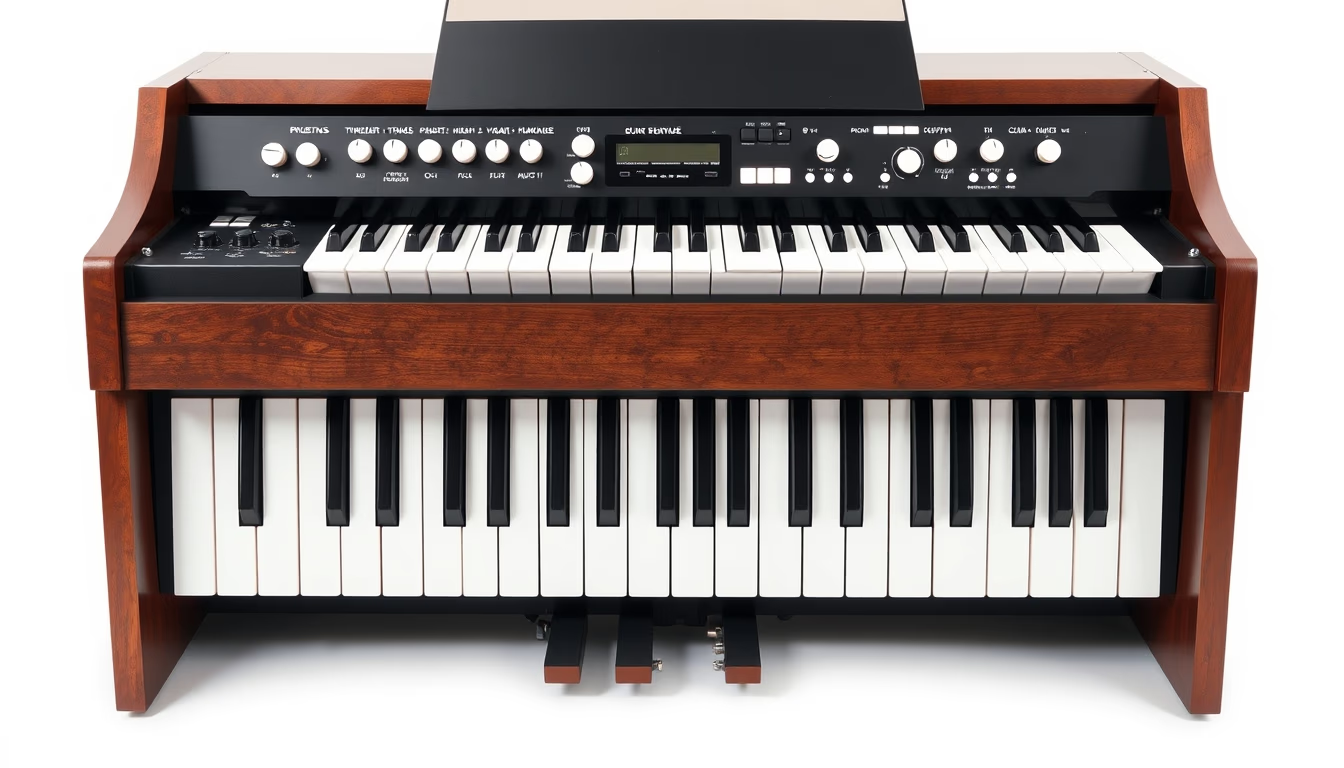
The Hammond electric organ, invented by Laurens Hammond in 1935, revolutionized music with its unique sound generated by tonewheels.
About this subject
The Hammond organ was created as a more affordable and portable alternative to massive pipe organs. Its innovative mechanism uses metal toothed discs (tonewheels) spinning near electromagnetic pickups, generating electrical voltages that produce different sound frequencies. The B3 model, launched in 1955, became the most iconic, extensively used in jazz, blues, rock, and gospel music.
Legends like Jimmy Smith, Booker T. Jones, Jon Lord, and Keith Emerson popularized the instrument, exploiting its infinite sustain and characteristic glissandos. The Leslie rotating speaker became synonymous with the Hammond sound, creating a Doppler effect that enriches the tone. While modern synthesizers try to emulate its sound, purists still prefer vintage models.
In Brazilian music, the Hammond appeared in recordings by artists such as Sérgio Mendes, João Donato, and in the Jovem Guarda movement. Original production ceased in the 1970s, but Hammond Suzuki Co. resumed manufacturing in Japan, keeping the tradition alive. To this day, the Hammond organ remains synonymous with musical expressiveness and personality.
Frequently Asked Questions
How does a Hammond organ work?
It uses tonewheels (metal discs with teeth) spinning near electromagnetic pickups to generate electrical signals, which are filtered and amplified. The signal approximates sine waves, and the player controls harmonics via drawbars, selecting different combinations for the sound.
Which famous musicians used the Hammond?
Jimmy Smith, the father of jazz Hammond, Booker T. Jones, Jon Lord (Deep Purple), and Keith Emerson (ELP) are iconic. In Brazil, Sérgio Mendes prominently featured the instrument.
What is the difference between a Hammond organ and a pipe organ?
A pipe organ produces sound through air passing through pipes, while the Hammond generates sound electrically. Hammond offers infinite sustain, portability, and quick timbre changes via drawbars, but lacks the acoustic complexity of a pipe organ.
Direct URL
https://pub-c7d6a6ea828543ac903a74a341ccb2e1.r2.dev/imagens/electric-organ-hammond-commercial-product-photography-p12.avifHow to credit
Include a visible link back to UtilizAí. Copy one of the snippets below:
<a href="https://xn--utiliza-eza.com/en/midia/imagens/electric-organ-hammond-commercial-product-photography-p12">Electric organ hammond</a> by <a href="https://xn--utiliza-eza.com">UtilizAí</a>, licensed under <a href="https://creativecommons.org/licenses/by/4.0/">CC BY 4.0</a>.
[Electric organ hammond](https://xn--utiliza-eza.com/en/midia/imagens/electric-organ-hammond-commercial-product-photography-p12) by [UtilizAí](https://xn--utiliza-eza.com), CC BY 4.0
License: CC-BY-4.0