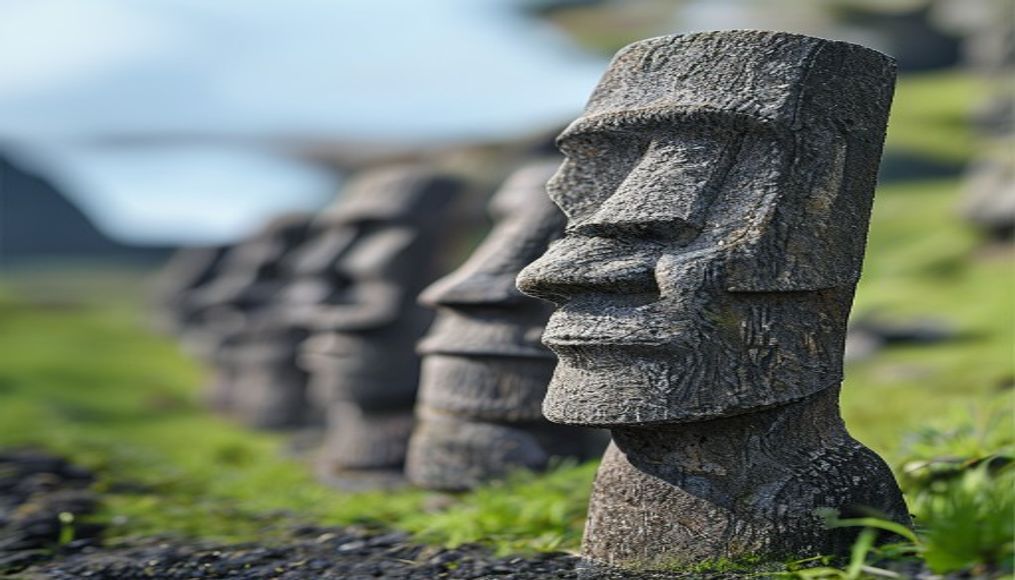
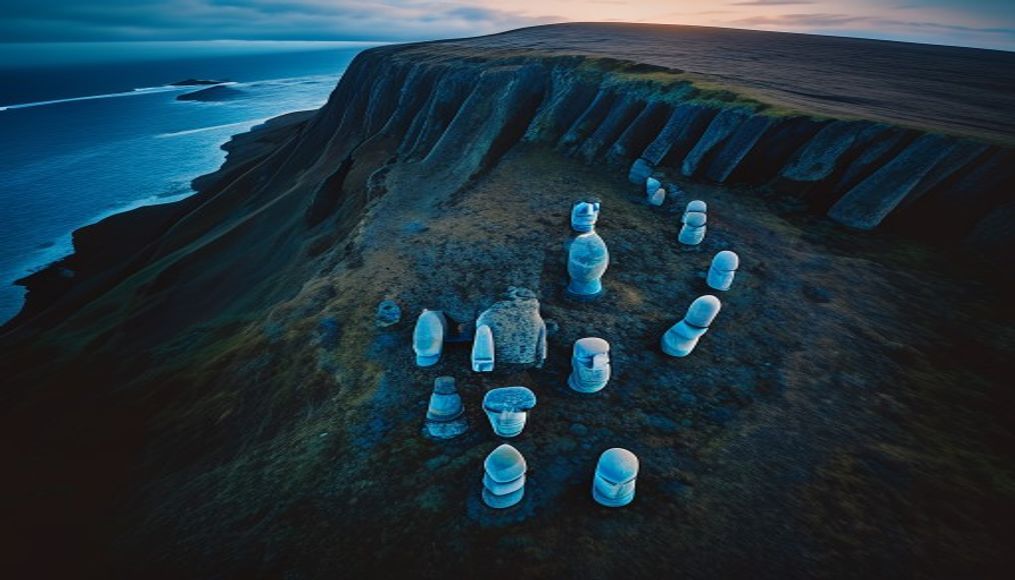
Easter island moai statues
1344×768 · AVIF · CC BY 4.0
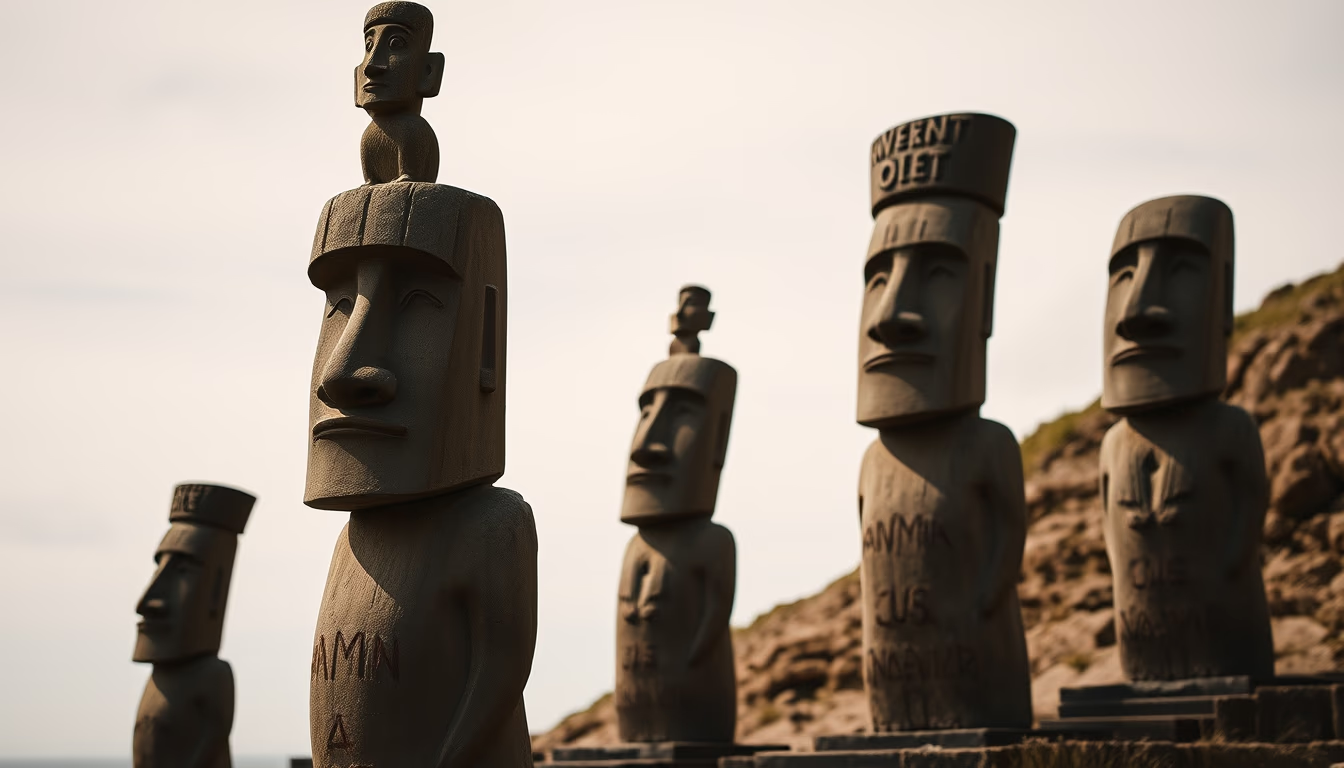
The Moai statues of Easter Island are massive monolithic stone carvings, created by the Rapa Nui people between the 13th and 16th centuries, representing important ancestors.
About this subject
The Moai are monolithic statues carved from volcanic tuff, a porous gray rock. Each moai is a stylized human figure with a large head and elongated torso, averaging 14 tons in weight, though the largest, El Gigante, reaches 21 meters and 270 tons. They were erected on stone platforms called ahu, typically facing inland, as if watching over the people. Construction and transport occurred mainly between 1200 and 1500 CE, and today about 900 statues remain scattered across the island, most at the Rano Raraku quarry.
The significance of moai is tied to ancestor worship. It was believed each statue embodied the mana (spiritual power) of a deceased chief, protecting the community. Tools were made from basalt and obsidian, and carving a single moai could take months. Transport remains a mystery, but theories involve tree trunks as rollers, ropes, and a rocking motion. The toppling of moai occurred during tribal wars in the 17th century, reflecting the collapse of Rapa Nui society due to resource depletion.
Today, the moai are a UNESCO World Heritage Site and one of Chile's most iconic tourist destinations. Most moai are being restored or preserved, with some still covered by sediment. Rapa Nui culture lives on through festivals like Tapati, celebrating the island's Polynesian heritage. Scholars highlight that the moai represent a remarkable technical achievement for a society without metal or draft animals, demonstrating ingenuity and community cooperation.
Frequently Asked Questions
Who built the Moai statues on Easter Island?
The Moai were built by the Rapa Nui people, descendants of Polynesian navigators who arrived on the island around 1200 CE.
How were the Moai transported?
The exact method is debated, but theories include the use of tree trunks as rollers, ropes and a rocking motion, or transport on wooden sleds with lubrication.
Why were the Moai toppled?
Toppling occurred during a period of tribal warfare and environmental decline in the 17th century, when rival factions knocked over the statues from their ahus as an insult.
Direct URL
https://pub-c7d6a6ea828543ac903a74a341ccb2e1.r2.dev/imagens/easter-island-moai-statues-film-grain-authentic-p1.avifHow to credit
Include a visible link back to UtilizAí. Copy one of the snippets below:
<a href="https://xn--utiliza-eza.com/en/midia/imagens/easter-island-moai-statues-film-grain-authentic-p1">Easter island moai statues</a> by <a href="https://xn--utiliza-eza.com">UtilizAí</a>, licensed under <a href="https://creativecommons.org/licenses/by/4.0/">CC BY 4.0</a>.
[Easter island moai statues](https://xn--utiliza-eza.com/en/midia/imagens/easter-island-moai-statues-film-grain-authentic-p1) by [UtilizAí](https://xn--utiliza-eza.com), CC BY 4.0
License: CC-BY-4.0