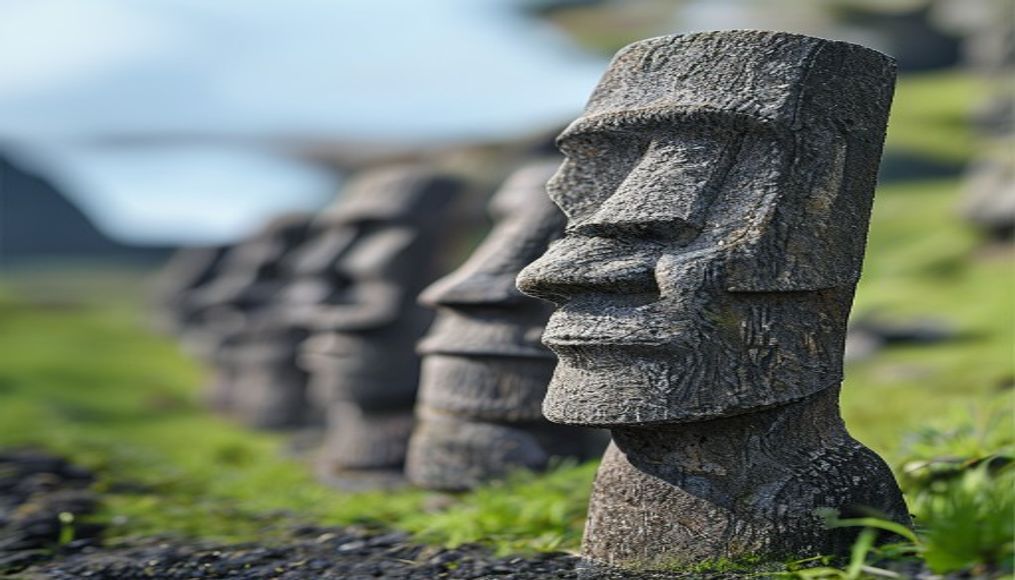
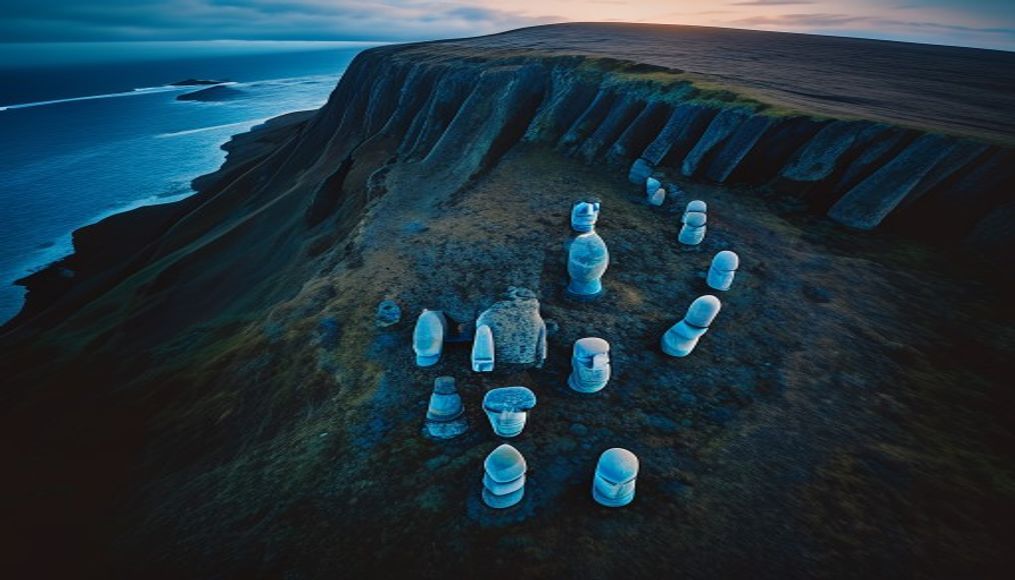
Easter island moai statues
1344×768 · AVIF · CC BY 4.0
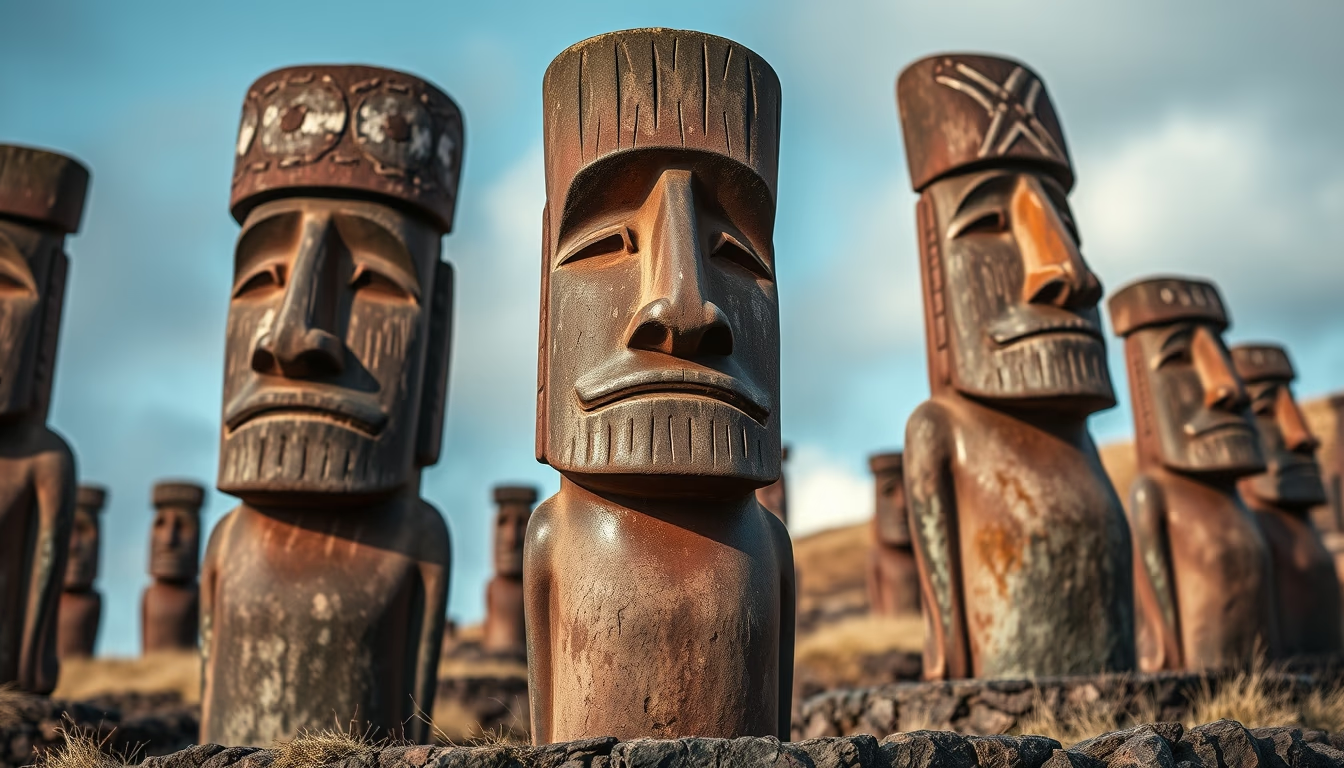
The moai statues of Easter Island are monumental stone figures carved by the Rapa Nui people between the 13th and 16th centuries, representing deified ancestors.
About this subject
The moai are monolithic stone statues carved by the Rapa Nui people on Easter Island (Rapa Nui), a special territory of Chile located in the Pacific Ocean, about 3,700 km from the South American coast. They were produced between approximately 1250 and 1500 CE, with 887 known statues scattered across the island, most carved from volcanic tuff from the Rano Raraku crater. Each moai represents a deceased high-status ancestor, serving as a spiritual guardian. The statues feature disproportionately large heads, broad noses, and elongated ears; many also have a pukao, a red stone topknot. The average height is 4 meters, but the largest, Moai Paro, reaches 10 meters in height and weighs about 82 tons.
The construction and transport of the moai are major archaeological mysteries. They were carved at the Rano Raraku quarry using basalt tools, then detached from the rock and transported to ceremonial platforms called ahu. The exact method is debated, but experiments suggest they could be "walked" using ropes in a rocking motion, or dragged on logs and rollers. Many moai were toppled (either intentionally or by earthquakes) and later re-erected in restoration projects, such as those at Anakena beach and Ahu Tongariki, which has the largest row of 15 moai. The island was declared a UNESCO World Heritage Site in 1995.
The Rapa Nui culture that created the moai collapsed around the 17th century due to internal conflicts, deforestation, and resource overexploitation. Statue construction ceased abruptly. Today, the moai are the island's most iconic symbol and one of the world's greatest archaeological treasures, attracting tourists and researchers alike. The famous statues represent not only technical skill but also the complex social and religious organization of the Rapa Nui people.
Frequently Asked Questions
How many moai are there on Easter Island?
There are 887 known moai on Easter Island, most carved from volcanic tuff at the Rano Raraku quarry. Of these, approximately 288 were transported to ceremonial platforms (ahu) and re-erected.
How were the moai transported?
The exact method is still debated, but archaeological experiments suggest that the moai could be 'walked' by groups using ropes, rocking the statue forward in alternating motions, or dragged on logs and rollers lubricated with water.
What is the meaning of the moai?
The moai represent important deceased ancestors (chiefs or religious leaders) who were seen as spiritual guardians of the community. They were placed on platforms (ahu) facing inland to protect the living.
Direct URL
https://pub-c7d6a6ea828543ac903a74a341ccb2e1.r2.dev/imagens/easter-island-moai-statues-documentary-photography-p8.avifHow to credit
Include a visible link back to UtilizAí. Copy one of the snippets below:
<a href="https://xn--utiliza-eza.com/en/midia/imagens/easter-island-moai-statues-documentary-photography-p8">Easter island moai statues</a> by <a href="https://xn--utiliza-eza.com">UtilizAí</a>, licensed under <a href="https://creativecommons.org/licenses/by/4.0/">CC BY 4.0</a>.
[Easter island moai statues](https://xn--utiliza-eza.com/en/midia/imagens/easter-island-moai-statues-documentary-photography-p8) by [UtilizAí](https://xn--utiliza-eza.com), CC BY 4.0
License: CC-BY-4.0