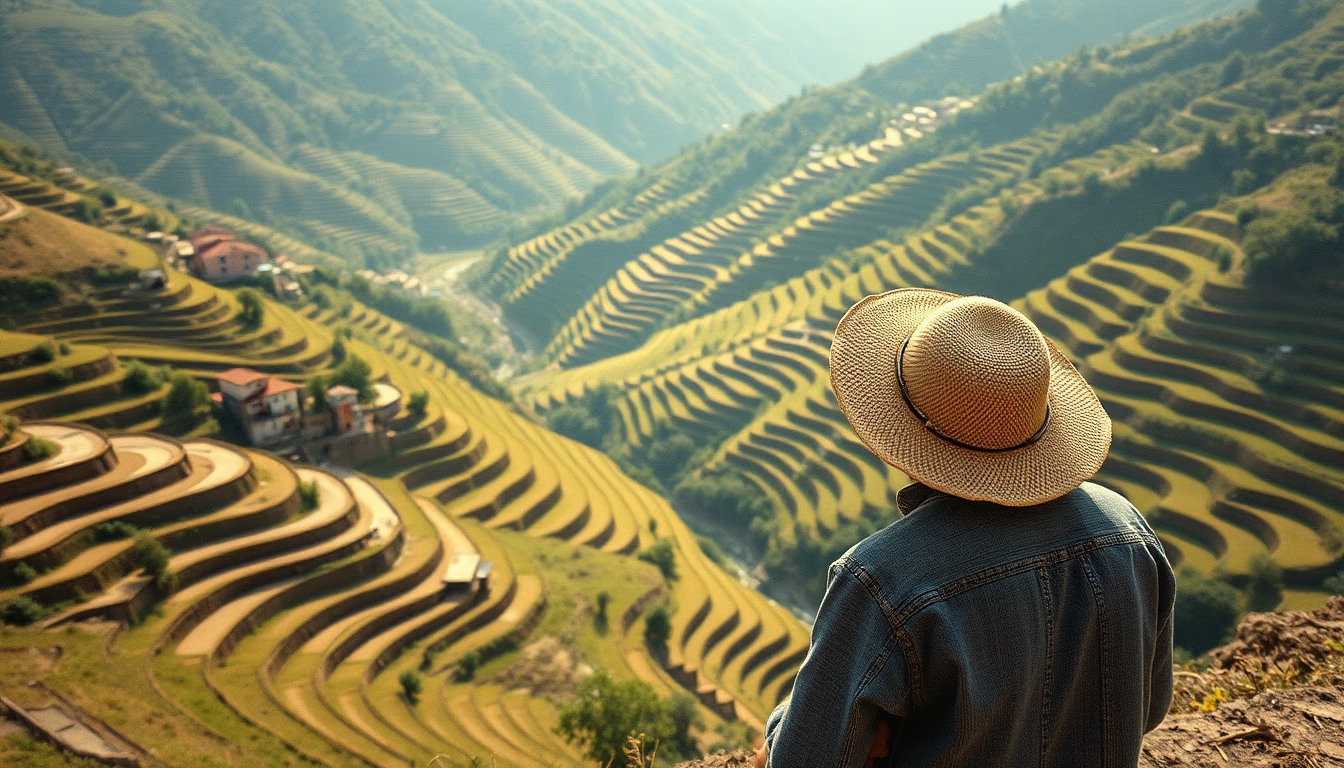
Douro valley terraces
1344×768 · AVIF · CC BY 4.0
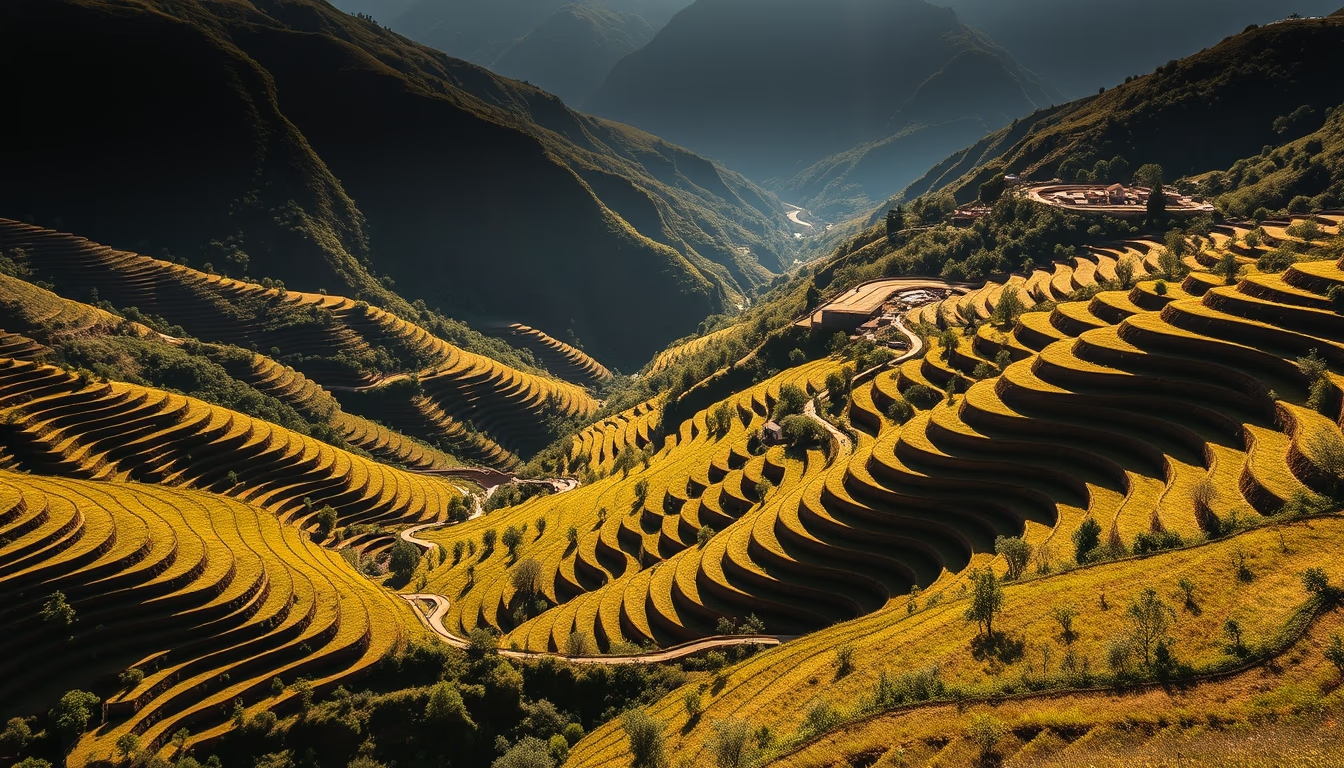
The Douro Valley terraces in Portugal exemplify heroic viticulture on steep schist slopes, a UNESCO World Heritage landscape.
About this subject
The Douro Valley in Portugal is one of the oldest and most stunning wine regions worldwide. Its steep slopes, composed mainly of schist, have been transformed over centuries into terraces that allow vine cultivation. This technique, known as heroic viticulture, demands intense manual labor and deep terrain knowledge. The landscape is so unique that it was declared a UNESCO World Heritage Site in 2001 as an Evolutive and Living Cultural Landscape.
The history of the terraces dates back to the 18th century, when port wine production gained commercial importance. Viticulturists realized that south-facing slopes with high sun exposure produced superior grapes. To maximize land use, they created narrow terraces supported by dry-stone walls that still characterize the region today. Each terrace is naturally drained, and vines are planted in rows following the relief.
Beyond scenic beauty, the terraces play a crucial ecological role. They prevent soil erosion and create microclimates that favor grape ripening. Common grape varieties include Touriga Nacional, Touriga Franca, Tinta Roriz, and Tinta Barroca, which give rise to renowned Port and Douro wines. The region is also known for its centuries-old quintas (estates) that produce top-quality wines and attract wine tourists worldwide.
A curious fact: the Douro River originates in Spain (where it is called Duero) and flows about 897 km to empty at Porto, Portugal. The Portuguese section is most famous for its terraced vineyards, but winemaking tradition is also strong on the Spanish side, in the Ribera del Duero region. The difference lies in climate: the Upper Douro, hotter and drier, produces more concentrated grapes, while the Lower Douro, closer to the Atlantic, yields fresher wines.
Frequently Asked Questions
Why is the Douro Valley a UNESCO World Heritage site?
The Douro Valley was listed in 2001 as an Evolutive and Living Cultural Landscape due to the harmonious integration of human activity and nature over centuries, exemplified by its terraces and port wine production.
What are the main grape varieties grown on the Douro terraces?
The most important varieties are Touriga Nacional, Touriga Franca, Tinta Roriz, and Tinta Barroca. They are used for both Port wine and still Douro wines.
How do the terraces help prevent soil erosion?
The dry-stone walls and terraces slow down rainwater runoff, allowing infiltration and preventing soil loss. Additionally, vine roots anchor the soil on the steep slopes.
Direct URL
https://pub-c7d6a6ea828543ac903a74a341ccb2e1.r2.dev/imagens/douro-valley-terraces-rembrandt-lighting-dramatic-shadows-fresh3.avifHow to credit
Include a visible link back to UtilizAí. Copy one of the snippets below:
<a href="https://xn--utiliza-eza.com/en/midia/imagens/douro-valley-terraces-rembrandt-lighting-dramatic-shadows-fresh3">Douro valley terraces</a> by <a href="https://xn--utiliza-eza.com">UtilizAí</a>, licensed under <a href="https://creativecommons.org/licenses/by/4.0/">CC BY 4.0</a>.
[Douro valley terraces](https://xn--utiliza-eza.com/en/midia/imagens/douro-valley-terraces-rembrandt-lighting-dramatic-shadows-fresh3) by [UtilizAí](https://xn--utiliza-eza.com), CC BY 4.0
License: CC-BY-4.0