Douro valley terraces
1344×768 · AVIF · CC BY 4.0
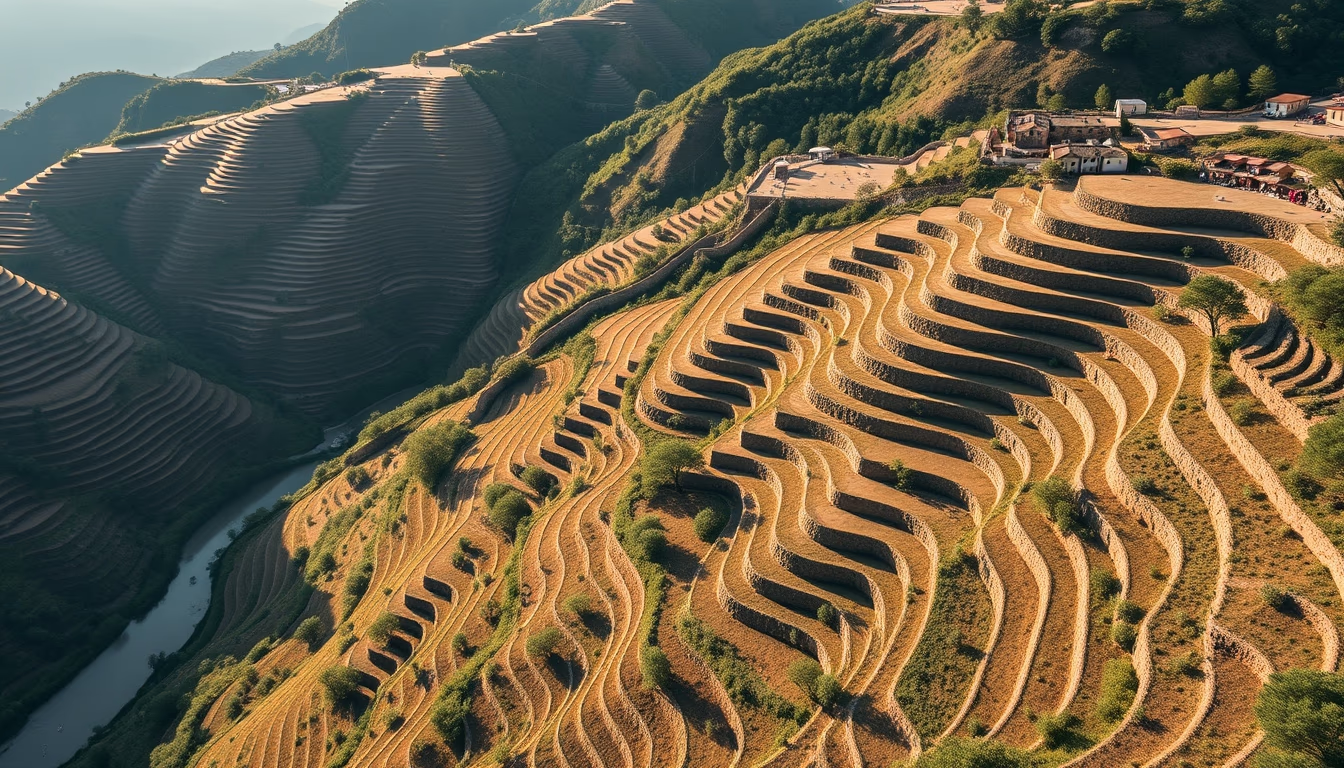
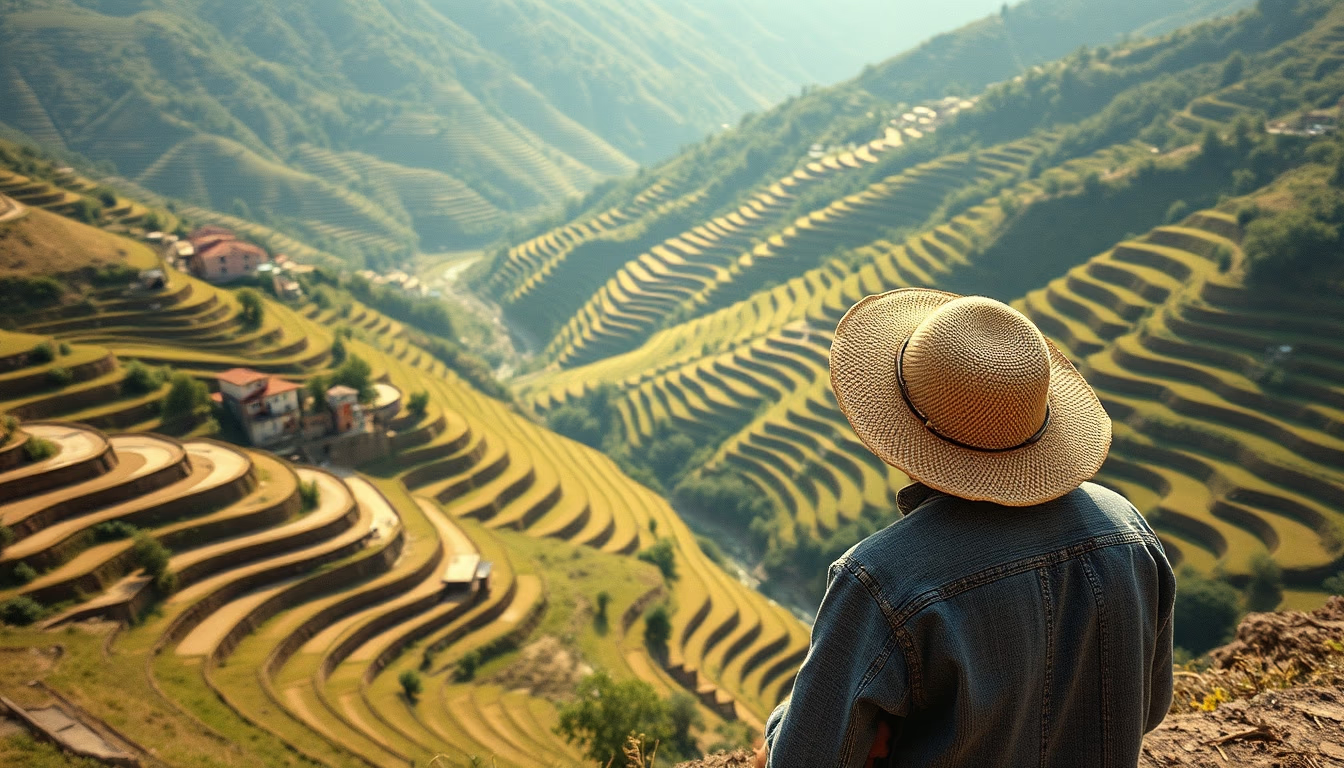
The Douro Valley terraces in Portugal are an iconic example of heroic viticulture on steep terrain, recognized as a UNESCO World Heritage site.
About this subject
The terraces of the Douro Valley are among the most stunning cultural landscapes in the world. Carved over centuries along the steep banks of the Douro River in northern Portugal, these terraces allow vine cultivation on slopes often exceeding 60% gradient. The Douro Demarcated Region was the first regulated wine appellation in the world, established in 1756 by the Marquis of Pombal to protect Port wine production. Today, terraces remain the backbone of local viticulture, blending traditional techniques with modern innovations.
Building and maintaining these terraces requires immense, specialized labor. Dry-stone walls made of schist, a characteristic local rock, support narrow cultivation platforms. Schist retains heat during the day and releases it at night, benefiting grape ripening. The Mediterranean microclimate, with hot, dry summers and harsh winters, combined with intense sun exposure, gives Douro wines, both fortified (Port) and still (Douro DOC), their complexity and concentration.
In 2001, UNESCO designated the Alto Douro Wine Region as a World Heritage site, emphasizing its continuous evolution as a living, productive landscape. Unlike static sites, Douro terraces are maintained and adapted by generations of vintners. Mechanization faces challenges due to the terrain, but innovations such as adapted small tractors and agricultural cable cars help sustain economic viability. Enotourism has grown exponentially, with visitors driving the national road EN222 or taking river cruises to admire the terraces and taste the wines.
Notably, the terrace system is not uniform: there are three main types. The "old terrace" (narrow steps with stone walls), the "wide terrace" (expanded in the 1970s to allow partial mechanization), and "vinha ao alto" (vertical planting without walls, resulting in high erosion risk but controlled). Each reflects different eras and needs. Despite the challenges, Douro's heroic viticulture produces world-renowned wines such as Vintage Port, Tawny, and Douro reds, which express the unique terroir of these schist slopes.
Frequently Asked Questions
Why are the Douro terraces considered heroic viticulture?
Heroic viticulture is defined by extreme conditions: very steep slopes (over 30%), high altitudes, small plots or micro-parcels. In the Douro, terraces exceed 60% gradient, requiring intense manual labor and special techniques for mechanization.
What grape varieties are grown on the Douro terraces?
Traditional Douro varieties include Touriga Nacional, Touriga Franca, Tinta Roriz (Tempranillo), Tinta Barroca, and Tinto Cão, among others. For Port wine, these grapes are often blended. For still wines, white varieties like Rabigato and Viosinho are also used.
What is the difference between old and modern Douro terraces?
Old terraces are narrow, with dry-stone walls following contours, built by hand. Modern ones, from the 1970s onward, were widened to allow small tractors, retaining walls but with greater width. The 'vinha ao alto' system plants vines in vertical rows without walls, a recent technique that reduces costs but accelerates erosion.
Direct URL
https://pub-c7d6a6ea828543ac903a74a341ccb2e1.r2.dev/imagens/douro-valley-terraces-isometric-flat-lay-fresh0.avifHow to credit
Include a visible link back to UtilizAí. Copy one of the snippets below:
<a href="https://xn--utiliza-eza.com/en/midia/imagens/douro-valley-terraces-isometric-flat-lay-fresh0">Douro valley terraces</a> by <a href="https://xn--utiliza-eza.com">UtilizAí</a>, licensed under <a href="https://creativecommons.org/licenses/by/4.0/">CC BY 4.0</a>.
[Douro valley terraces](https://xn--utiliza-eza.com/en/midia/imagens/douro-valley-terraces-isometric-flat-lay-fresh0) by [UtilizAí](https://xn--utiliza-eza.com), CC BY 4.0
License: CC-BY-4.0