Dna helix glowing blue
1344×768 · AVIF · CC BY 4.0
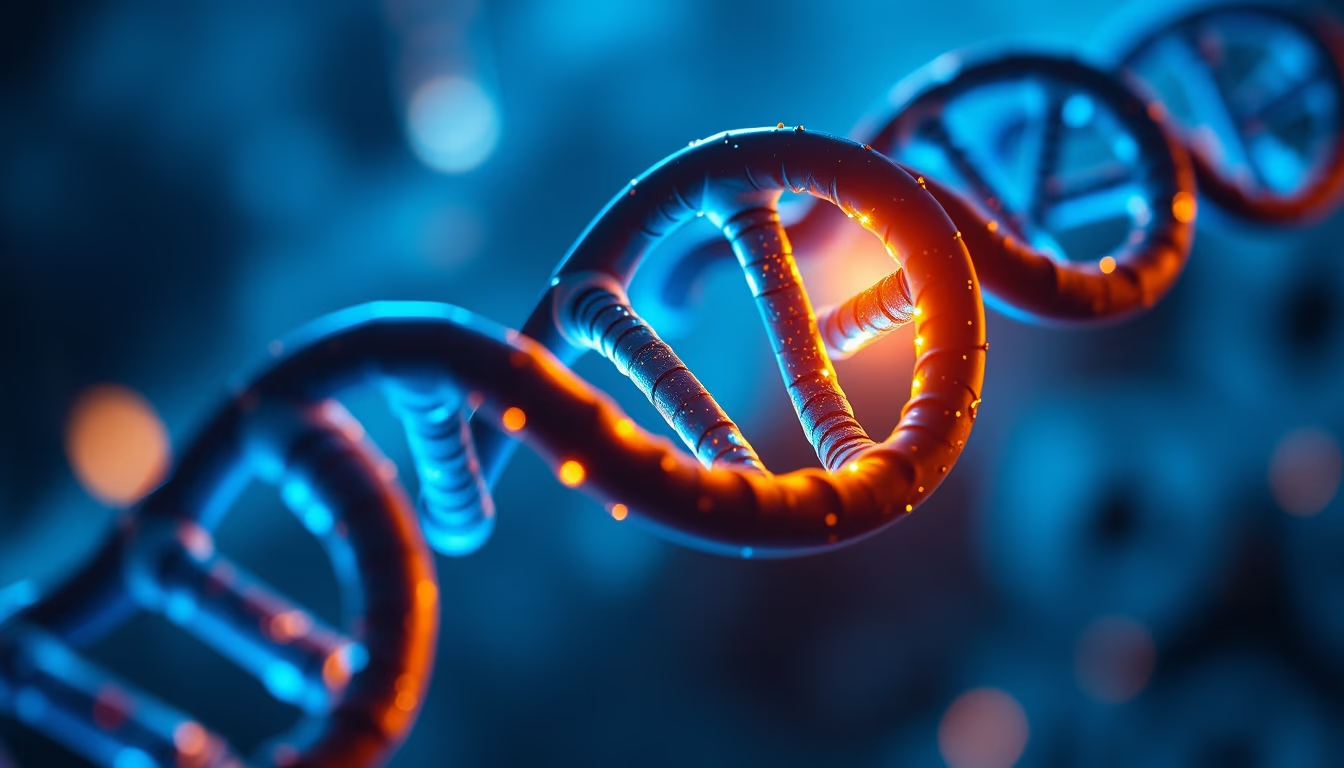
Glowing blue DNA double helix, the fundamental structure of life carrying the genetic code of all living organisms.
About this subject
The DNA double helix is one of the most important discoveries in biology, identified by James Watson and Francis Crick in 1953 based on X-ray diffraction data from Rosalind Franklin. This spiral staircase-like structure is composed of two nucleotide strands held together by hydrogen bonds between complementary bases adenine-thymine and cytosine-guanine. DNA is found in the nucleus of eukaryotic cells, as well as in mitochondria and chloroplasts, and its primary function is to store and transmit hereditary information.
Each DNA molecule contains genes that encode proteins and regulate cellular processes. The human genome, for example, has about 3 billion base pairs and approximately 20,000 genes. DNA replication is semiconservative, ensuring that each new cell receives a faithful copy of the genetic material. Mutations in this sequence can lead to diseases like cancer, but also drive evolution.
The bright blue image evokes fluorescence techniques used in laboratories to visualize DNA. Dyes like DAPI or Sybr Green emit blue light when bound to DNA under UV light, enabling microscopy studies. This approach is crucial in fields such as forensic genetics, disease diagnosis, and molecular biology.
Beyond its biological role, the DNA helix has become a cultural icon, representing science and life. Its elegant form inspires architecture, art, and even fashion. The double helix structure is so emblematic that it was patented by Watson and Crick, though the patent has expired. Synthetic DNA is now used in genetic engineering, such as producing recombinant insulin in bacteria.
Frequently Asked Questions
What is the DNA helix?
The DNA helix is the three-dimensional structure formed by two intertwined nucleotide strands that carry genetic information. It was discovered in 1953 by Watson and Crick, and each strand is composed of a sequence of nitrogenous bases (A, T, C, G).
Why does DNA appear bright blue in the image?
The bright blue is an artistic or scientific representation based on the use of fluorescent dyes like DAPI, which emit blue light when bound to DNA and excited by ultraviolet light. Fluorescence techniques are common in labs to visualize genetic material.
How important is DNA for life?
DNA contains the instructions for the development, functioning, and reproduction of all living organisms. It determines hereditary traits and controls protein synthesis. Mutations in DNA can cause diseases, but also enable species evolution.
Direct URL
https://pub-c7d6a6ea828543ac903a74a341ccb2e1.r2.dev/imagens/dna-helix-glowing-blue-cinematic-wide-shot-p4.avifHow to credit
Include a visible link back to UtilizAí. Copy one of the snippets below:
<a href="https://xn--utiliza-eza.com/en/midia/imagens/dna-helix-glowing-blue-cinematic-wide-shot-p4">Dna helix glowing blue</a> by <a href="https://xn--utiliza-eza.com">UtilizAí</a>, licensed under <a href="https://creativecommons.org/licenses/by/4.0/">CC BY 4.0</a>.
[Dna helix glowing blue](https://xn--utiliza-eza.com/en/midia/imagens/dna-helix-glowing-blue-cinematic-wide-shot-p4) by [UtilizAí](https://xn--utiliza-eza.com), CC BY 4.0
License: CC-BY-4.0