Dna double helix 3D render
1344×768 · AVIF · CC BY 4.0
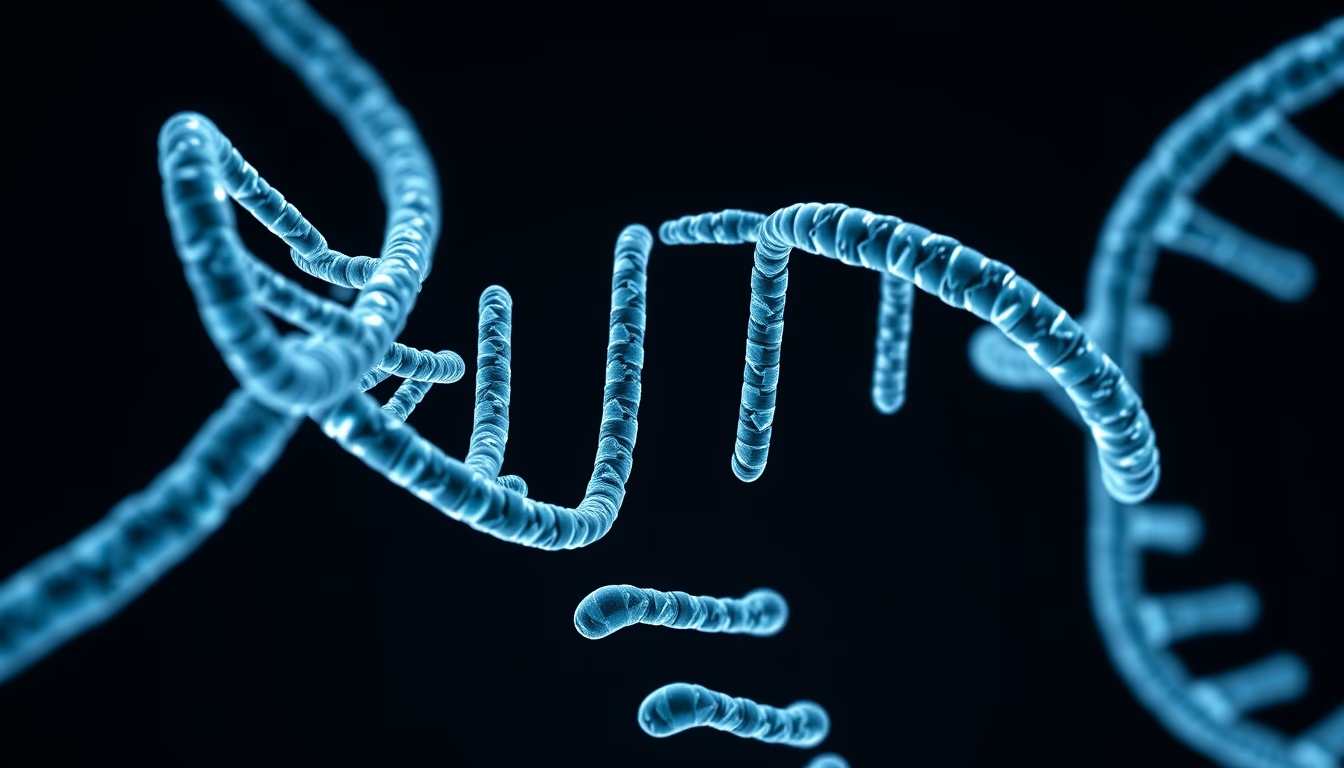
The DNA double helix is the molecular structure that stores the genetic code of all living beings, discovered in 1953 by Watson and Crick.
About this subject
The DNA double helix is one of the most important discoveries in modern biology. It was elucidated in 1953 by scientists James Watson and Francis Crick, based on X-ray diffraction data obtained by Rosalind Franklin and Maurice Wilkins. This structure consists of two nucleotide chains that wind around each other, forming a spiral staircase. Each rung is composed of nitrogenous base pairs: adenine (A) with thymine (T) and cytosine (C) with guanine (G). This complementarity is fundamental for DNA replication and the transmission of genetic information.
DNA is present in the nucleus of eukaryotic cells and also in organelles such as mitochondria and chloroplasts. In prokaryotic organisms, it is found in the cytoplasm, usually in a circular structure. The human genome contains approximately 3 billion base pairs, organized into 23 pairs of chromosomes. The complete sequence of the human genome was published in 2003 by the Human Genome Project, a milestone that revolutionized medicine and biology.
Beyond its role in storing information, DNA has unique physicochemical properties. Its stability is maintained by hydrogen bonds between bases and hydrophobic interactions between base stacks. The double helix can assume different conformations, such as A, B, and Z forms, with B being the most common under physiological conditions. Techniques such as PCR (polymerase chain reaction) and DNA sequencing allow amplification and reading of the genetic code, enabling diagnostics, paternity tests, and evolutionary studies.
Interestingly, DNA is not exclusive to current living beings. Fossils of extinct organisms, such as mammoths and Neanderthals, have had their DNA sequenced, revealing relationships and evolutionary histories. The double helix structure has also inspired fields like nanotechnology, where DNA molecules are used to build nanostructures and biological computers. Understanding DNA continues to expand frontiers in gene therapy, CRISPR gene editing, and synthetic biology.
Frequently Asked Questions
What is the DNA double helix?
It is the three-dimensional structure of DNA, composed of two nucleotide chains twisted into a spiral, joined by nitrogenous base pairs. It stores and transmits genetic information.
Who discovered the structure of DNA?
James Watson and Francis Crick in 1953, with crucial contributions from Rosalind Franklin and Maurice Wilkins, who provided X-ray diffraction data.
Why is DNA important for medicine?
DNA enables genetic diagnostics, paternity tests, gene therapy development, CRISPR gene editing, and studies of hereditary diseases and cancer.
Direct URL
https://pub-c7d6a6ea828543ac903a74a341ccb2e1.r2.dev/imagens/dna-double-helix-3d-render-studio-editorial-portrait-v3.avifHow to credit
Include a visible link back to UtilizAí. Copy one of the snippets below:
<a href="https://xn--utiliza-eza.com/en/midia/imagens/dna-double-helix-3d-render-studio-editorial-portrait-v3">Dna double helix 3D render</a> by <a href="https://xn--utiliza-eza.com">UtilizAí</a>, licensed under <a href="https://creativecommons.org/licenses/by/4.0/">CC BY 4.0</a>.
[Dna double helix 3D render](https://xn--utiliza-eza.com/en/midia/imagens/dna-double-helix-3d-render-studio-editorial-portrait-v3) by [UtilizAí](https://xn--utiliza-eza.com), CC BY 4.0
License: CC-BY-4.0