Didgeridoo aboriginal
1344×768 · AVIF · CC BY 4.0
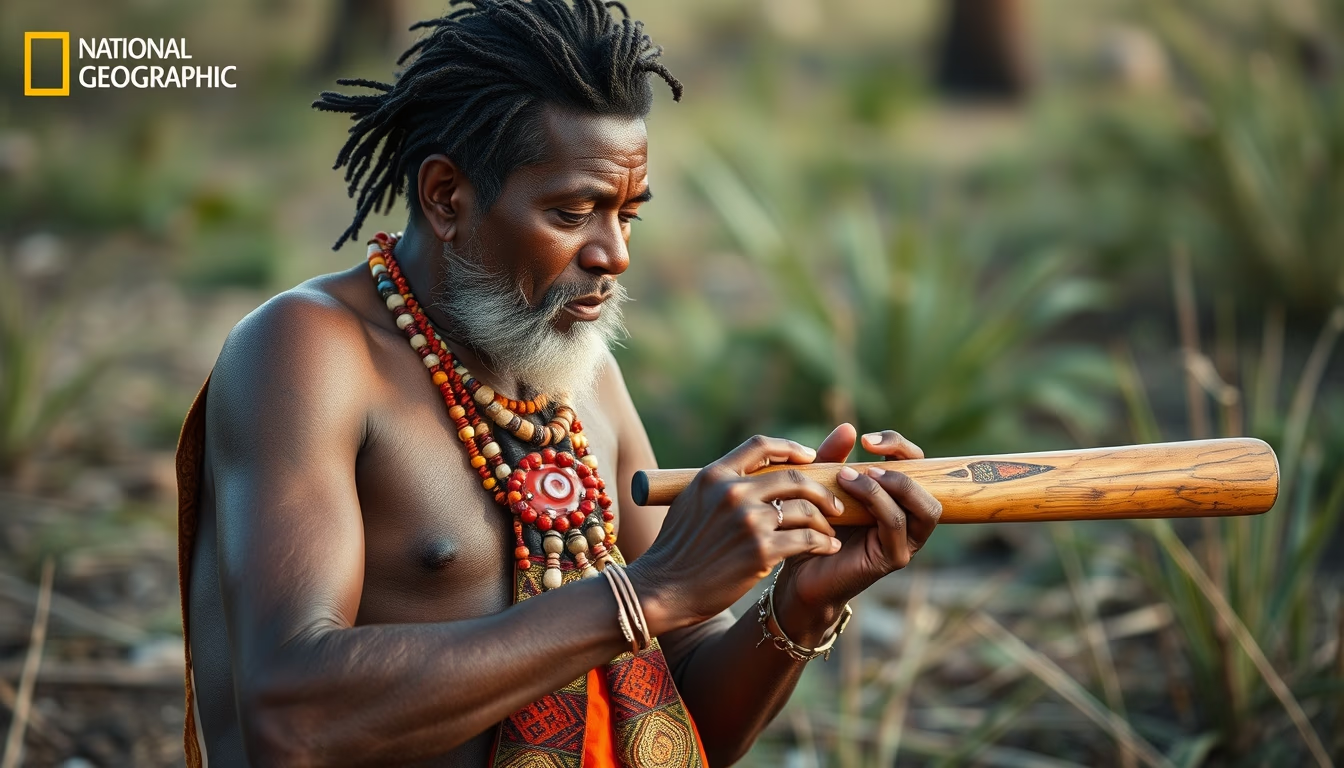
The didgeridoo, an Aboriginal Australian wind instrument, is one of the world's oldest, carved by nature from hollow eucalyptus trunks.
About this subject
The didgeridoo is an ancient wind instrument originating from the Aboriginal peoples of northern Australia, particularly in Arnhem Land. Traditionally crafted from eucalyptus trunks hollowed out by termites, its length ranges from 1 to 3 meters, producing a distinctive low, droning sound. Archaeological evidence suggests the didgeridoo may be over 1,500 years old, with rock art depictions pointing to even earlier use.
In Aboriginal culture, the didgeridoo is not merely a musical instrument but a spiritual and ceremonial tool. It accompanies traditional songlines that narrate Dreamtime creation stories and connect the player to the land and ancestors. Advanced techniques include circular breathing, enabling a continuous sound, and mimicking local wildlife sounds, such as kangaroos and birds. Historically, the didgeridoo was played exclusively by men, but today women also play, challenging cultural taboos.
The instrument gained global prominence in the 1960s when Western musicians like keyboardist Rick Wakeman and The Beatles incorporated it into their work. Today, the didgeridoo is featured in genres from world music to electronic, and is studied for its therapeutic benefits in improving respiratory health and reducing stress. Despite its popularity, authenticity and respect for Aboriginal traditions remain crucial, with cultural guidelines for non-Indigenous use.
Frequently Asked Questions
Is the didgeridoo the oldest instrument in the world?
No, although it is one of the oldest wind instruments still in use, at around 1,500 years or more. Prehistoric bone flutes, such as those found in Europe, are older, dating back 40,000 years.
Who can play the didgeridoo?
Traditionally, only Aboriginal men could play, but today people of all genders and backgrounds practice, respecting cultural traditions. Some communities still restrict female use in ceremonial contexts.
How is a traditional didgeridoo made?
It is made from a eucalyptus trunk naturally hollowed by termites. The craftsman cleans the interior, shapes the mouthpiece with beeswax, and decorates the exterior with traditional paintings using natural pigments like ochre.
Direct URL
https://pub-c7d6a6ea828543ac903a74a341ccb2e1.r2.dev/imagens/didgeridoo-aboriginal-national-geographic-style-p5.avifHow to credit
Include a visible link back to UtilizAí. Copy one of the snippets below:
<a href="https://xn--utiliza-eza.com/en/midia/imagens/didgeridoo-aboriginal-national-geographic-style-p5">Didgeridoo aboriginal</a> by <a href="https://xn--utiliza-eza.com">UtilizAí</a>, licensed under <a href="https://creativecommons.org/licenses/by/4.0/">CC BY 4.0</a>.
[Didgeridoo aboriginal](https://xn--utiliza-eza.com/en/midia/imagens/didgeridoo-aboriginal-national-geographic-style-p5) by [UtilizAí](https://xn--utiliza-eza.com), CC BY 4.0
License: CC-BY-4.0