Didgeridoo aboriginal
1344×768 · AVIF · CC BY 4.0
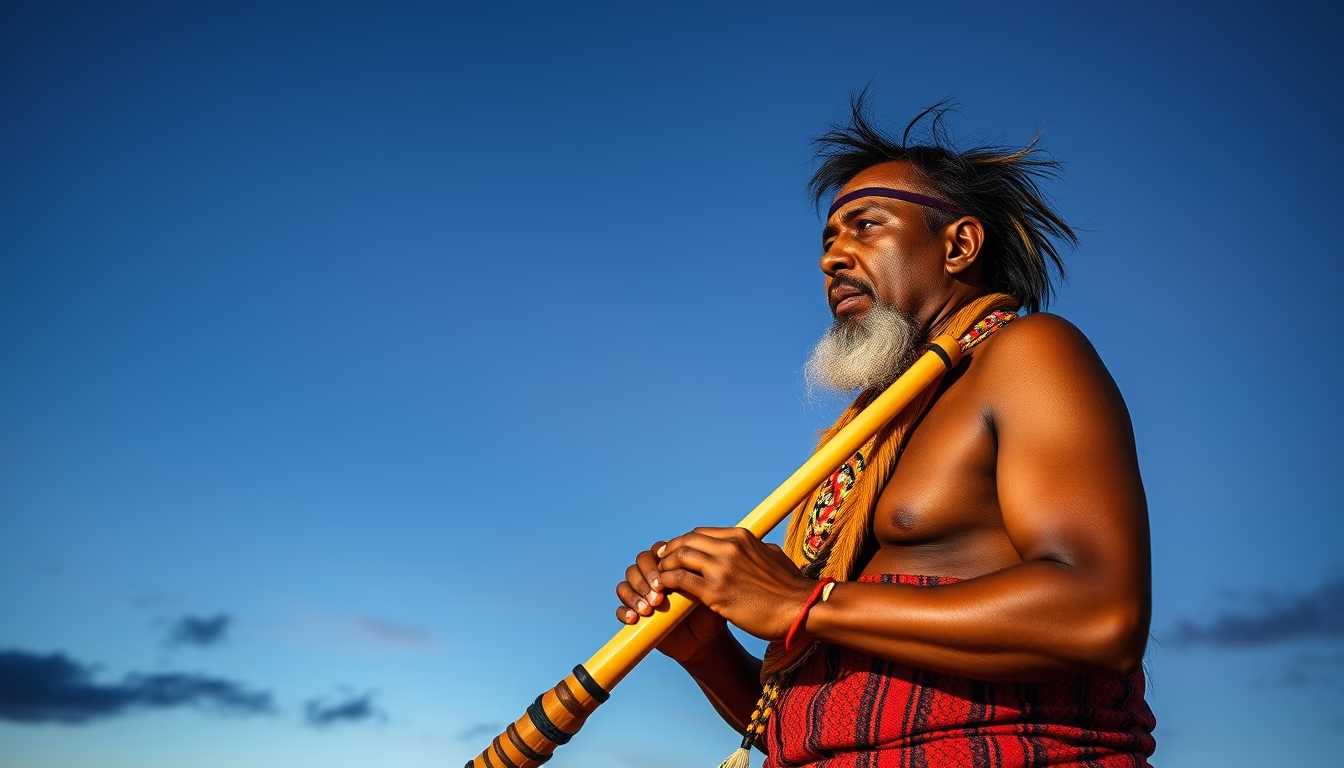
The didgeridoo is an ancient wind instrument of Aboriginal Australians, naturally carved from hollow eucalyptus trunks.
About this subject
The didgeridoo, also known as yidaki or mago, is one of the world's oldest musical instruments, with archaeological evidence dating back 1,500 to 2,000 years in northern Australia. Its origins are deeply rooted in Aboriginal culture, especially in Arnhem Land and Kimberley. Traditionally, the instrument is made from eucalyptus trunks naturally hollowed out by termites; artisans select already hollow trees, clean the interior, shape the mouthpiece with beeswax, and decorate the exterior with ritual paintings. The circular breathing technique allows the player to sustain a continuous drone for minutes, while the tongue and cheeks modulate deep tones and complex rhythms. The didgeridoo mimics natural sounds: frog croaks, kangaroo barks, or desert wind, accompanying songs and dances in Dreamtime ceremonies, the Aboriginal cosmology that recounts the creation of the world. Though now played globally, among Aboriginal peoples it remains a sacred instrument, often restricted to men in ritual contexts. Regional variations exist: the yirdaki is shorter and higher-pitched, while the mago is longer and deeper. Its popularity surged from the 1970s with artists like David Hudson and groups such as Yothu Yindi, bringing the didgeridoo sound to world stages, influencing new age music and film scores like 'Crocodile Dundee'.
Frequently Asked Questions
Is the didgeridoo exclusively male in Aboriginal culture?
Traditionally, the didgeridoo is a male instrument in many Aboriginal communities, especially in sacred ceremonies. However, women may play in non-ritual contexts, and restrictions vary among clans and regions.
How is a traditional didgeridoo made?
The process starts by selecting eucalyptus trunks already hollowed by termites. The craftsman cleans the interior with hand tools, shapes a mouthpiece with beeswax, and optionally paints the surface with natural pigments and dreamtime symbols.
What is the spiritual meaning of the didgeridoo?
For Aboriginal people, the didgeridoo connects the player to the land and ancestral Dreamtime. Its deep vibrating sound is considered the voice of nature, used in healing rituals, celebrations, and to tell creation stories.
Direct URL
https://pub-c7d6a6ea828543ac903a74a341ccb2e1.r2.dev/imagens/didgeridoo-aboriginal-long-exposure-p11.avifHow to credit
Include a visible link back to UtilizAí. Copy one of the snippets below:
<a href="https://xn--utiliza-eza.com/en/midia/imagens/didgeridoo-aboriginal-long-exposure-p11">Didgeridoo aboriginal</a> by <a href="https://xn--utiliza-eza.com">UtilizAí</a>, licensed under <a href="https://creativecommons.org/licenses/by/4.0/">CC BY 4.0</a>.
[Didgeridoo aboriginal](https://xn--utiliza-eza.com/en/midia/imagens/didgeridoo-aboriginal-long-exposure-p11) by [UtilizAí](https://xn--utiliza-eza.com), CC BY 4.0
License: CC-BY-4.0