Didgeridoo aboriginal
1344×768 · AVIF · CC BY 4.0
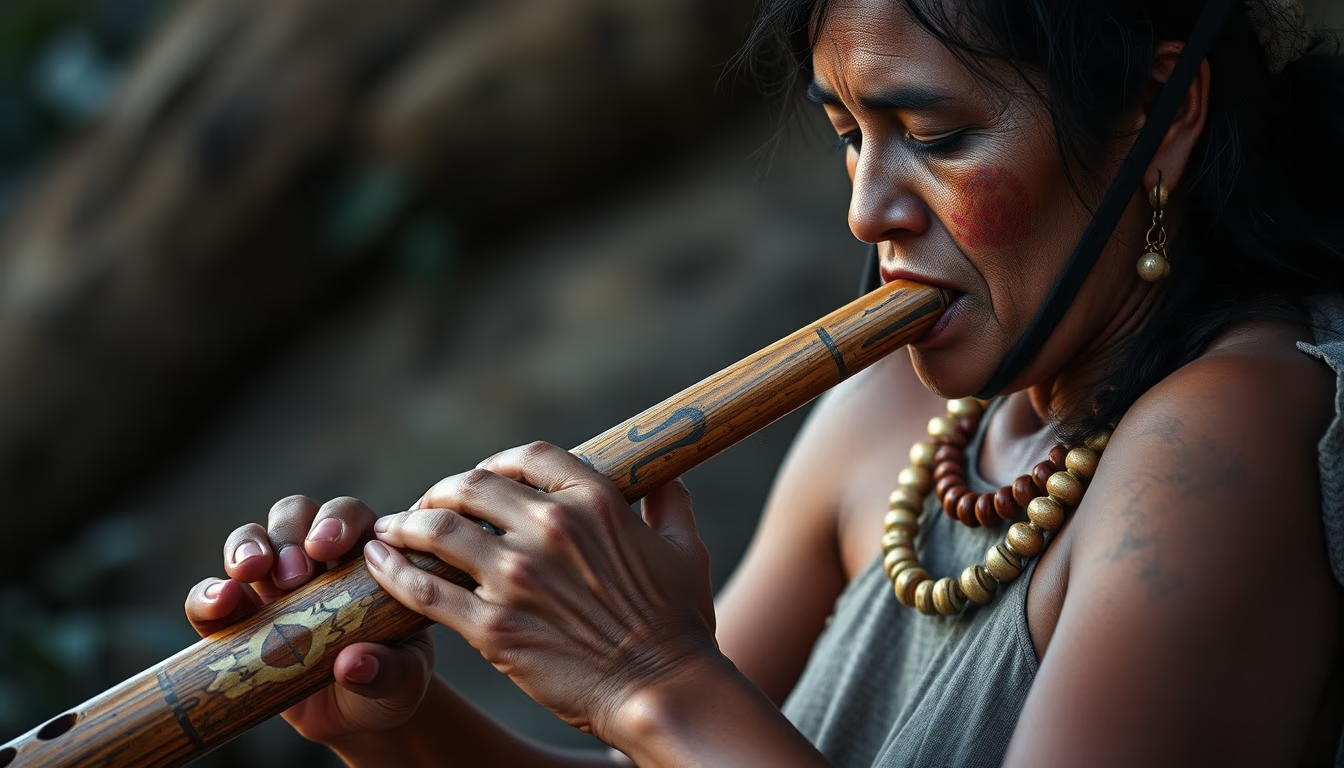
The didgeridoo is an ancient wind instrument of Aboriginal Australians, made from hollow eucalyptus trunks.
About this subject
The didgeridoo, also known as yidaki in parts of northern Australia, is a wind instrument traditionally used by Aboriginal peoples. Its origins date back thousands of years, making it one of the oldest musical instruments in the world. Typically made from hollow eucalyptus trunks carved out by termites, the didgeridoo is handcrafted and shaped, ranging from 1 to 3 meters in length. The deep, resonant sound is produced by the vibration of the player's lips, combined with circular breathing, allowing a continuous drone without pauses.
In Aboriginal culture, the didgeridoo is not just a musical instrument but a ceremonial and spiritual object. Its music accompanies rituals, songs, and dances, representing stories from the Dreamtime, the Aboriginal cosmology. Each region has variations in shape, decoration, and playing technique. The didgeridoo is often painted with traditional symbols that convey ancestral narratives.
Today, the didgeridoo has gained global popularity, used in contemporary music styles such as world music, jazz, and even rock. However, cultural appropriation is a concern, and many Aboriginal artists advocate for respect and authenticity in its practice. Preserving traditional crafting and playing techniques is vital to maintaining this cultural heritage.
Frequently Asked Questions
How is the didgeridoo traditionally made?
The traditional didgeridoo is made from eucalyptus branches that have been hollowed out by termites. The craftsman cleans the interior, shapes the exterior, and applies a beeswax mouthpiece for sealing and comfort.
What is circular breathing used in didgeridoo playing?
Circular breathing is a technique where the player inhales through the nose while pushing air out from the cheeks via the mouth, maintaining a continuous airflow. This allows playing the didgeridoo without pauses for extended periods.
What is the cultural significance of the didgeridoo for Aboriginal people?
The didgeridoo is a sacred instrument representing the connection to the land and ancestors. It is used in ceremonies to tell Dreamtime stories, for healing, and to accompany ritual songs and dances.
Direct URL
https://pub-c7d6a6ea828543ac903a74a341ccb2e1.r2.dev/imagens/didgeridoo-aboriginal-film-grain-authentic-p8.avifHow to credit
Include a visible link back to UtilizAí. Copy one of the snippets below:
<a href="https://xn--utiliza-eza.com/en/midia/imagens/didgeridoo-aboriginal-film-grain-authentic-p8">Didgeridoo aboriginal</a> by <a href="https://xn--utiliza-eza.com">UtilizAí</a>, licensed under <a href="https://creativecommons.org/licenses/by/4.0/">CC BY 4.0</a>.
[Didgeridoo aboriginal](https://xn--utiliza-eza.com/en/midia/imagens/didgeridoo-aboriginal-film-grain-authentic-p8) by [UtilizAí](https://xn--utiliza-eza.com), CC BY 4.0
License: CC-BY-4.0