Dead sea floating
1344×768 · AVIF · CC BY 4.0
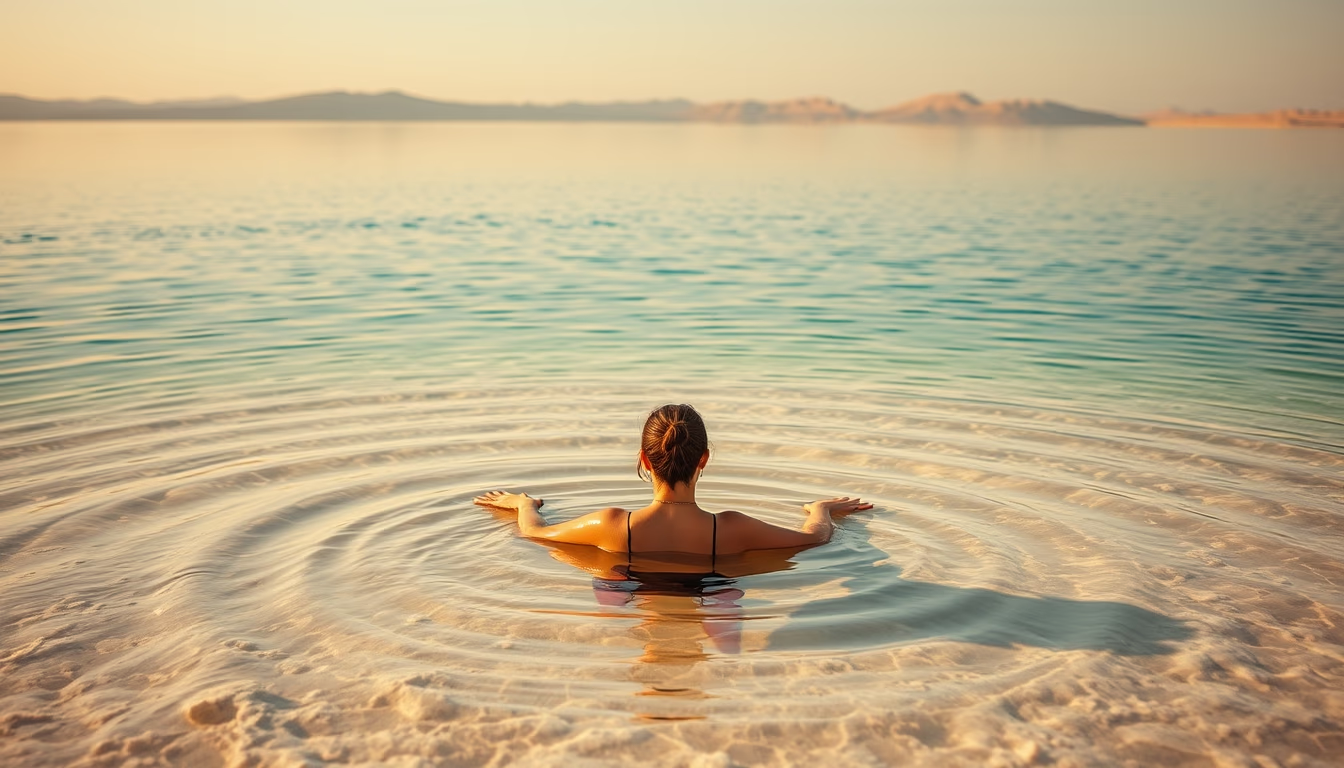
Floating in the Dead Sea is a unique experience, made possible by its extreme salinity that keeps bodies effortlessly buoyant.
About this subject
The Dead Sea is a hypersaline lake located in the Jordan Rift Valley, bordering Israel, Jordan, and the West Bank. With a salinity of about 34.2% (roughly 9.6 times saltier than the ocean), it is one of the saltiest bodies of water in the world. This extreme concentration of minerals, including magnesium chloride, sodium, and potassium, makes it impossible for most aquatic life to survive, hence the name "Dead Sea." The water's high density allows bathers to float effortlessly, a global tourist attraction since the mid-20th century.
The Dead Sea region is also one of the lowest points on Earth, with its surface approximately 430 meters (1,411 feet) below sea level. This unique environment draws visitors seeking therapeutic benefits from the mineral-rich waters, particularly for skin conditions like psoriasis. The black mud found along the shores, loaded with minerals, is used in spa treatments. Additionally, the higher atmospheric pressure and elevated oxygen levels in the area are believed to aid respiratory health.
However, the Dead Sea faces severe environmental challenges. Since the 1960s, the water level has been dropping at a rate of about 1 meter per year, primarily due to diversion of the Jordan River for agriculture and domestic use, as well as mineral extraction by industries. This has led to thousands of sinkholes forming along the shoreline, posing risks to infrastructure and tourists. Projects like the Red Sea-Dead Sea Water Conveyance have been proposed to stabilize the level but face political and financial hurdles.
Interestingly, the Dead Sea is one of the world's oldest health tourism destinations. As early as the 1st century BC, Cleopatra allegedly obtained exclusive rights to its minerals. Today, luxury resorts along the coast offer easy access to floating, but caution is advised: the high salinity can irritate eyes and open wounds, and it is recommended not to submerge your head or swallow the water. Despite environmental changes, the Dead Sea remains a fascinating destination blending science, history, and geography.
Frequently Asked Questions
Why do people float in the Dead Sea?
The high salinity (about 34%) makes the water extremely dense, so the human body is naturally buoyant and floats without effort. This is due to the high concentration of dissolved salts.
Is the Dead Sea actually dying?
Yes, the water level has been dropping rapidly since the 1960s, about 1 meter per year, due to diversion of the Jordan River and mineral extraction. This causes sinkholes and shrinking of the lake, though conservation projects are being discussed.
What precautions should be taken when entering the Dead Sea?
Avoid diving or swallowing the water, as the salt can severely irritate eyes and mucous membranes. Do not enter with open cuts. Wear water shoes to protect feet from sharp salt crystals. Rinse off with fresh water after swimming.
Direct URL
https://pub-c7d6a6ea828543ac903a74a341ccb2e1.r2.dev/imagens/dead-sea-floating-travel-photography-p11.avifHow to credit
Include a visible link back to UtilizAí. Copy one of the snippets below:
<a href="https://xn--utiliza-eza.com/en/midia/imagens/dead-sea-floating-travel-photography-p11">Dead sea floating</a> by <a href="https://xn--utiliza-eza.com">UtilizAí</a>, licensed under <a href="https://creativecommons.org/licenses/by/4.0/">CC BY 4.0</a>.
[Dead sea floating](https://xn--utiliza-eza.com/en/midia/imagens/dead-sea-floating-travel-photography-p11) by [UtilizAí](https://xn--utiliza-eza.com), CC BY 4.0
License: CC-BY-4.0