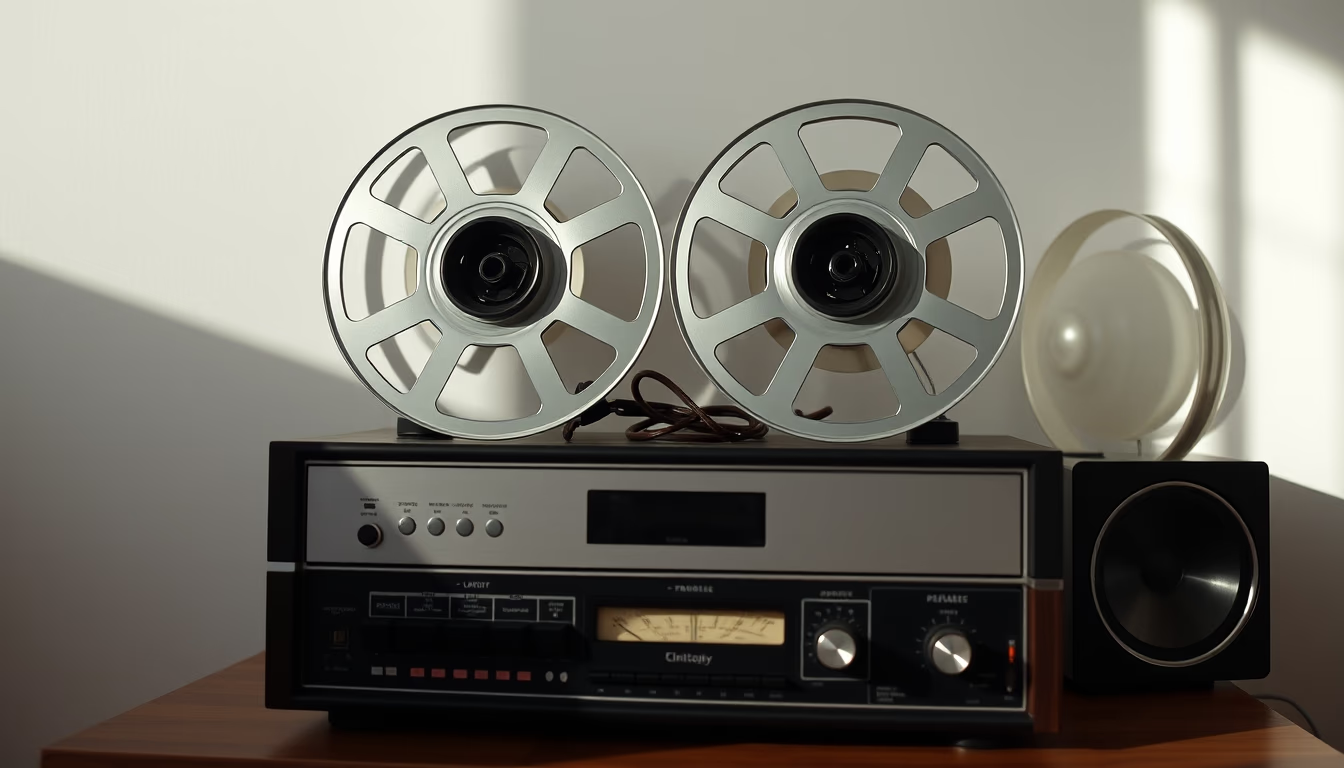
Dat tape recorder
1344×768 · AVIF · CC BY 4.0

The DAT tape recorder, or Digital Audio Tape, was a digital recording format launched by Sony in 1987, revolutionizing music production and radio broadcasting.
About this subject
The DAT (Digital Audio Tape) is a magnetic tape format developed by Sony for high-fidelity digital audio recording. Introduced in 1987, it used rotating helical scan heads similar to VCRs to read and write data on compact cassette tapes. It offered 16-bit resolution with sampling rates of 44.1 or 48 kHz, surpassing analog formats of the time, and could record up to four hours continuously.
Professionally, DAT became a standard in mastering studios, radio stations, and television and film production. It was used as a digital master medium, replacing analog tapes in editing and mixing workflows. Many iconic albums from the 1990s were mastered on DAT, ensuring a high-quality digital copy before CD pressing.
Despite its professional success, DAT never gained widespread consumer adoption due to high equipment costs and competition from recordable CDs and later hard-disk recording. By the 2000s, the format declined, gradually replaced by file-based digital solutions. However, DAT left a legacy in standardizing high-resolution digital audio and influencing compression technologies like MP3.
Interestingly, DAT tapes were also adapted for digital data storage (DDS format), widely used for computer backups in the 1990s and 2000s. This use prolonged the format's life well beyond its decline in the audio market.
Frequently Asked Questions
What is a DAT tape recorder used for?
DAT tape recorders were used to record and play back digital audio with high fidelity. Professionals in studios, radio, and TV employed them as mastering media and for broadcast recording, before hard-disk recording became common.
What is the audio quality of DAT?
DAT offered 16-bit digital audio at sampling rates of 44.1 kHz or 48 kHz, providing quality equal to or better than CD. Later models supported up to 96 kHz for higher resolution.
Why did DAT disappear from the market?
DAT declined due to high equipment costs, lack of consumer market acceptance, and the rise of more practical alternatives like CD-R, direct hard-disk recording, and file-based formats.
Direct URL
https://pub-c7d6a6ea828543ac903a74a341ccb2e1.r2.dev/imagens/dat-tape-recorder-rembrandt-lighting-dramatic-shadows-fresh8.avifHow to credit
Include a visible link back to UtilizAí. Copy one of the snippets below:
<a href="https://xn--utiliza-eza.com/en/midia/imagens/dat-tape-recorder-rembrandt-lighting-dramatic-shadows-fresh8">Dat tape recorder</a> by <a href="https://xn--utiliza-eza.com">UtilizAí</a>, licensed under <a href="https://creativecommons.org/licenses/by/4.0/">CC BY 4.0</a>.
[Dat tape recorder](https://xn--utiliza-eza.com/en/midia/imagens/dat-tape-recorder-rembrandt-lighting-dramatic-shadows-fresh8) by [UtilizAí](https://xn--utiliza-eza.com), CC BY 4.0
License: CC-BY-4.0