Dat tape recorder
1344×768 · AVIF · CC BY 4.0
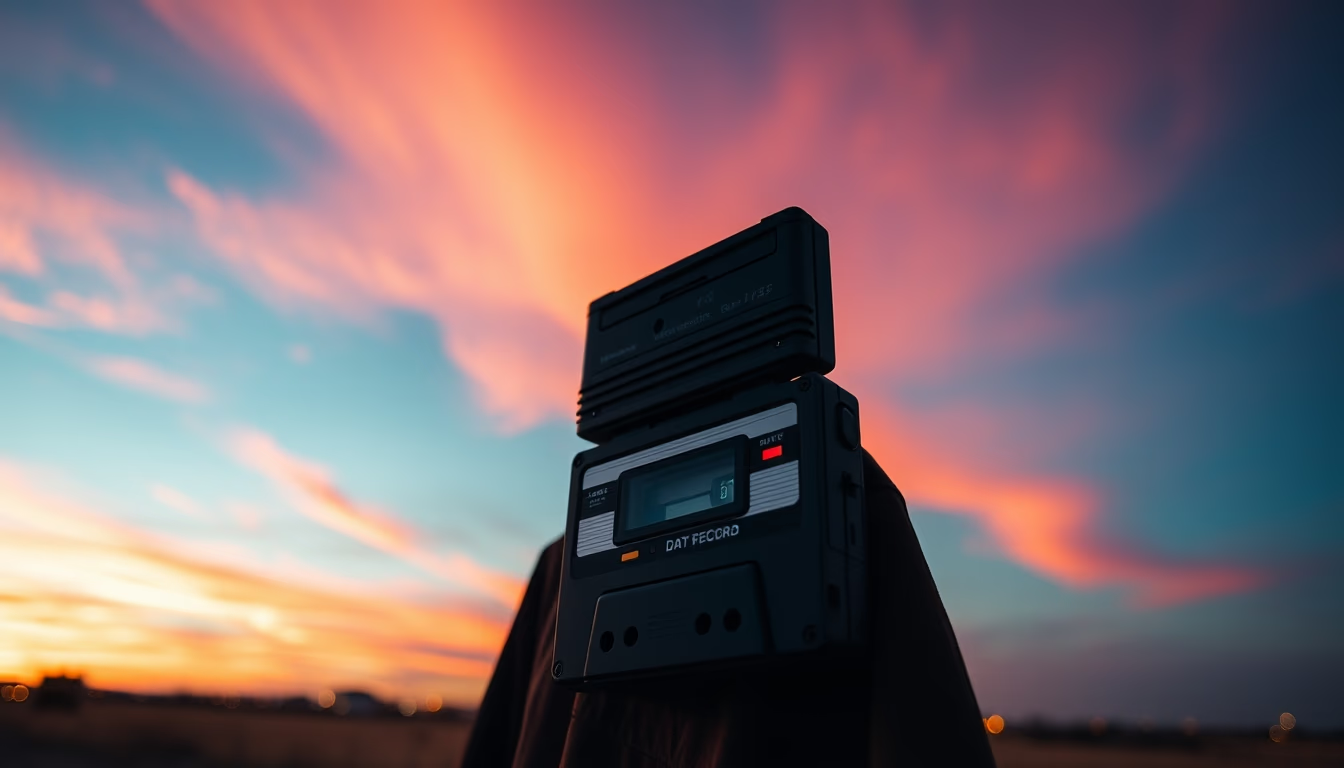
The DAT (Digital Audio Tape) recorder revolutionized professional audio recording in the 1990s with digital quality and compact size.
About this subject
The DAT (Digital Audio Tape) recorder is a digital magnetic tape format developed by Sony and Philips in the late 1980s. It was designed to replace analog cassette tapes in the professional audio market, offering digital recording and playback with quality comparable to CDs. The system uses a 3.81 mm wide cassette tape with helical scan recording, allowing high data density. It was common in recording studios, radio stations, and music production settings during the 1990s due to its portability and fidelity.
Technically, DAT operates at sampling rates of 44.1 kHz or 48 kHz and 16-bit resolution, resulting in a flat frequency response from 20 Hz to 20 kHz and a dynamic range exceeding 90 dB. Unlike analog tapes, DAT does not suffer generational degradation in copies because the data is digital. Moreover, the compact tape (smaller than a standard cassette) enabled portable recorders much smaller than reel-to-reel decks, facilitating field recordings. Despite its initial success, the format faced competition from alternatives like CD-R, hard drives, and later flash-based media.
The decline of DAT began in the late 1990s as hard disk recorders and computer-based systems became more affordable. Many studios migrated to non-linear solutions, rendering DAT obsolete. However, it is still valued by vintage audio enthusiasts and some archivists, as many important album masters were originally recorded on DAT. Interestingly, DAT tape was used in non-musical applications, such as computer data storage (DDS format) and even some medical equipment. Today, functional DAT recorders are rare and collectible, with parts and maintenance increasingly scarce.
Frequently Asked Questions
What does DAT stand for?
DAT stands for Digital Audio Tape. It is a digital magnetic tape format developed by Sony and Philips.
What is the difference between a DAT recorder and a standard cassette recorder?
The DAT records digitally, whereas standard cassette recorders are analog. DAT offers superior audio quality, no tape hiss, and no generation loss when copying.
Can you still buy DAT tapes today?
Yes, but they are becoming rare. Some specialized stores and online sites still sell sealed DAT tapes, though production has been discontinued by most manufacturers.
Direct URL
https://pub-c7d6a6ea828543ac903a74a341ccb2e1.r2.dev/imagens/dat-tape-recorder-long-exposure-fresh4.avifHow to credit
Include a visible link back to UtilizAí. Copy one of the snippets below:
<a href="https://xn--utiliza-eza.com/en/midia/imagens/dat-tape-recorder-long-exposure-fresh4">Dat tape recorder</a> by <a href="https://xn--utiliza-eza.com">UtilizAí</a>, licensed under <a href="https://creativecommons.org/licenses/by/4.0/">CC BY 4.0</a>.
[Dat tape recorder](https://xn--utiliza-eza.com/en/midia/imagens/dat-tape-recorder-long-exposure-fresh4) by [UtilizAí](https://xn--utiliza-eza.com), CC BY 4.0
License: CC-BY-4.0