Curry color south indian
1344×768 · AVIF · CC BY 4.0
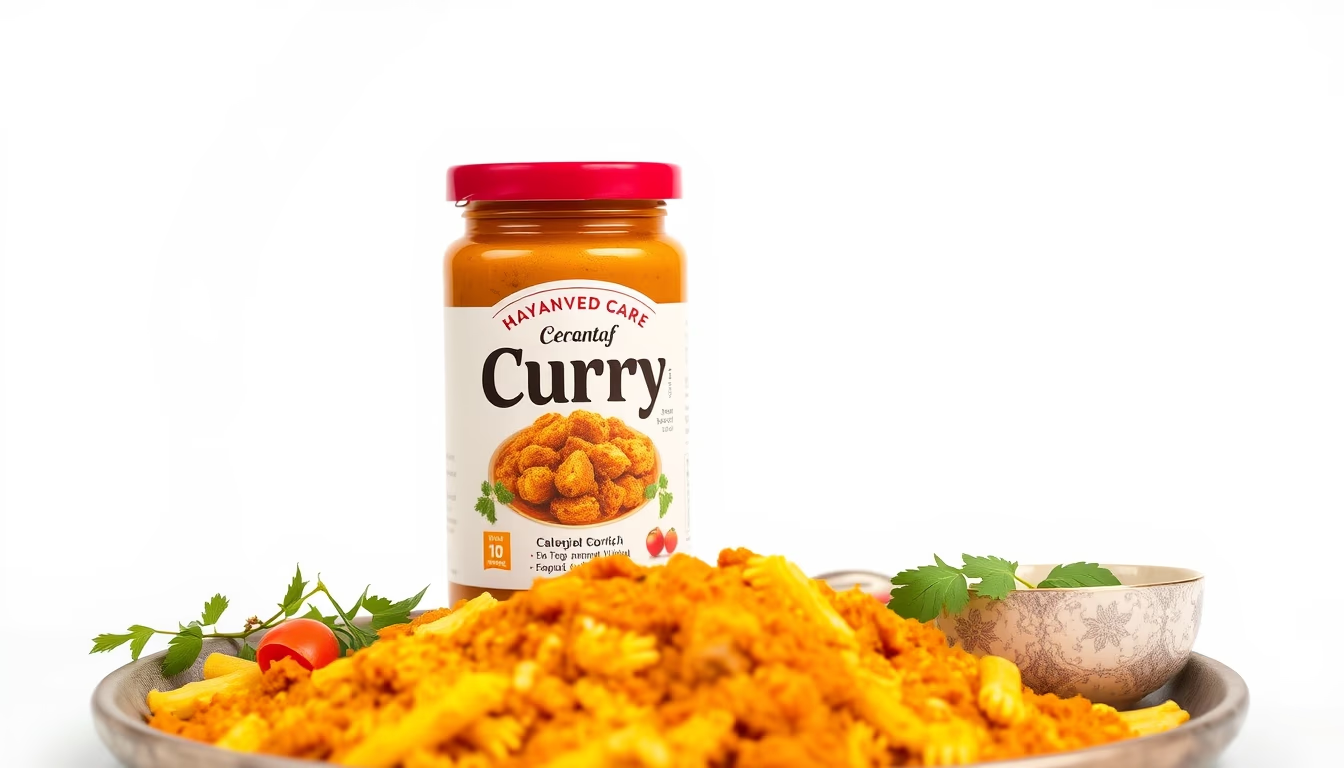
South Indian curry is known for its vibrant color, resulting from a blend of spices like turmeric, red chili, and coriander.
About this subject
South Indian curry is a broad term covering various cooked dishes from the states of Tamil Nadu, Kerala, Karnataka, Andhra Pradesh, and Telangana. Unlike the often creamy northern Indian curries, these are thinner, lightly tangy (with tamarind or lime), and flavored with curry leaves, mustard seeds, and coconut. A typical base starts with a tadka of oil, mustard, cumin, and curry leaves, followed by onion, ginger, garlic, and ground spices.
The vibrant color of South Indian curry comes mainly from turmeric (rich yellow) and red chili powder or whole chilies (orange to red). Depending on the region, ingredients like ripe tomato, beetroot, spinach, or coconut milk also influence the final hue. For instance, sambar, a lentil stew, has an yellow-orange color, while Kerala's avial includes coconut and green vegetables, resulting in a pale greenish tone.
Beyond visual appeal, color is linked to freshness and ingredient quality. In traditional households, turmeric is valued for its anti-inflammatory and digestive properties, while red chili acts as a natural preservative in warm climates. Each curry variety tells a story of spice trade: Malabar black pepper, mountain cardamom, and coastal coconut. The color harmony on the plate reflects a balance of flavors, spicy, sour, salty, and slightly sweet.
Interestingly, the color of a South Indian curry can indicate its complexity. Experienced cooks adjust spice ratios not only for taste but to achieve specific shades. For example, kootu, a vegetable and lentil curry, uses freshly ground pepper, resulting in a brownish tone. Rasam, a thin soup, is translucent and lightly reddish thanks to tomato and black pepper. This chromatic diversity is a hallmark of South Indian cuisine.
Frequently Asked Questions
What gives South Indian curry its yellow color?
The characteristic yellow color comes from turmeric, a ground rhizome widely used in Indian cooking for both flavor and color.
What is the difference between South and North Indian curry?
South Indian curry is typically thinner, slightly tangy, and uses coconut, curry leaves, and tamarind. North Indian curry is often thicker, with dairy like cream and yogurt, and spices such as garam masala.
Is South Indian curry always spicy?
Not necessarily. Red chili is common, but quantity varies by region and recipe. Many dishes can be mild or have heat balanced with coconut and tamarind.
Direct URL
https://pub-c7d6a6ea828543ac903a74a341ccb2e1.r2.dev/imagens/curry-color-south-indian-commercial-product-photography-p5.avifHow to credit
Include a visible link back to UtilizAí. Copy one of the snippets below:
<a href="https://xn--utiliza-eza.com/en/midia/imagens/curry-color-south-indian-commercial-product-photography-p5">Curry color south indian</a> by <a href="https://xn--utiliza-eza.com">UtilizAí</a>, licensed under <a href="https://creativecommons.org/licenses/by/4.0/">CC BY 4.0</a>.
[Curry color south indian](https://xn--utiliza-eza.com/en/midia/imagens/curry-color-south-indian-commercial-product-photography-p5) by [UtilizAí](https://xn--utiliza-eza.com), CC BY 4.0
License: CC-BY-4.0