Crystal formation amethyst
1344×768 · AVIF · CC BY 4.0
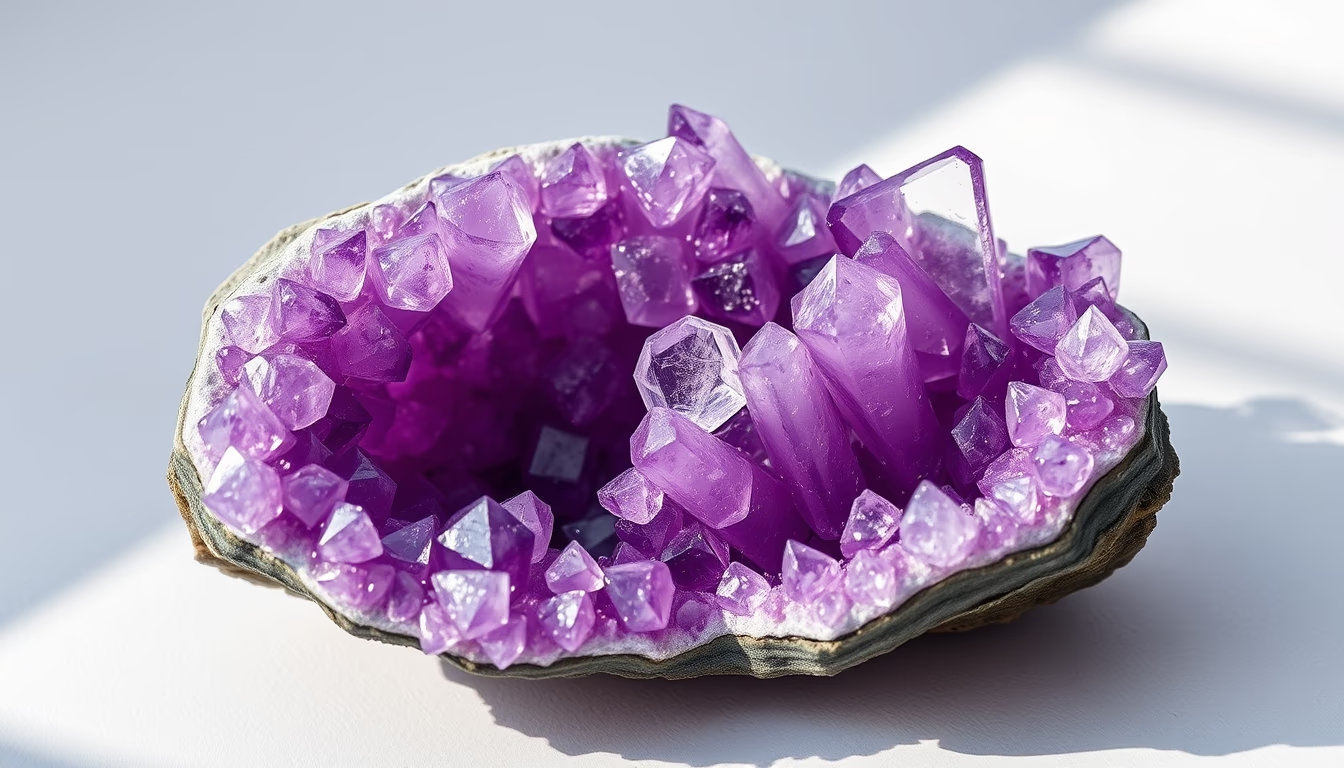
Amethyst crystals form in volcanic rock cavities over millions of years, blending beauty and geology.
About this subject
Amethyst is a violet variety of quartz, whose characteristic color comes from iron and aluminum impurities in its crystal structure, along with natural radiation exposure. It forms in geodes, cavities within volcanic or sedimentary rocks, where silica-rich solutions slowly deposit over thousands to millions of years. Crystals grow from the inner walls of the geode, pointing inward, and can reach impressive sizes, such as the famous amethyst geodes from Rio Grande do Sul, Brazil, which can be meters in diameter.
Brazil is one of the world's largest producers of amethyst, notably from the region of Ametista do Sul in Rio Grande do Sul and the municipality of Marabá in Pará. Brazilian deposits are known for high-quality crystals with intense coloration. Other significant deposits are found in Uruguay, Zambia, and Madagascar. Amethyst is valued in jewelry and mineral collecting, and its hardness of 7 on the Mohs scale makes it suitable for rings, necklaces, and other adornments.
Historically, amethyst was used by ancient civilizations such as the Egyptians, Greeks, and Romans, who believed the stone protected against drunkenness and brought mental clarity. The name comes from the Greek "amethystos," meaning "not intoxicated." In the Middle Ages, it was considered a symbol of royalty and power, often used in crowns and noble jewelry. Today, besides its aesthetic value, amethyst is studied by geologists to understand crystallization processes and hydrothermal conditions.
Each amethyst crystal exhibits a hexagonal prismatic habit, terminated by pyramids, and may show alternating color zones, creating unique patterns. Prolonged exposure to intense sunlight can fade the color, so it is recommended to avoid extended exposure. The formation of amethyst geodes is associated with the slow cooling of basaltic lavas, such as those in the Paraná Basin during the Cretaceous period, about 130 million years ago.
Frequently Asked Questions
What causes the violet color of amethyst?
The violet color is caused by iron and aluminum impurities in the quartz structure, combined with natural radiation exposure over time.
Where are the largest amethyst geodes in the world found?
The largest amethyst geodes are found in Brazil, especially in Rio Grande do Sul, such as in the Ametista do Sul region, and also in Uruguay.
Can amethyst lose its color over time?
Yes, prolonged exposure to intense sunlight can fade the color of amethyst. It is recommended to avoid leaving it exposed to direct sunlight for long periods.
Direct URL
https://pub-c7d6a6ea828543ac903a74a341ccb2e1.r2.dev/imagens/crystal-formation-amethyst-magazine-editorial.avifHow to credit
Include a visible link back to UtilizAí. Copy one of the snippets below:
<a href="https://xn--utiliza-eza.com/en/midia/imagens/crystal-formation-amethyst-magazine-editorial">Crystal formation amethyst</a> by <a href="https://xn--utiliza-eza.com">UtilizAí</a>, licensed under <a href="https://creativecommons.org/licenses/by/4.0/">CC BY 4.0</a>.
[Crystal formation amethyst](https://xn--utiliza-eza.com/en/midia/imagens/crystal-formation-amethyst-magazine-editorial) by [UtilizAí](https://xn--utiliza-eza.com), CC BY 4.0
License: CC-BY-4.0