Crystal formation amethyst
1344×768 · AVIF · CC BY 4.0
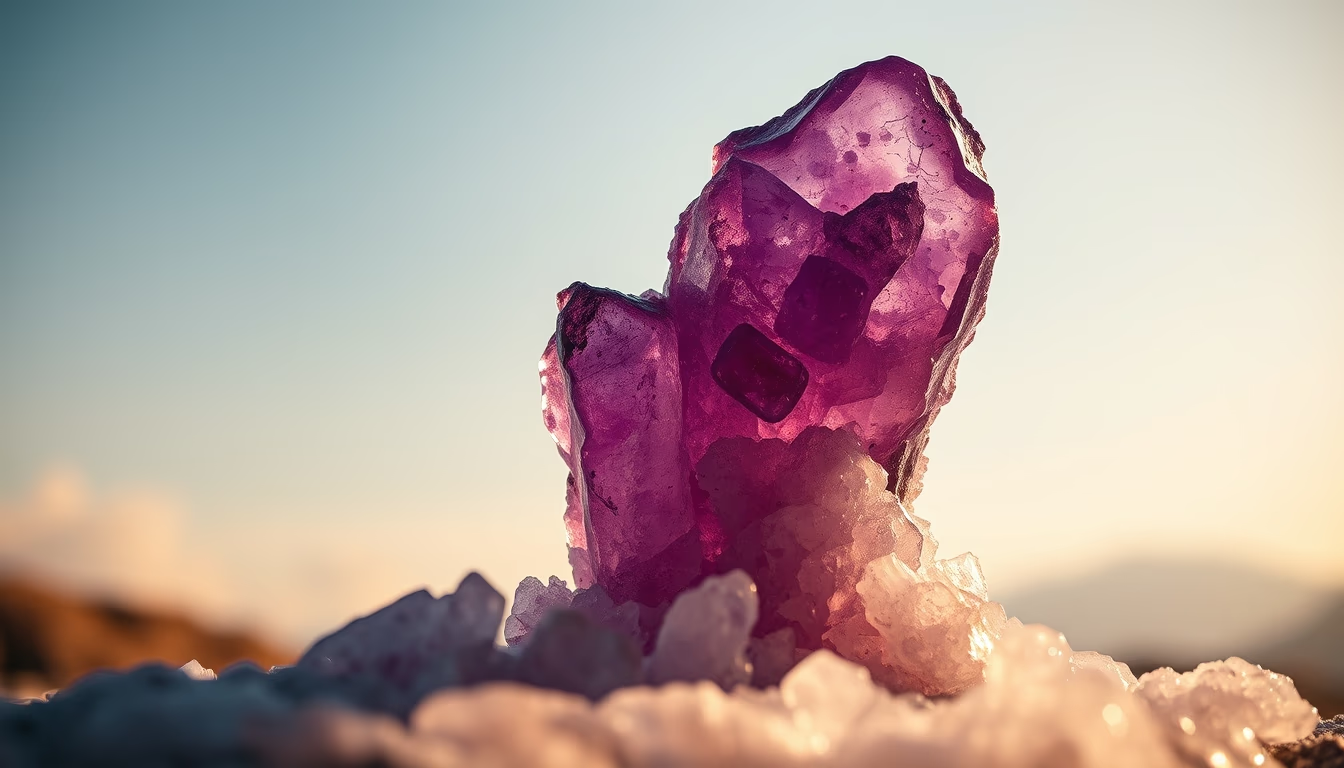
Amethyst quartz is a violet variety of silicon dioxide, formed in geodes over millions of years by radiation and iron impurities.
About this subject
Amethyst is a variety of quartz (SiO₂) that owes its characteristic violet color to the presence of iron ions (Fe³⁺) and exposure to natural radiation over millions of years. It typically forms in cavities within volcanic rocks or pegmatites, where silica-rich solutions slowly crystallize, creating geodes lined with prismatic crystals. Major deposits are found in Brazil (Rio Grande do Sul, Minas Gerais, Bahia), Uruguay, Zambia, and Madagascar. Amethyst color ranges from pale lilac to deep violet, with darker specimens and those containing rutile inclusions being especially prized.
Historically, amethyst was considered a high-value gemstone, comparable to ruby and emerald, until large deposits were discovered in Brazil in the 19th century. In ancient Greece, the stone was believed to prevent intoxication, its name derives from the Greek "amethystos", meaning "not drunk". The mineral is widely used in jewelry as a faceted gem, as well as in decorative objects like carvings and spheres. In Brazil, the town of Ametista do Sul (RS) is famous for its giant geodes, some over 3 meters tall, displayed in museums and private collections.
Technically, amethyst has a hardness of 7 on the Mohs scale, making it scratch-resistant but prone to fracture under impact. Its color can fade with prolonged exposure to direct sunlight due to photodegradation of color centers. Heat treatment is used to lighten or darken the shade, and artificial irradiation can intensify color. Synthetic amethyst, produced in laboratories, is chemically identical to natural amethyst but lacks typical inclusions that help identify natural origin.
Interestingly, amethyst is the birthstone for February and symbolizes peace, balance, and spiritual protection in various cultures. In gemology, the distinction between amethyst and rose quartz or citrine is based on color and chemical composition. The variety "amethyst-citrine" (ametrine) occurs naturally only in one region of Bolivia, combining violet and yellow colors in the same crystal.
Frequently Asked Questions
How does amethyst get its violet color?
The violet color of amethyst is caused by iron impurities (Fe³⁺) in quartz crystals, combined with exposure to natural radiation over millions of years. The radiation excites iron electrons, creating color centers that absorb light at specific wavelengths, resulting in the violet hue.
Where are the largest amethyst geodes in the world found?
The largest amethyst geodes in the world are found in the region of Ametista do Sul, Rio Grande do Sul, Brazil. Some geodes reach over 3 meters in height and are displayed in museums and private collections. Other major sources include Uruguay, Zambia, and Madagascar.
Can amethyst lose its color over time?
Yes, amethyst can fade if exposed to direct sunlight or intense ultraviolet light for long periods. This happens because UV radiation degrades the color centers responsible for the violet hue. To preserve color, avoid prolonged sun exposure.
Direct URL
https://pub-c7d6a6ea828543ac903a74a341ccb2e1.r2.dev/imagens/crystal-formation-amethyst-cinematic-wide-shot-v2.avifHow to credit
Include a visible link back to UtilizAí. Copy one of the snippets below:
<a href="https://xn--utiliza-eza.com/en/midia/imagens/crystal-formation-amethyst-cinematic-wide-shot-v2">Crystal formation amethyst</a> by <a href="https://xn--utiliza-eza.com">UtilizAí</a>, licensed under <a href="https://creativecommons.org/licenses/by/4.0/">CC BY 4.0</a>.
[Crystal formation amethyst](https://xn--utiliza-eza.com/en/midia/imagens/crystal-formation-amethyst-cinematic-wide-shot-v2) by [UtilizAí](https://xn--utiliza-eza.com), CC BY 4.0
License: CC-BY-4.0