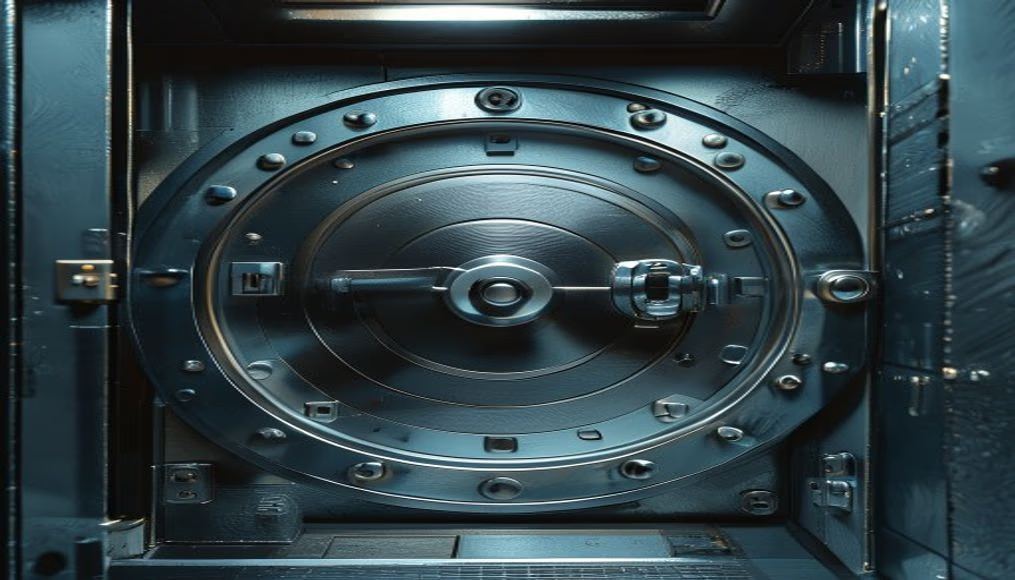
Credit card chip macro shot
1344×768 · AVIF · CC BY 4.0

A macro shot of a credit card chip reveals the intricate details of the technology that secures global financial transactions.
About this subject
The chip on a credit card is the heart of modern financial security. It stores encrypted data in a microprocessor, replacing the vulnerable magnetic stripe. This component, standardized by EMV (Europay, Mastercard and Visa), contains a unique cryptographic key that generates dynamic codes for each transaction, making cloning nearly impossible.
Manufacturing these chips requires micrometer precision. They are mounted on plastic substrates with gold-plated contacts, ensuring electrical conductivity and corrosion resistance. Gold, though expensive, is chosen for its durability and low resistance. Each chip undergoes rigorous stress and security tests, including simulated attacks to verify resistance to tampering.
Brazil is one of the largest chip card markets globally, with over 1.5 billion monthly credit and debit card transactions, according to ABECS data. Chip adoption accelerated after 2010, when the Central Bank of Brazil mandated migration to the EMV standard, drastically reducing in-person fraud. Today, nearly all payment terminals in the country accept contactless payments (NFC), which also rely on the chip for authentication.
Interestingly, chip design varies among card networks and banks. Some feature holograms or microtext as additional security layers. Macro photography of this component reveals textures and patterns invisible to the naked eye, highlighting the engineering behind something so commonplace.
Frequently Asked Questions
How does the credit card chip protect against fraud?
The chip generates a unique cryptographic code for each transaction that cannot be reused. This prevents cloning, as intercepted data is useless for new purchases.
Why are the chip contacts gold-plated?
Gold is used for its excellent electrical conductivity and corrosion resistance, ensuring reliable chip operation for years despite frequent use.
Do all credit cards in Brazil have a chip?
Yes, since 2014 all credit and debit cards issued in Brazil follow the EMV standard with a chip, as mandated by the Central Bank.
Direct URL
https://pub-c7d6a6ea828543ac903a74a341ccb2e1.r2.dev/imagens/credit-card-chip-macro-shot-national-geographic-style.avifHow to credit
Include a visible link back to UtilizAí. Copy one of the snippets below:
<a href="https://xn--utiliza-eza.com/en/midia/imagens/credit-card-chip-macro-shot-national-geographic-style">Credit card chip macro shot</a> by <a href="https://xn--utiliza-eza.com">UtilizAí</a>, licensed under <a href="https://creativecommons.org/licenses/by/4.0/">CC BY 4.0</a>.
[Credit card chip macro shot](https://xn--utiliza-eza.com/en/midia/imagens/credit-card-chip-macro-shot-national-geographic-style) by [UtilizAí](https://xn--utiliza-eza.com), CC BY 4.0
License: CC-BY-4.0