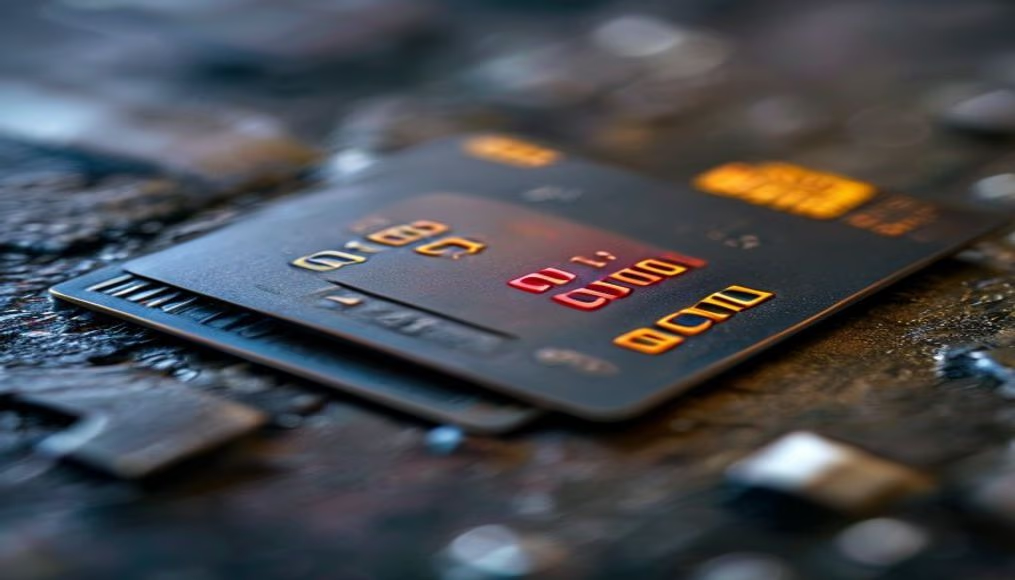
Credit card chip macro shot
1344×768 · AVIF · CC BY 4.0
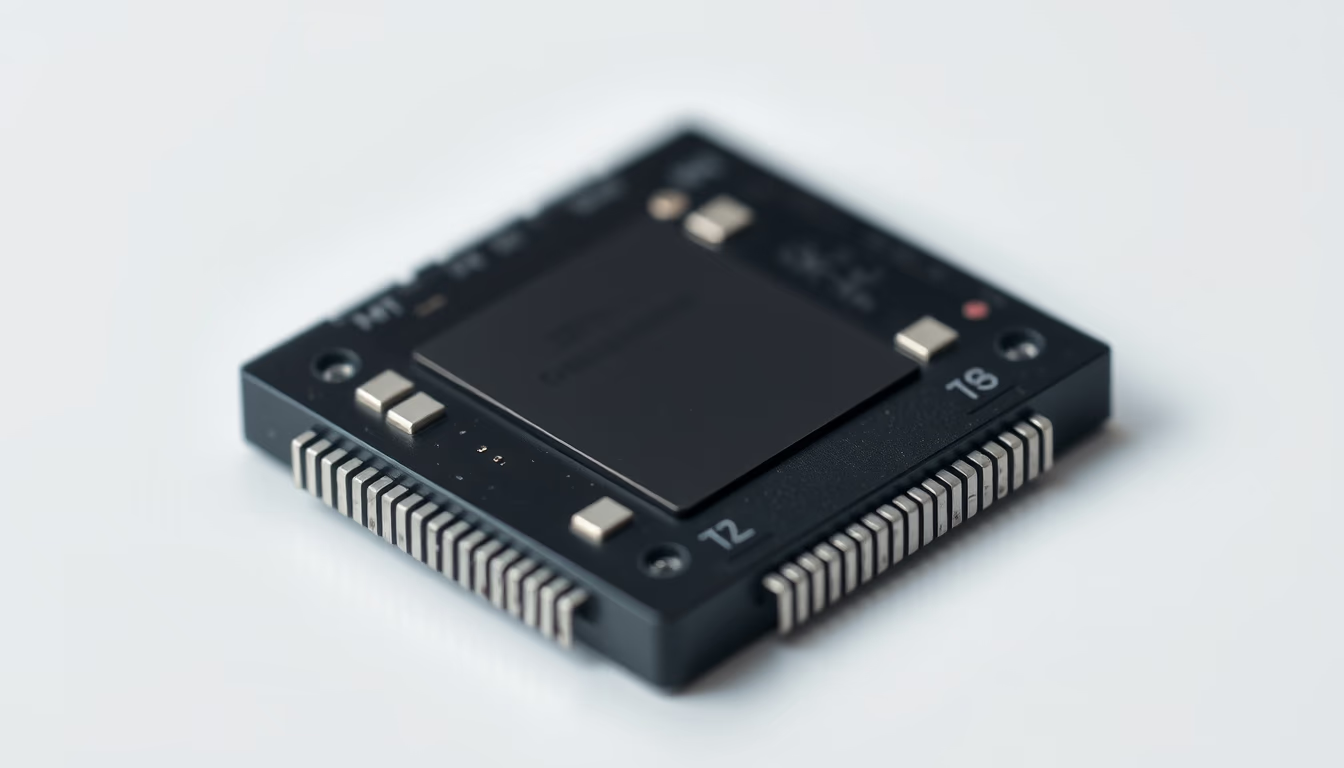
The credit card chip is a microprocessor that stores and processes encrypted data, ensuring secure transactions worldwide.
About this subject
The credit card chip, also known as the EMV chip (Europay, MasterCard, and Visa), is a small microprocessor embedded in the card that replaced the traditional magnetic stripe. It was developed in the 1990s to enhance financial transaction security by generating a unique, dynamic code for each purchase, making it impossible to clone. In Brazil, the migration to chip cards intensified around 2014, driven by magnetic stripe fraud. Today, the vast majority of cards issued in the country use EMV technology, either via contact (inserting the card into the terminal) or contactless (tap to pay).
The chip works using asymmetric cryptography: during a transaction, the terminal reads the chip data and requests a digital signature, which is validated by the issuing bank. This prevents sensitive information, such as the card number, from being transmitted in plain text. Additionally, the chip can store multiple applications, such as loyalty programs and biometric identification, although in Brazil its use is predominantly financial.
An interesting fact: the contactless chip allows payments via NFC (Near Field Communication) technology. This mode gained popularity during the COVID-19 pandemic by avoiding physical contact with terminals. Currently, most payment terminals in Brazil accept contactless payments, with a transaction limit without a PIN varying by bank.
Despite improved security, the chip is not infallible. Skimming attacks on compromised terminals can still capture data, but on a much smaller scale than with magnetic stripes. Therefore, the global adoption of EMV chips has drastically reduced in-person fraud, shifting criminals' focus to online transactions and social engineering.
Frequently Asked Questions
How does a credit card chip work?
The EMV chip generates a unique encrypted code for each transaction. When the card is inserted into the terminal, it communicates with the issuing bank to validate the operation. This prevents card cloning.
Is the chip safer than the magnetic stripe?
Yes. The chip is much safer because it does not store static data. Each transaction uses dynamic encryption, while the magnetic stripe contains fixed information that can be easily copied.
Do all credit cards in Brazil have a chip?
Most do. Since 2014, Brazilian banks have been issuing EMV chip cards. Today, almost all new cards come with a chip, and payment terminals have been adapted to accept them.
Direct URL
https://pub-c7d6a6ea828543ac903a74a341ccb2e1.r2.dev/imagens/credit-card-chip-macro-shot-commercial-product-photography-v9.avifHow to credit
Include a visible link back to UtilizAí. Copy one of the snippets below:
<a href="https://xn--utiliza-eza.com/en/midia/imagens/credit-card-chip-macro-shot-commercial-product-photography-v9">Credit card chip macro shot</a> by <a href="https://xn--utiliza-eza.com">UtilizAí</a>, licensed under <a href="https://creativecommons.org/licenses/by/4.0/">CC BY 4.0</a>.
[Credit card chip macro shot](https://xn--utiliza-eza.com/en/midia/imagens/credit-card-chip-macro-shot-commercial-product-photography-v9) by [UtilizAí](https://xn--utiliza-eza.com), CC BY 4.0
License: CC-BY-4.0