Credit card chip closeup macro photography of EMV chip
1344×768 · AVIF · CC BY 4.0
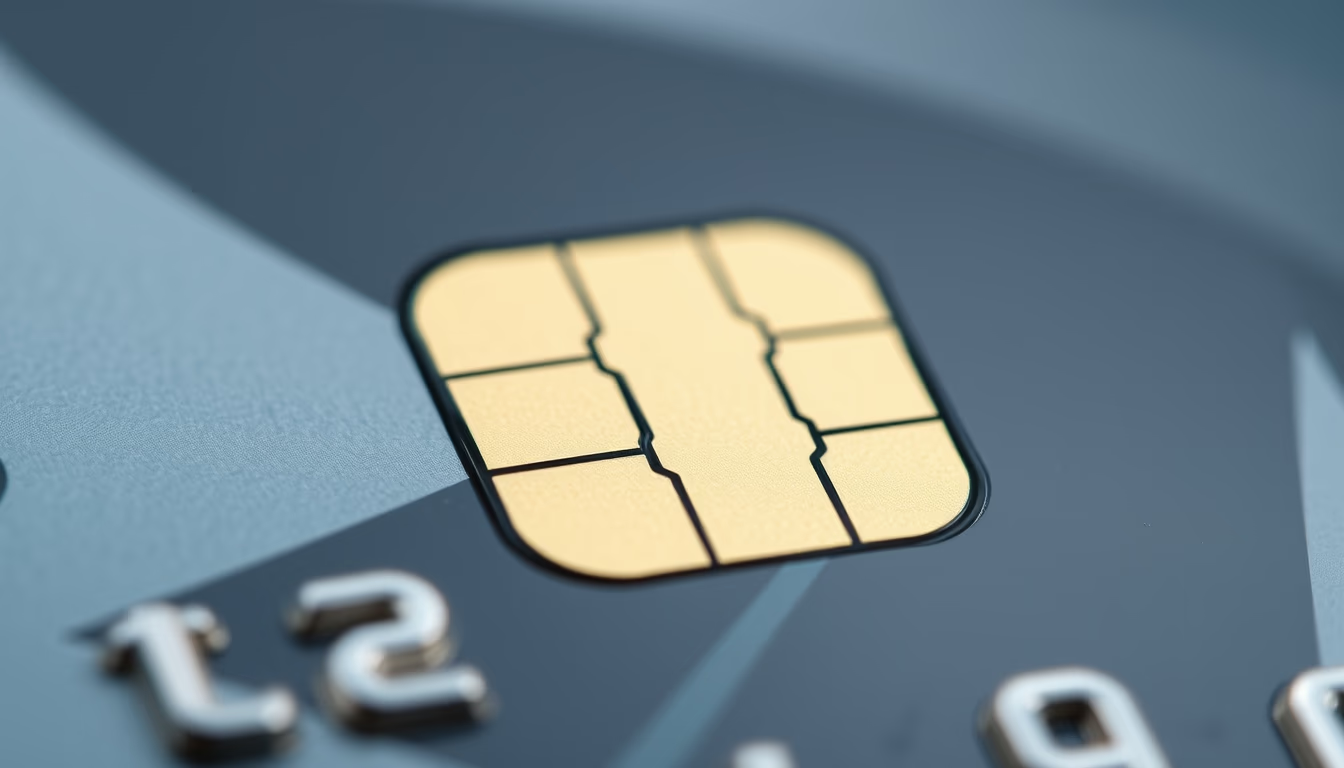
Macro shot of an EMV chip on a credit card reveals the technology that revolutionized global payment security.
About this subject
The EMV chip (Europay, Mastercard, and Visa) is the global standard for card payments, adopted in over 190 countries. Introduced in the 1990s, it replaced magnetic stripes, which were vulnerable to skimming and fraud. The chip generates a unique code for each transaction, making card cloning useless for future purchases. In Brazil, the migration to chip technology began in 2014 and was completed by 2018, drastically reducing in-person fraud.
EMV technology relies on microprocessors that store and process encrypted data. Unlike magnetic stripes, which contain static data, the chip creates a dynamic token for each payment. This requires compatible point-of-sale (POS) terminals and that the card is inserted or tapped (contactless). The standard also allows offline authentication in areas without network connectivity, common in remote regions.
Interestingly, the EMV chip does not prevent online fraud (card-not-present), where card details are manually entered. Hence, additional measures like dynamic CVV and two-factor authentication are used. Brazil is one of the countries with the highest adoption of contactless payments (NFC), which uses the same EMV chip for tap-and-go transactions. The close-up photo highlights the gold contacts of the chip, made of gold for its conductivity and corrosion resistance.
EMV chip security is so robust that in countries like the UK, in-person fraud dropped by over 70% after migration. However, attacks like shimming (inserting a thin device into the chip slot) have emerged, but they are rare. The technology continues to evolve with dual-interface chips (contact and contactless) and integration with biometrics. The macro image allows appreciation of the minute details of the contacts and chip encapsulation, a feat of materials engineering.
Frequently Asked Questions
What does EMV stand for?
EMV stands for Europay, Mastercard, and Visa, the three companies that created the chip standard for payment cards.
Does the EMV chip eliminate all card fraud?
No. It reduces in-person fraud but does not prevent online (card-not-present) fraud, where card details are used without the chip.
Why are the chip contacts gold-colored?
Gold is used for its excellent electrical conductivity and corrosion resistance, ensuring durability and reliability in transactions.
Direct URL
https://pub-c7d6a6ea828543ac903a74a341ccb2e1.r2.dev/imagens/credit-card-chip-closeup-macro-photography-of-emv-chip-closeup-macro-shot-overcast-soft-daylight.avifHow to credit
Include a visible link back to UtilizAí. Copy one of the snippets below:
<a href="https://xn--utiliza-eza.com/en/midia/imagens/credit-card-chip-closeup-macro-photography-of-emv-chip-closeup-macro-shot-overcast-soft-daylight">Credit card chip closeup macro photography of EMV chip</a> by <a href="https://xn--utiliza-eza.com">UtilizAí</a>, licensed under <a href="https://creativecommons.org/licenses/by/4.0/">CC BY 4.0</a>.
[Credit card chip closeup macro photography of EMV chip](https://xn--utiliza-eza.com/en/midia/imagens/credit-card-chip-closeup-macro-photography-of-emv-chip-closeup-macro-shot-overcast-soft-daylight) by [UtilizAí](https://xn--utiliza-eza.com), CC BY 4.0
License: CC-BY-4.0