Credit card chip closeup macro photography of EMV chip
1344×768 · AVIF · CC BY 4.0
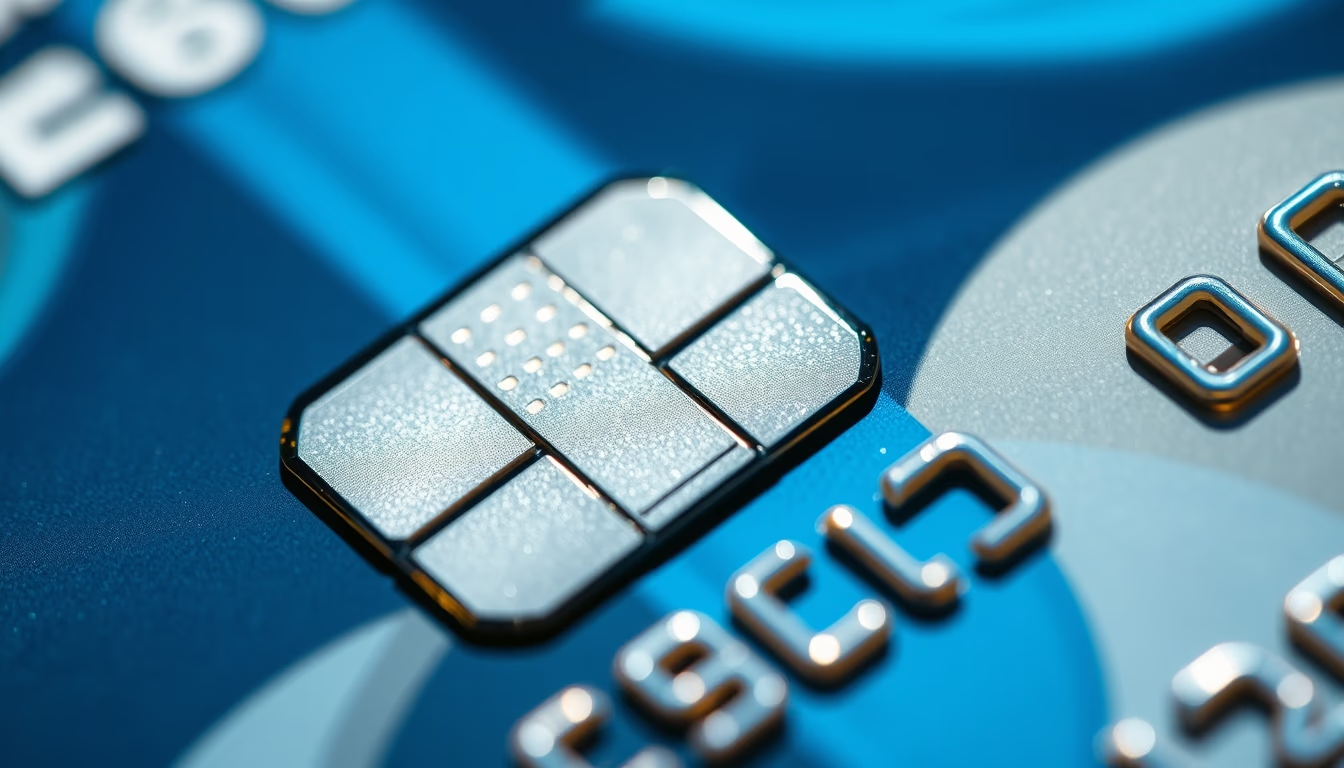
Closeup macro of an EMV chip on a credit card reveals details of the technology that revolutionized payment security in Brazil and worldwide.
About this subject
The EMV chip (Europay, Mastercard, and Visa) is a microprocessor embedded in credit and debit cards that stores and processes data securely. Unlike magnetic stripes, which contain static information, the chip generates a dynamic code for each transaction, making cloning nearly impossible. In Brazil, the migration to chip cards began in 2010, driven by card network requirements and the Central Bank, dramatically reducing in-person fraud. Today, over 90% of Brazilian cards have a chip.
EMV technology was developed in the 1990s by a consortium of the three major card networks. The standard became global and is adopted in more than 190 countries. Each chip contains an operating system and applications that follow strict specifications, such as ISO 7816. Besides cards, the chip is used in devices like smartphones for contactless payments (NFC).
A technical curiosity is that the EMV chip does not store the full card number. Instead, it uses an encrypted token that can only be deciphered by the issuing bank. This means that even if chip data is intercepted, it is useless for future transactions. The chip also requires the card to be inserted into the terminal (chip dip) or tapped (contactless), ensuring the transaction is authorized in real time.
In Brazil, chip adoption was accelerated by educational campaigns and modernization of POS terminals. Despite security, online fraud (without the chip) still occurs, leading to measures like two-factor authentication. The EMV chip is a milestone in financial security and continues to evolve with features like advanced encryption and integrated biometrics.
Frequently Asked Questions
What does EMV stand for?
EMV stands for Europay, Mastercard, and Visa, the three companies that developed the chip standard for payment cards. Today the standard is managed by EMVCo, which also includes other networks like American Express and Discover.
How does the card chip protect against fraud?
The chip generates a unique, encrypted code for each transaction, unlike the magnetic stripe which has fixed data. Even if chip data is copied, it cannot be reused because the code is only valid for that specific transaction.
Do all cards in Brazil have a chip?
Since 2010, most cards issued in Brazil already come with a chip. It is estimated that over 90% of active cards in the country have the technology, although some older cards with magnetic stripes still exist.
Direct URL
https://pub-c7d6a6ea828543ac903a74a341ccb2e1.r2.dev/imagens/credit-card-chip-closeup-macro-photography-of-emv-chip-closeup-macro-shot-bright-midday-sun.avifHow to credit
Include a visible link back to UtilizAí. Copy one of the snippets below:
<a href="https://xn--utiliza-eza.com/en/midia/imagens/credit-card-chip-closeup-macro-photography-of-emv-chip-closeup-macro-shot-bright-midday-sun">Credit card chip closeup macro photography of EMV chip</a> by <a href="https://xn--utiliza-eza.com">UtilizAí</a>, licensed under <a href="https://creativecommons.org/licenses/by/4.0/">CC BY 4.0</a>.
[Credit card chip closeup macro photography of EMV chip](https://xn--utiliza-eza.com/en/midia/imagens/credit-card-chip-closeup-macro-photography-of-emv-chip-closeup-macro-shot-bright-midday-sun) by [UtilizAí](https://xn--utiliza-eza.com), CC BY 4.0
License: CC-BY-4.0