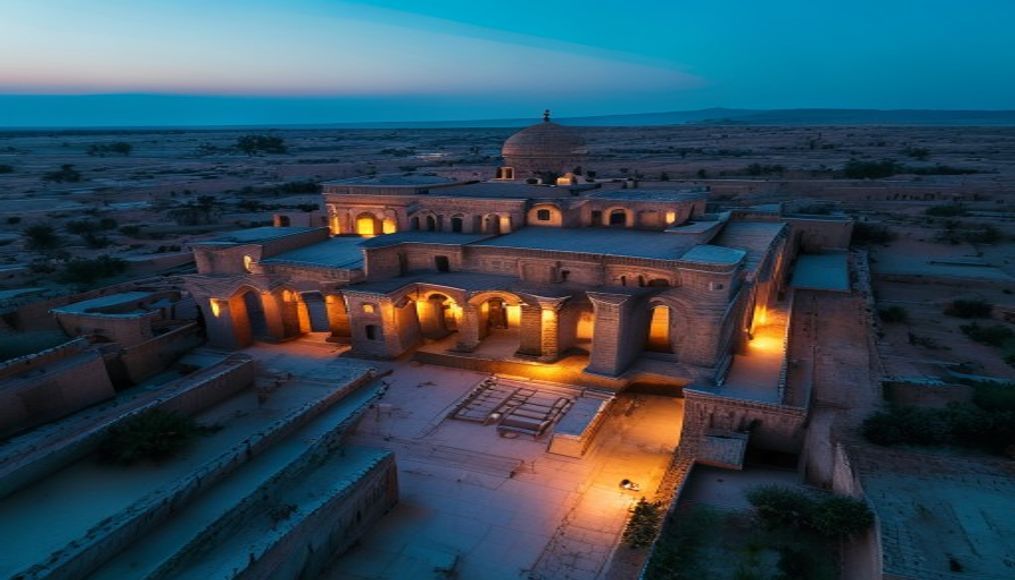
Coptic monastery egypt
1344×768 · AVIF · CC BY 4.0
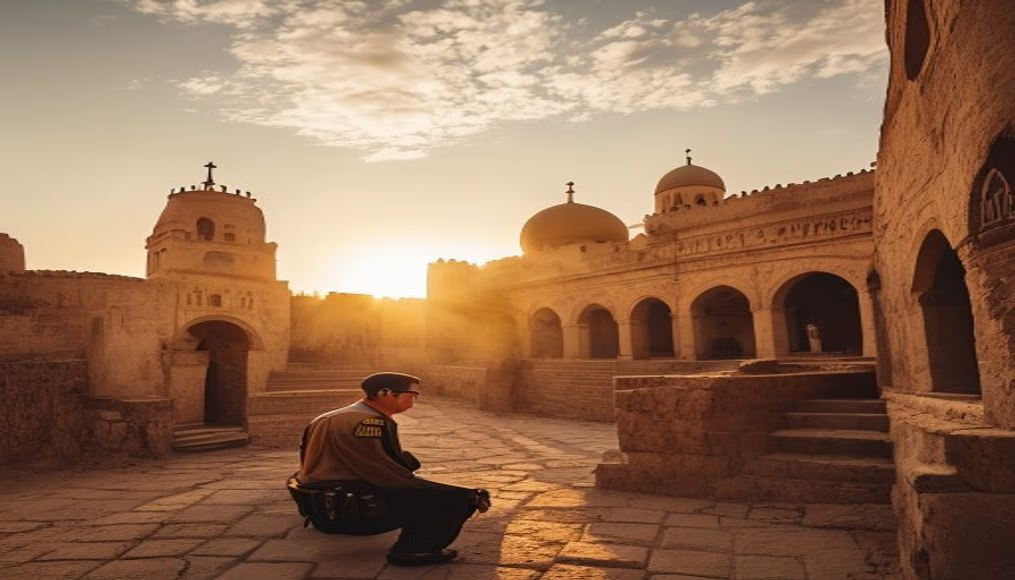
Coptic monasteries, such as those in the Nitrian Desert and Wadi El Natrun, preserve an ancient Christian monastic tradition and unique architecture.
About this subject
Coptic monasteries in Egypt are among the earliest Christian monastic settlements, dating from the 4th and 5th centuries. They were founded by hermits and followers of Saint Anthony, considered the father of Christian monasticism. Located in remote desert areas such as Wadi El Natrun, the Nitrian Desert, and the Red Sea coast, these religious complexes were built as spiritual fortresses, isolated from the outside world. Typical architecture includes churches with domes, bell towers, and monastic cells, often enclosed by high walls for protection against invasions.
The importance of Coptic monasteries goes beyond religion, as they served as centers of cultural and literary preservation. For centuries, ancient manuscripts, including biblical texts and theological works, were copied and stored in their libraries. The Monastery of Saint Macarius in Wadi El Natrun, for example, holds one of the richest collections of Coptic papyri. Egyptian monastic tradition deeply influenced monasticism in the Middle East, Europe, and Ethiopia.
Currently, dozens of Coptic monasteries remain active in Egypt, many restored and open to visitors. They are still inhabited by monks following the Rule of Saint Pachomius, with a routine of prayers, manual labor, and study. The Monastery of Saint Paul and the Monastery of Saint Anthony, near the Red Sea, are popular destinations for tourists and pilgrims, attracting interest for their millennia-old history and the austere beauty of the desert.
The landscape around these monasteries is marked by arid mountains and vast stretches of sand, highlighting the contrast between spirituality and the harsh environment. The defensive architecture, with thick stone walls and small windows, reflects the need for protection against Bedouins and raiders over the centuries. Today, the monasteries are living symbols of cultural resilience and unwavering faith.
Frequently Asked Questions
What is the origin of Coptic monasteries in Egypt?
Coptic monasteries originated in the 4th century, inspired by desert hermits, especially Saint Anthony, who is considered the father of monasticism. The first organized monastery was founded by Saint Pachomius at Tabennese.
Why were Coptic monasteries built in desert areas?
Monks sought complete isolation for prayer and contemplation away from urban temptations. The desert also provided natural protection and symbolized spiritual purification.
Which Coptic monastery is the oldest still in operation?
The Monastery of Saint Anthony, near the Red Sea, is considered the oldest continuously operating Christian monastery, founded around 356 AD. It currently houses about 30 monks.
Direct URL
https://pub-c7d6a6ea828543ac903a74a341ccb2e1.r2.dev/imagens/coptic-monastery-egypt-cinematic-wide-shot-p2.avifHow to credit
Include a visible link back to UtilizAí. Copy one of the snippets below:
<a href="https://xn--utiliza-eza.com/en/midia/imagens/coptic-monastery-egypt-cinematic-wide-shot-p2">Coptic monastery egypt</a> by <a href="https://xn--utiliza-eza.com">UtilizAí</a>, licensed under <a href="https://creativecommons.org/licenses/by/4.0/">CC BY 4.0</a>.
[Coptic monastery egypt](https://xn--utiliza-eza.com/en/midia/imagens/coptic-monastery-egypt-cinematic-wide-shot-p2) by [UtilizAí](https://xn--utiliza-eza.com), CC BY 4.0
License: CC-BY-4.0