Construction worker with full PPE on a São Paulo high-rise site
1344×768 · AVIF · CC BY 4.0
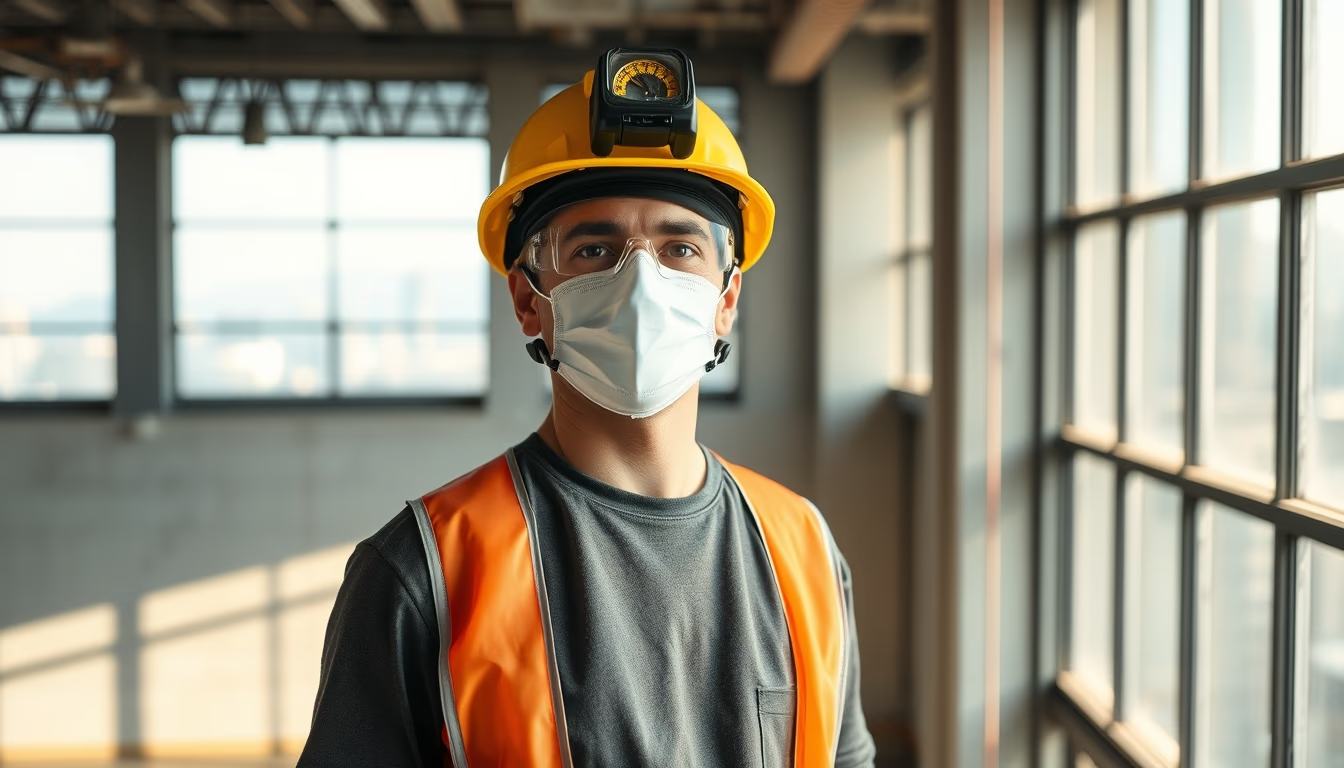
Construction worker with full PPE on a high-rise building site in São Paulo, depicting safety conditions in the industry.
About this subject
The construction industry is one of Brazil's largest employers, with about 2.5 million formal workers according to Caged data. In São Paulo, the country's main financial hub, skyscrapers symbolize urban development but also pose constant safety challenges. The use of Personal Protective Equipment (PPE) such as hard hats, safety harnesses, goggles, and gloves is mandatory by law (NR-6) and essential to prevent accidents at heights.
São Paulo's real estate market has boomed in recent years, with launches of residential and commercial towers exceeding 50 stories. Working at great heights requires specific training, such as the NR-35 (Work at Height) course, which teaches workers to properly use equipment and follow emergency procedures. Enforcement by the Ministry of Labor and Employment (MTE) has intensified, but challenges remain: in 2022, over 600 fatal accidents were recorded in the sector nationwide.
The documentary photo was taken in the morning, when natural light highlights the worker's silhouette against the city skyline. The scene reflects the daily routine of thousands of workers who build the skyline-defining structures. The use of full PPE indicates a worksite that follows regulatory standards, contrasting with informal settings where protection is often neglected.
Fun fact: São Paulo's tallest building, Platina 220, stands 172 meters tall with 55 floors. To erect such structures, teams of up to 200 workers operate in shifts, often under adverse weather conditions. Workplace safety is a right won through decades of union struggle, but constant vigilance is needed to prevent setbacks.
Frequently Asked Questions
What PPE is mandatory for working at heights in construction?
Mandatory PPE includes a hard hat with chin strap, full-body harness with lanyard, safety glasses, gloves, steel-toed boots, and sunscreen. NR-35 specifies all requirements.
How many floors does São Paulo's tallest building have?
Platina 220, located on Avenida Paulista, has 55 floors and stands 172 meters tall, making it the city's tallest building.
Why is NR-35 important for construction worker safety?
NR-35 establishes minimum safety requirements for work at heights, including training, emergency planning, and proper PPE use, significantly reducing fall risks.
Direct URL
https://pub-c7d6a6ea828543ac903a74a341ccb2e1.r2.dev/imagens/construction-worker-with-full-ppe-on-a-sao-paulo-high-rise-site-documentary-morning-6.avifHow to credit
Include a visible link back to UtilizAí. Copy one of the snippets below:
<a href="https://xn--utiliza-eza.com/en/midia/imagens/construction-worker-with-full-ppe-on-a-sao-paulo-high-rise-site-documentary-morning-6">Construction worker with full PPE on a São Paulo high-rise site</a> by <a href="https://xn--utiliza-eza.com">UtilizAí</a>, licensed under <a href="https://creativecommons.org/licenses/by/4.0/">CC BY 4.0</a>.
[Construction worker with full PPE on a São Paulo high-rise site](https://xn--utiliza-eza.com/en/midia/imagens/construction-worker-with-full-ppe-on-a-sao-paulo-high-rise-site-documentary-morning-6) by [UtilizAí](https://xn--utiliza-eza.com), CC BY 4.0
License: CC-BY-4.0
Tags
Related images
 Food delivery rider on motorbike in São Paulo traffic
 Food delivery rider on motorbike in São Paulo traffic
 Food delivery rider on motorbike in São Paulo traffic
 Food delivery rider on motorbike in São Paulo traffic
 Food delivery rider on motorbike in São Paulo traffic
 Food delivery rider on motorbike in São Paulo traffic