Concertina small
1344×768 · AVIF · CC BY 4.0

The concertina is a free-reed musical instrument known for its distinctive sound and presence in folk traditions around the world.
About this subject
The concertina is a free-reed musical instrument patented by English physicist Sir Charles Wheatstone in 1829. Unlike the accordion, which has a keyboard or buttons arranged in one direction, the concertina has buttons on both ends, with the bellows compressed and expanded horizontally. There are three main systems: the English system (chromatic, with the same note on push and pull), the Anglo-German system (diatonic, with different notes on push and pull), and the Duet system (which separates the notes of each hand by tonal range).
Its popularity spread globally, especially in Irish folk music, where it is used in jigs and reels, and in traditional South African music, such as boeremusiek. In Latin America, although the accordion is more common in genres like forró and chamamé, the concertina appears in some regional expressions, such as Brazilian rural music (caipira) and Argentine tango, though less frequently. Its compact size and penetrating sound made it ideal for traveling musicians and 19th-century chamber music.
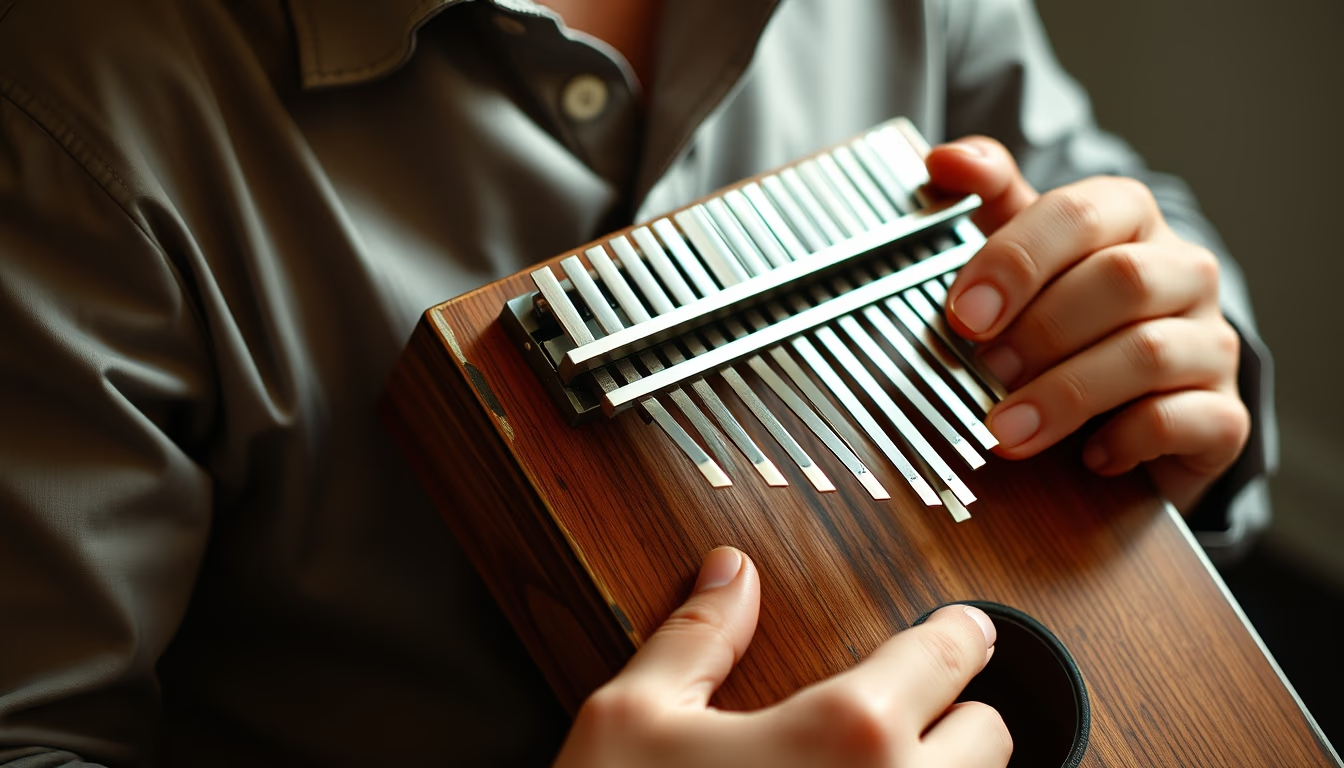
Construction involves metal reeds mounted on a plate, with a bellows providing air. Tuning is precise, and the instrument requires specific technique for dynamic control and articulation. The concertina was also used in symphony orchestras during the Romantic period, though today it is more associated with traditional music ensembles. Its versatility keeps it alive in styles ranging from folk to experimental, being rediscovered by new musicians exploring its timbral possibilities.
Frequently Asked Questions
What is the difference between a concertina and an accordion?
Unlike the accordion, which often has a keyboard or buttons arranged in one direction and may produce different notes on push and pull, the concertina has buttons on both ends and the bellows move horizontally. The concertina is typically smaller and lighter, with a more penetrating sound.
How is the concertina used in Brazilian music?
In Brazil, the concertina is less common than the accordion, but appears in rural music (caipira) and some recordings of choro and forró. Its sound has been explored by musicians such as Sivuca and Dominguinhos, though the accordion predominates in these genres.
What are the common types of concertina?
The three most common systems are: English (chromatic, same note on push and pull), Anglo-German (diatonic, different notes on push and pull, ideal for folk music), and Duet (tonal separation between hands, allowing greater melodic and harmonic independence).
Direct URL
https://pub-c7d6a6ea828543ac903a74a341ccb2e1.r2.dev/imagens/concertina-small-lo-fi-disposable-camera-p2.avifHow to credit
Include a visible link back to UtilizAí. Copy one of the snippets below:
<a href="https://xn--utiliza-eza.com/en/midia/imagens/concertina-small-lo-fi-disposable-camera-p2">Concertina small</a> by <a href="https://xn--utiliza-eza.com">UtilizAí</a>, licensed under <a href="https://creativecommons.org/licenses/by/4.0/">CC BY 4.0</a>.
[Concertina small](https://xn--utiliza-eza.com/en/midia/imagens/concertina-small-lo-fi-disposable-camera-p2) by [UtilizAí](https://xn--utiliza-eza.com), CC BY 4.0
License: CC-BY-4.0