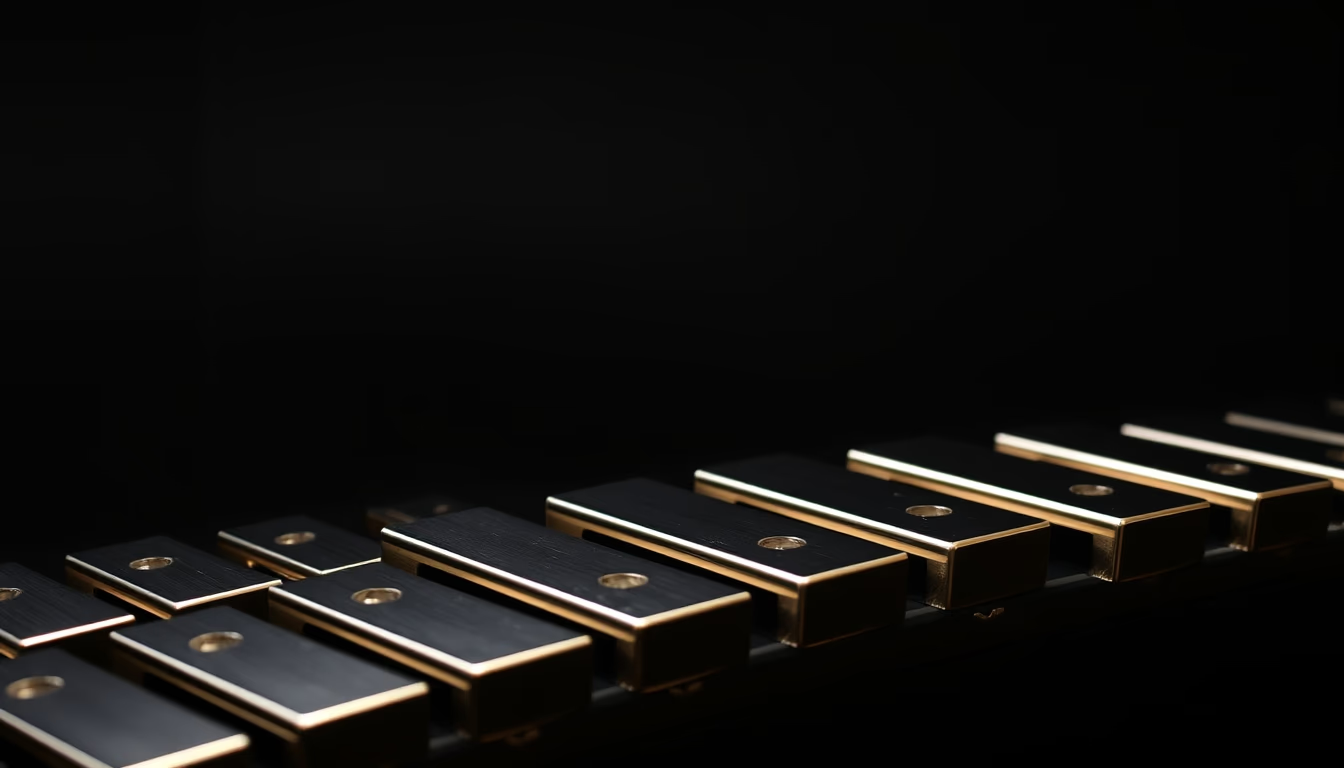
Concertina small
1344×768 · AVIF · CC BY 4.0

The concertina is a free-reed musical instrument, popular in folk traditions and classical music, especially in England and Ireland.
About this subject
The concertina is a free-reed musical instrument, belonging to the accordion family, but distinguished by its hexagonal or octagonal shape and buttons on the sides. It was invented in the early 19th century, simultaneously by Sir Charles Wheatstone in England (English concertina system) and by Carl Friedrich Uhlig in Germany (German concertina system). Sound is produced when the bellows are pushed or pulled, forcing air through metal reeds that vibrate. Unlike the traditional accordion, each button on the English concertina produces the same note whether the bellows are opening or closing, while on the Anglo-German concertina the notes change with the direction of the bellows, similar to a harmonica.
Concertinas are traditionally associated with Irish, English, and Scottish folk music, being a key instrument in Celtic music sessions. They were also popular in the 19th century as parlor instruments due to their sweet sound and portability. There are several types: the English concertina, with a chromatic layout and a softer tone; the Anglo-German concertina, with a diatonic layout and a more percussive timbre; and the duet concertina, combining features of both. Famous composers like Igor Stravinsky included the concertina in orchestral works, such as in his ballet "Petrushka".
Today, concertinas are still handcrafted by specialized luthiers, mainly in the United Kingdom, Germany, and Italy. The instrument has a vast repertoire, ranging from Irish jigs and reels to classical pieces and contemporary compositions. Dedicated societies, such as the International Concertina Association, promote festivals and gatherings for enthusiasts. The concertina also influenced other instruments, like the Argentine bandoneón used in tango, which is a variation of the German system.
Frequently Asked Questions
What is the difference between English and Anglo-German concertina?
The English concertina is chromatic and each button produces the same note on push and pull, with a softer tone. The Anglo-German is diatonic and notes change with bellows direction, giving a more percussive timbre, ideal for folk music.
Is the concertina difficult to learn?
Like any instrument, it takes practice. The Anglo-German concertina has a steeper learning curve due to changing notes with the bellows, while the English is more intuitive. Many beginners start with online tutorials and in-person lessons.
Which famous songs use the concertina?
The concertina appears in works like Stravinsky's 'Petrushka', Irish folk tunes like 'The Irish Washerwoman', and songs by bands such as The Dubliners and Planxty. It is also used in English folk groups like Steeleye Span.
Direct URL
https://pub-c7d6a6ea828543ac903a74a341ccb2e1.r2.dev/imagens/concertina-small-isometric-flat-lay-p5.avifHow to credit
Include a visible link back to UtilizAí. Copy one of the snippets below:
<a href="https://xn--utiliza-eza.com/en/midia/imagens/concertina-small-isometric-flat-lay-p5">Concertina small</a> by <a href="https://xn--utiliza-eza.com">UtilizAí</a>, licensed under <a href="https://creativecommons.org/licenses/by/4.0/">CC BY 4.0</a>.
[Concertina small](https://xn--utiliza-eza.com/en/midia/imagens/concertina-small-isometric-flat-lay-p5) by [UtilizAí](https://xn--utiliza-eza.com), CC BY 4.0
License: CC-BY-4.0