Concertina small
1344×768 · AVIF · CC BY 4.0

The concertina, a free-reed instrument, is popular in Irish and English folk music. Discover its history, types, and uses worldwide.
About this subject
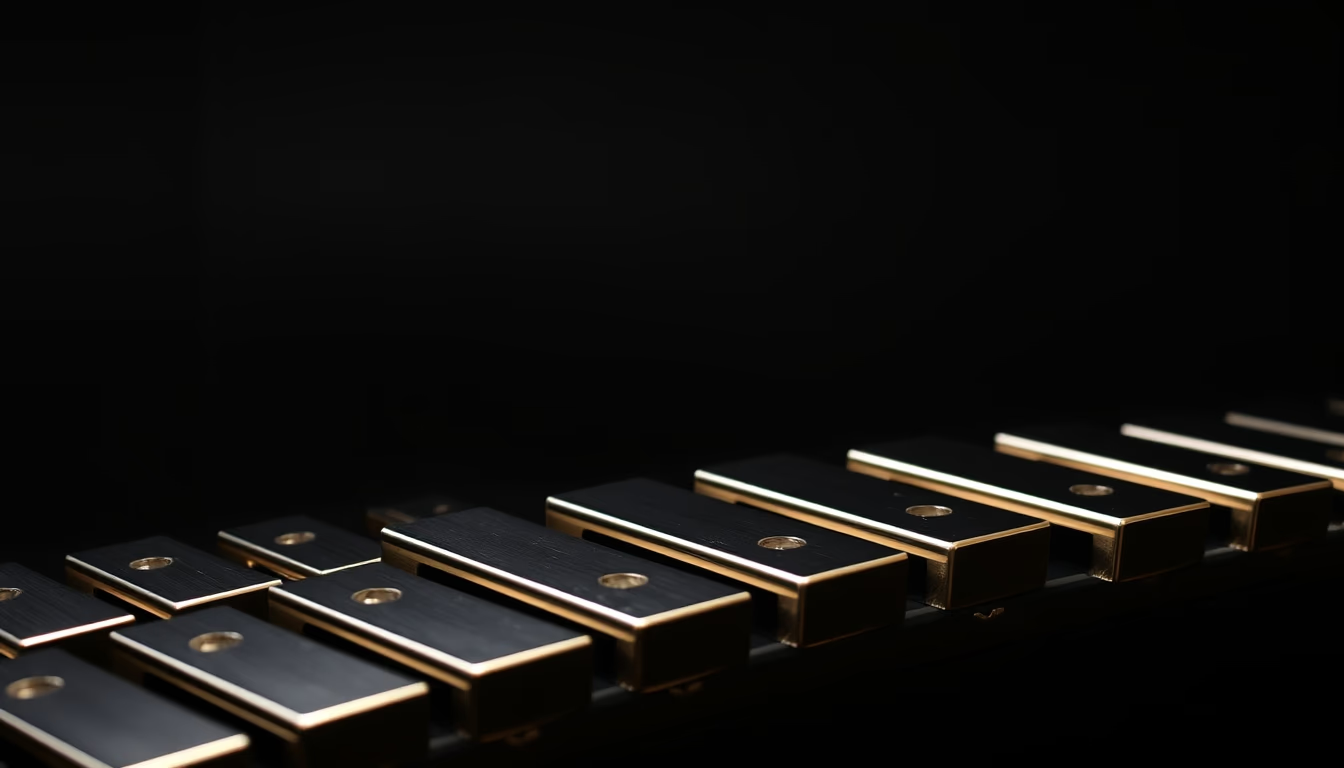
The concertina is a free-reed musical instrument, closely related to the accordion and bandoneon. It was invented in 1829 by English scientist Sir Charles Wheatstone, who patented the design known as the English concertina. Unlike the accordion, which has a keyboard or buttons on one side and chord buttons on the other, the concertina has buttons on both ends of a hexagonal bellows, with each button producing a single note. There are two main types: the English concertina, where each button plays the same note whether the bellows are pushed or pulled (unisonoric), and the Anglo concertina, which produces different notes on push and pull (bisonoric).
The concertina became iconic in Irish and English folk music, particularly for traditional dances like polkas and jigs. In Brazil, the instrument is less common but appears in regional genres such as forró and choro, though the accordion (sanfona) is more prevalent. Globally, the concertina was also adopted in styles like tango (where the bandoneon is more typical) and classical music, with composers such as Charles Ives and John Cage writing for it.
A technical curiosity: the concertina produces a softer, more expressive tone than the accordion, thanks to its design and use of steel reeds. The bellows are controlled by the player's arms, allowing dynamic nuance. Notable players include Irish musician Noel Hill and English player Simon Thoumire. Construction is typically hexagonal, though octagonal or square variants exist. Button counts range from 20 to 80, depending on the desired range.
The concertina also has a strong tradition in South Africa, where it was introduced by British immigrants and adapted into genres like Boer music. In popular culture, it appears in films such as 'Titanic' and in video game soundtracks. Its portability and distinctive sound make it a favorite among street musicians and collectors. Despite its niche status, the concertina maintains an active community of players and handmade custom builders.
Frequently Asked Questions
What is the difference between English and Anglo concertinas?
The English concertina is unisonoric: each button produces the same note whether the bellows are pushed or pulled. The Anglo concertina is bisonoric, giving different notes on push and pull, which helps in playing fast melodies and chords.
In which music styles is the concertina most used?
The concertina is primarily associated with Irish and English folk music, but also appears in forró, choro, classical music, and in South African Boer music.
Is the concertina hard to learn?
Difficulty varies. The Anglo concertina is often more intuitive for simple melodies, while the English requires more coordination for both hands. Consistent practice is key to mastering bellows dynamics.
Direct URL
https://pub-c7d6a6ea828543ac903a74a341ccb2e1.r2.dev/imagens/concertina-small-cinematic-wide-shot-p9.avifHow to credit
Include a visible link back to UtilizAí. Copy one of the snippets below:
<a href="https://xn--utiliza-eza.com/en/midia/imagens/concertina-small-cinematic-wide-shot-p9">Concertina small</a> by <a href="https://xn--utiliza-eza.com">UtilizAí</a>, licensed under <a href="https://creativecommons.org/licenses/by/4.0/">CC BY 4.0</a>.
[Concertina small](https://xn--utiliza-eza.com/en/midia/imagens/concertina-small-cinematic-wide-shot-p9) by [UtilizAí](https://xn--utiliza-eza.com), CC BY 4.0
License: CC-BY-4.0