Concertina small
1344×768 · AVIF · CC BY 4.0

The small concertina is a portable bellows instrument known for its high-pitched sound and presence in folk and traditional music around the world.
About this subject
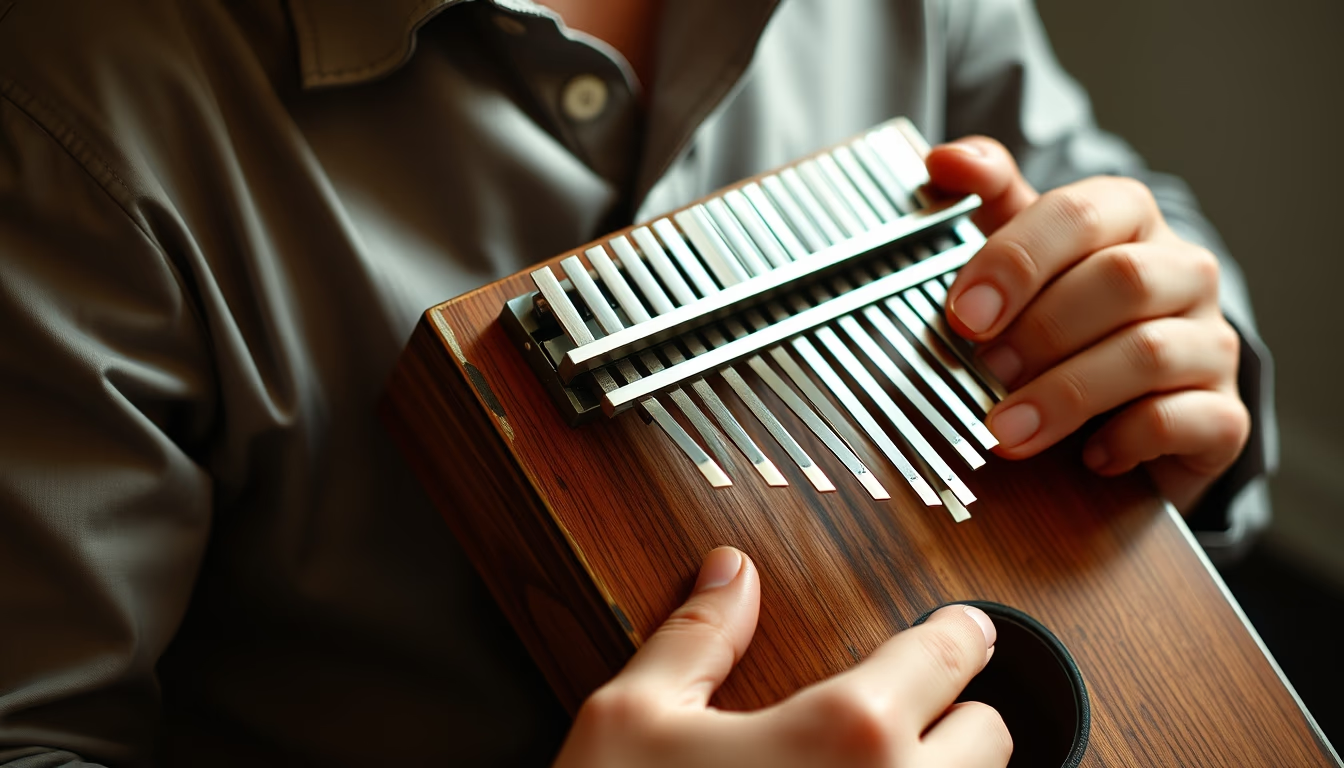
The concertina is a free-reed musical instrument, closely related to the accordion and bandoneon. Its small version, often featuring 20 to 30 buttons, is valued for its portability and characteristic timbre, which combines high and middle registers. Unlike the accordion, notes are produced by buttons that activate metal reeds, and sound is generated by the movement of the bellows, controlled by the player's hands.
Invented in the early 19th century, the concertina gained popularity in Europe, especially in England and Ireland. In Irish music, it is an iconic instrument, used in jigs and reels. In other countries, such as Brazil, Argentina, and Uruguay, it also appears in styles like chamamé and tango, though often replaced by the button accordion. The small version, being more compact, is ideal for musicians seeking agility in live performances.
Technically, the small concertina has two bellows that expand and contract, and each button can produce different notes depending on the direction of the bellows. This requires precise control of the instrument's breath, similar to that of a bagpipe. There are two main systems: the Anglo-German, with buttons arranged in rows and different notes on push and pull; and the English system, where each button produces the same note regardless of bellows direction. The small concertina usually follows the Anglo system, more common in traditional music.
Culturally, the concertina is associated with dances and celebrations. In Ireland, it is common in pubs and Celtic music festivals. In Brazil, although less frequent, it appears in folk music groups and choro circles. Its small version allows beginners to learn easily, serving as an entry instrument into the world of bellows instruments.
Frequently Asked Questions
What is the difference between a concertina and an accordion?
The concertina is smaller, has buttons instead of keys, and generally produces a higher-pitched sound. The accordion uses keys or buttons and has a fuller, more robust tone.
How do you play a small concertina?
The instrument is held with both hands, one on each side of the bellows. Fingers press the buttons while arms push and pull the bellows to create airflow and produce sound.
In which musical styles is the small concertina most commonly used?
It is traditional in Irish, English, and Scottish folk music, but also appears in Brazilian styles like chamamé and in European dance music.
Direct URL
https://pub-c7d6a6ea828543ac903a74a341ccb2e1.r2.dev/imagens/concertina-small-aerial-drone-shot-p11.avifHow to credit
Include a visible link back to UtilizAí. Copy one of the snippets below:
<a href="https://xn--utiliza-eza.com/en/midia/imagens/concertina-small-aerial-drone-shot-p11">Concertina small</a> by <a href="https://xn--utiliza-eza.com">UtilizAí</a>, licensed under <a href="https://creativecommons.org/licenses/by/4.0/">CC BY 4.0</a>.
[Concertina small](https://xn--utiliza-eza.com/en/midia/imagens/concertina-small-aerial-drone-shot-p11) by [UtilizAí](https://xn--utiliza-eza.com), CC BY 4.0
License: CC-BY-4.0