Concert wristbands stack
1344×768 · AVIF · CC BY 4.0
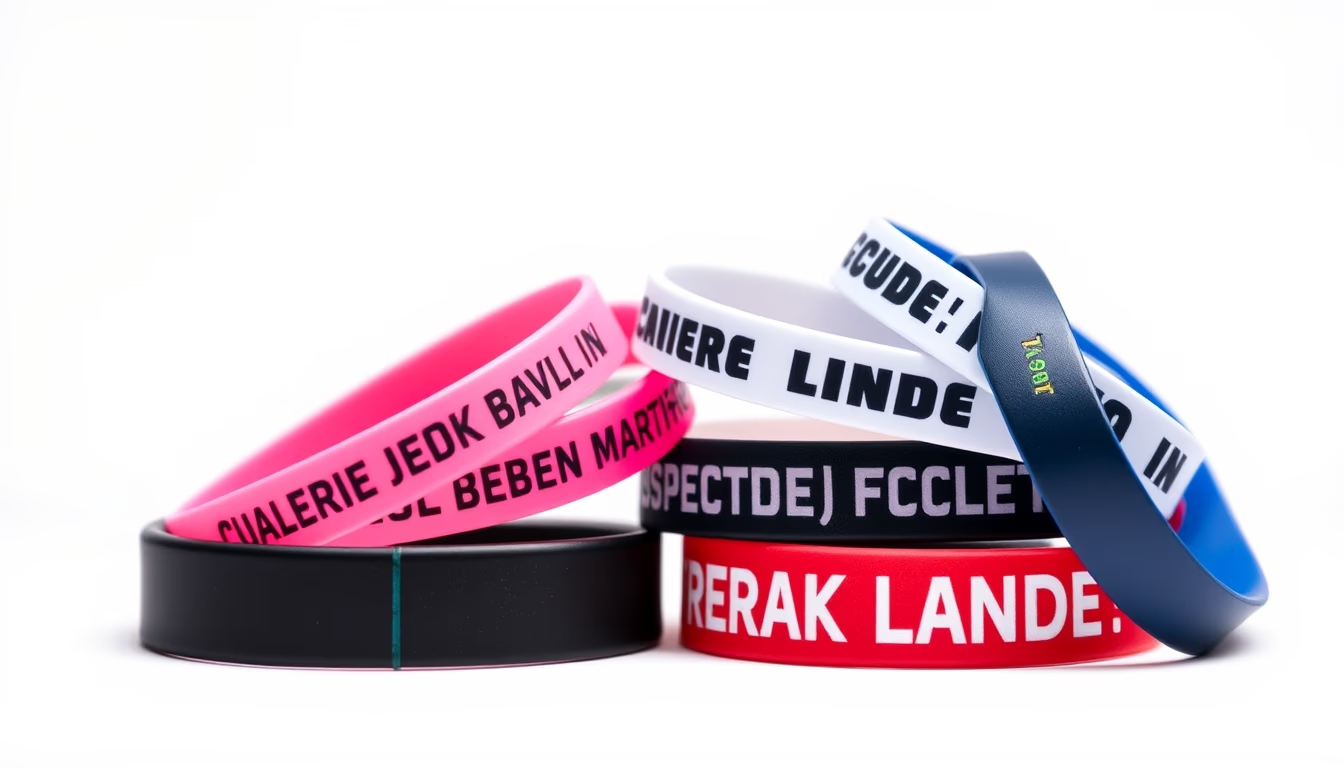
Stacked concert wristbands reveal festival culture and the evolution of identification accessories at music events.
About this subject
Concert wristbands are ubiquitous at music festivals and events worldwide. Originally designed as a practical means of access control and attendee identification, they have evolved into collector's items and symbols of lived experience. Common materials include Tyvek, silicone, and fabric, varying by event type and duration. Festivals such as Rock in Rio, Lollapalooza, and Coachella issue customized designs each edition, many becoming coveted by fans.
The history of wristbands dates back to the 1980s, when music festivals began using them to replace paper tickets, reducing fraud and streamlining logistics. Since then, technology has advanced: RFID (Radio-Frequency Identification) wristbands enable contactless payments, restricted area access, and even social media integration. This innovation transformed the audience experience, speeding up queues and personalizing event interaction.
Interestingly, the practice of keeping wristbands as souvenirs is so widespread that it spawned a secondary market for resale and trade, especially for limited editions or defunct festivals. In Brazil, the tradition is strong: many attendees of festivals like João Rock or VillaMix accumulate dozens of wristbands over the years. Beyond sentimental value, they serve as a visual map of one's musical history, sparking conversations and connections among fans.
Wristbands also carry cultural meanings. In some genres such as rock and punk, leather or studded fabric wristbands became fashion statements independent of their original function. Silicone wristbands are sometimes used as symbols of social causes or campaigns when distributed at charity events. The accessory's versatility reflects the diversity of the global music scene, blending practicality with emotional memory.
Frequently Asked Questions
What is the most common material for concert wristbands?
The most common materials are Tyvek (used for single-day events), silicone (water-resistant and durable, common for multi-day festivals), and fabric (with custom prints).
Can concert wristbands be reused?
It depends on the model. Tyvek wristbands are usually disposable once torn. Silicone or fabric ones can be reused as accessories, but their identification function is lost after the event.
How do RFID wristbands work?
RFID wristbands store the wearer's data. When brought near readers, they grant access to specific areas, record payments, or even connect to social media profiles for event interactions.
Direct URL
https://pub-c7d6a6ea828543ac903a74a341ccb2e1.r2.dev/imagens/concert-wristbands-stack-commercial-product-photography-p3.avifHow to credit
Include a visible link back to UtilizAí. Copy one of the snippets below:
<a href="https://xn--utiliza-eza.com/en/midia/imagens/concert-wristbands-stack-commercial-product-photography-p3">Concert wristbands stack</a> by <a href="https://xn--utiliza-eza.com">UtilizAí</a>, licensed under <a href="https://creativecommons.org/licenses/by/4.0/">CC BY 4.0</a>.
[Concert wristbands stack](https://xn--utiliza-eza.com/en/midia/imagens/concert-wristbands-stack-commercial-product-photography-p3) by [UtilizAí](https://xn--utiliza-eza.com), CC BY 4.0
License: CC-BY-4.0