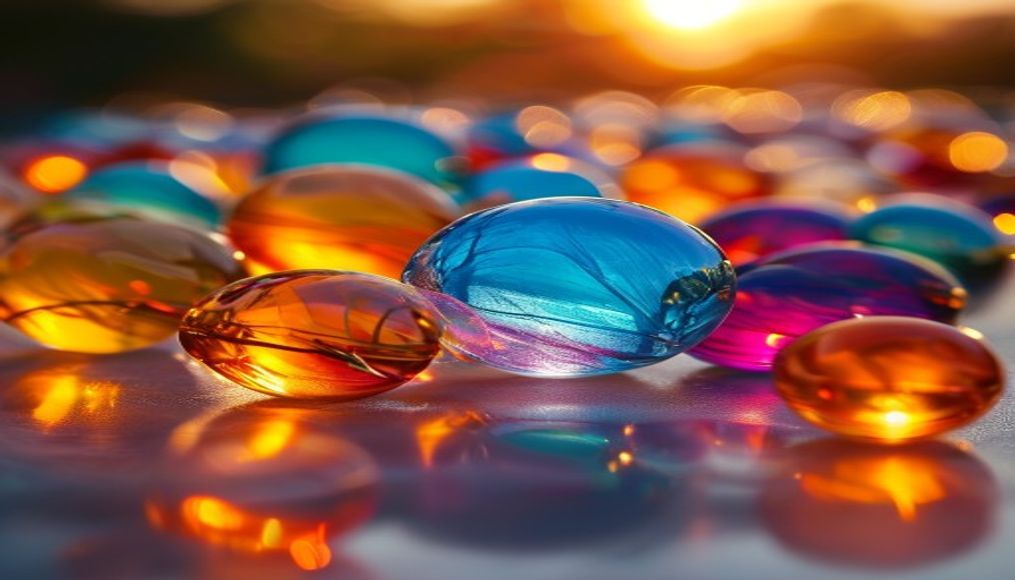
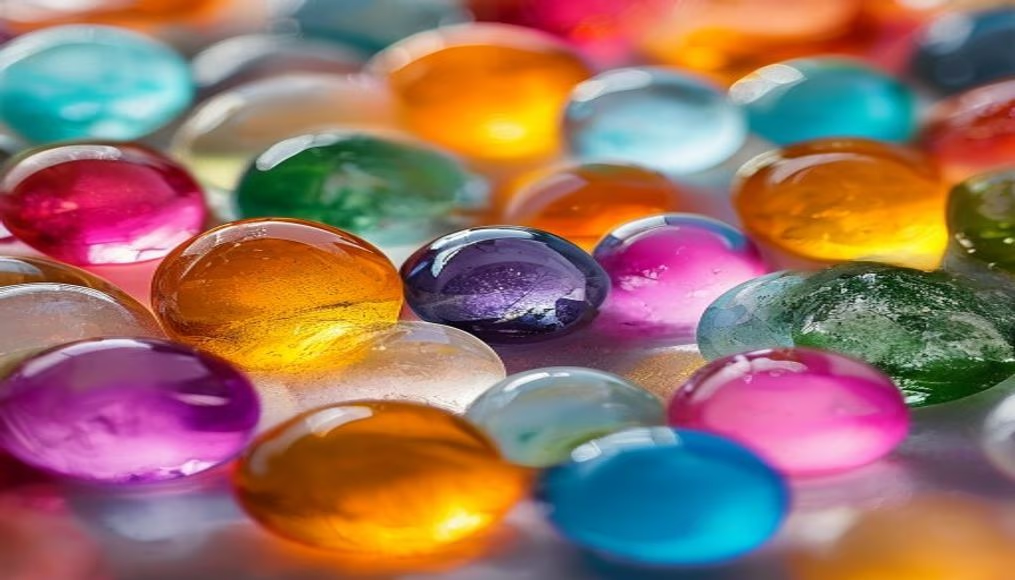
Colored glass marbles
1344×768 · AVIF · CC BY 4.0
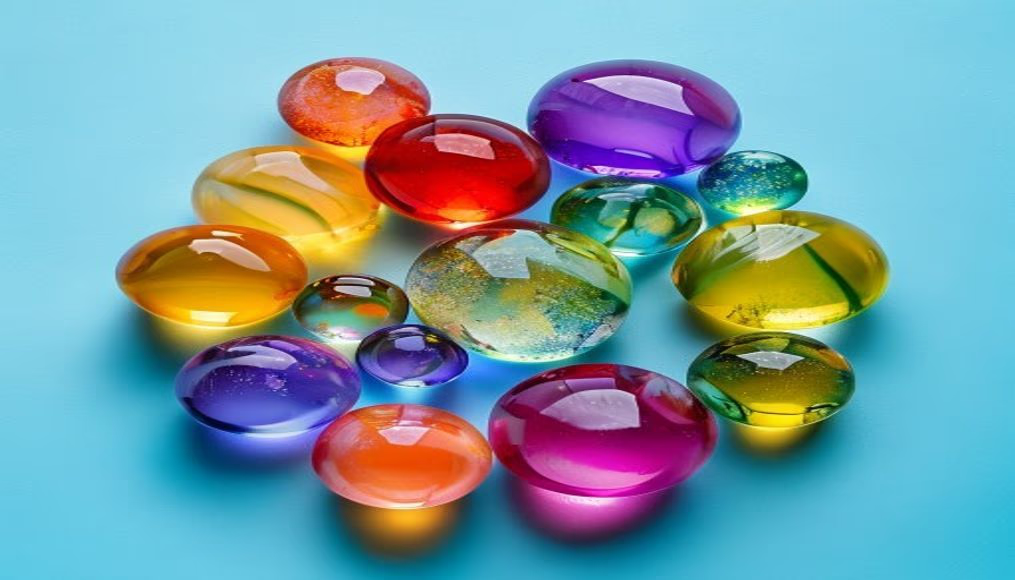
Colored glass marbles have a long history dating back to antiquity, blending art, technique, and culture.
About this subject
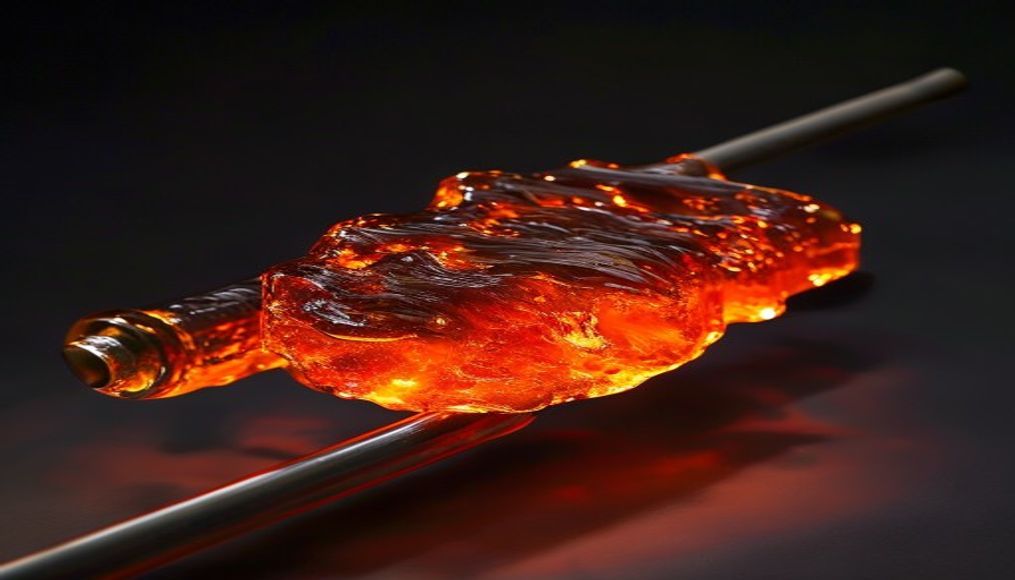
Colored glass marbles are small decorative and playful spheres that have fascinated humanity for millennia. Their origins trace back to ancient civilizations such as the Egyptians and Romans, who produced glass objects as early as 1500 BC. However, the marbles we know today gained prominence in Europe during the 19th century, when German and Italian artisans perfected blowing and molding techniques to create spheres with intricate patterns, such as the famous "millefiori" (a thousand flowers). These techniques involve fusing colored glass rods, which are cut and rolled into a glowing gob, generating geometric or floral designs inside the ball.
Industrial production of marbles exploded in the United States after 1884 with Martin Christensen's invention of the glass-cutting machine, enabling mass manufacturing. Since then, glass marbles have become a worldwide popular toy, especially in games like "marbles," which require skill and strategy. Culturally, they are also collected for their beauty and historical value; rare pieces made by Japanese artisans from the Edo period or by Czechoslovak factories can fetch high prices at auctions.
Interestingly, colored marbles are not just toys or collectibles. They have applications in science and art: used in laboratories as grinding media in ball mills, in jewelry as beads, and in contemporary art installations exploring refraction and color. The manufacturing process also influenced later techniques in fused glass and stained glass. The diversity of colors and patterns, from transparent marbles with stripes to opaque ones with color labyrinths, results from metallic oxides added to molten glass, such as cobalt for blue, manganese for purple, and gold for reddish hues.
Frequently Asked Questions
How are colored glass marbles made?
Glass marbles are made by melting glass in a furnace at high temperatures and adding metallic oxides for color. There are two main methods: hand-blowing (artisanal technique) and industrial processes using cutting and rolling machines, which produce perfect spheres on a large scale.
What is the origin of marble games?
Games with glass marbles are ancient; similar games were recorded in the Roman Empire and India. The modern game became popular in the 19th century in the United States and Europe, where children competed to hit marbles into holes or knock opponents' marbles out.
Why are some glass marbles valuable?
Rare marbles, such as handcrafted pieces by famous artisans (e.g., Christoph von Dallwitz) or historical collections from 19th-century Germany, can fetch high prices due to age, rarity, complex patterns, and color.
Direct URL
https://pub-c7d6a6ea828543ac903a74a341ccb2e1.r2.dev/imagens/colored-glass-marbles-isometric-flat-lay-p0.avifHow to credit
Include a visible link back to UtilizAí. Copy one of the snippets below:
<a href="https://xn--utiliza-eza.com/en/midia/imagens/colored-glass-marbles-isometric-flat-lay-p0">Colored glass marbles</a> by <a href="https://xn--utiliza-eza.com">UtilizAí</a>, licensed under <a href="https://creativecommons.org/licenses/by/4.0/">CC BY 4.0</a>.
[Colored glass marbles](https://xn--utiliza-eza.com/en/midia/imagens/colored-glass-marbles-isometric-flat-lay-p0) by [UtilizAí](https://xn--utiliza-eza.com), CC BY 4.0
License: CC-BY-4.0