Coffee farm beans plant
1344×768 · AVIF · CC BY 4.0
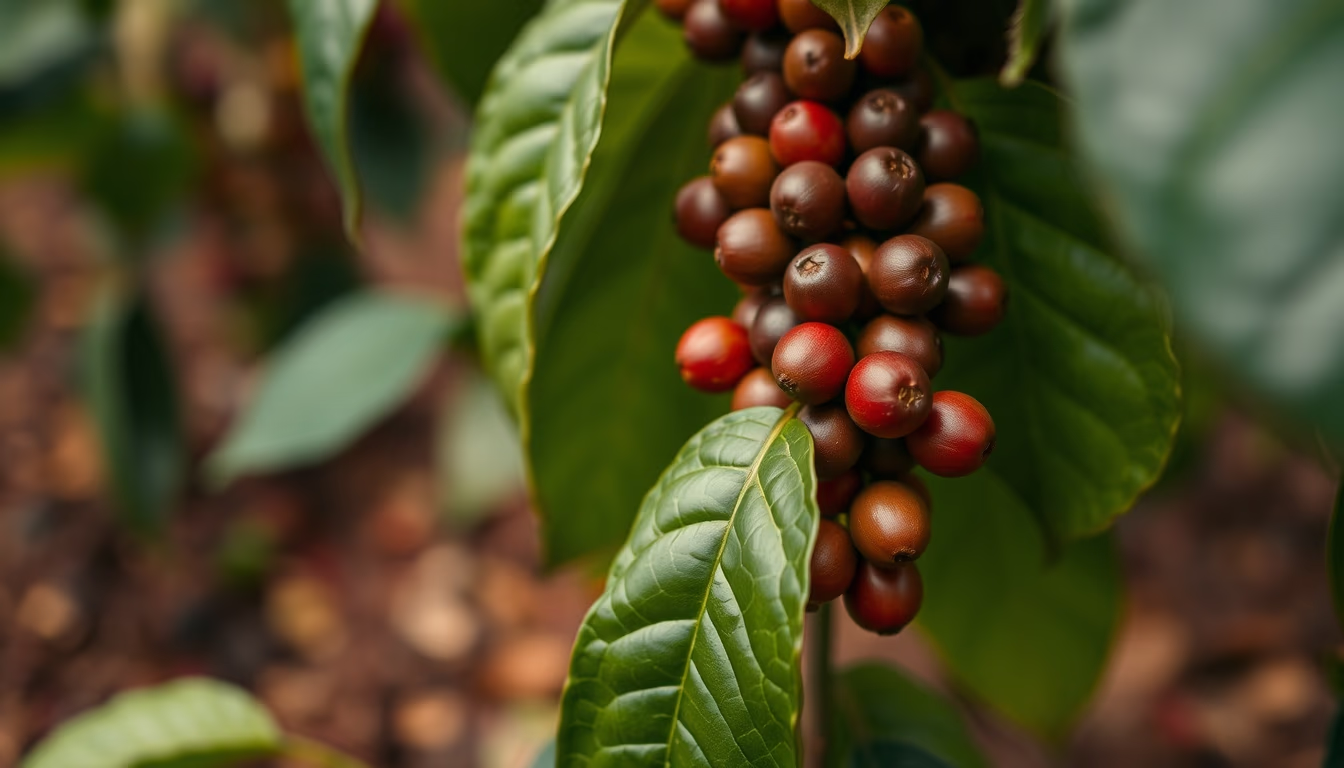
Handpicked coffee beans on a Brazilian farm show ideal ripeness for roasting, highlighting the critical harvest timing for beverage quality.
About this subject
Coffee is one of the world's most valuable commodities, with Brazil being the largest producer and exporter, accounting for about one-third of global consumption. The beans in the image belong to the Coffea arabica species, predominant in high-altitude plantations above 800 meters, where mild climate and temperature variation favor the development of sugars and aromatic compounds. Manual selective picking, as shown, is typical for specialty coffees because it allows separating only ripe cherry-stage fruits, avoiding green or overripe beans that compromise flavor.
Each coffee fruit contains two seeds (the beans) surrounded by a sweet pulp. Full ripening takes 6 to 9 months after flowering, varying by variety and weather. In Brazil, the main harvest occurs between May and September depending on the region. After harvest, beans undergo processing via dry (natural) or wet (washed) methods, directly influencing the final beverage's sensory profile. Natural coffee retains more sweetness and body, while washed coffee yields higher acidity and cup cleanliness.
Brazilian coffee farming also faces challenges, such as the need for agroforestry systems to mitigate climate change and pests like coffee leaf rust. Integrated management and traceability are trends adding value to the product. The close-up image allows observing details of the fruit's epidermis and seed distribution, aspects that enologists and baristas use to evaluate roasting and extraction potential.
Frequently Asked Questions
What is the difference between Arabica and Robusta coffee?
Arabica (Coffea arabica) has a smoother, more complex flavor with high acidity and fruity notes, grown at altitudes above 800 m. Robusta (Coffea canephora) is more bitter, with higher caffeine content, grown in lowlands, mainly used in blends and instant coffee.
How can you tell if a coffee is specialty grade?
Specialty coffees are graded by SCA (Specialty Coffee Association) experts and score above 80 on a 100-point scale. Criteria include absence of defects, aroma, flavor, acidity, body, and aftertaste.
What does 'cherry coffee' mean?
Cherry coffee refers to the ripe coffee fruit, red or yellow in color, at the optimal harvest stage. Harvesting at this stage ensures higher sweetness and balanced acidity, essential for high-quality coffee.
Direct URL
https://pub-c7d6a6ea828543ac903a74a341ccb2e1.r2.dev/imagens/coffee-farm-beans-plant-macro-closeup-p6.avifHow to credit
Include a visible link back to UtilizAí. Copy one of the snippets below:
<a href="https://xn--utiliza-eza.com/en/midia/imagens/coffee-farm-beans-plant-macro-closeup-p6">Coffee farm beans plant</a> by <a href="https://xn--utiliza-eza.com">UtilizAí</a>, licensed under <a href="https://creativecommons.org/licenses/by/4.0/">CC BY 4.0</a>.
[Coffee farm beans plant](https://xn--utiliza-eza.com/en/midia/imagens/coffee-farm-beans-plant-macro-closeup-p6) by [UtilizAí](https://xn--utiliza-eza.com), CC BY 4.0
License: CC-BY-4.0