Coffee farm beans plant
1344×768 · AVIF · CC BY 4.0
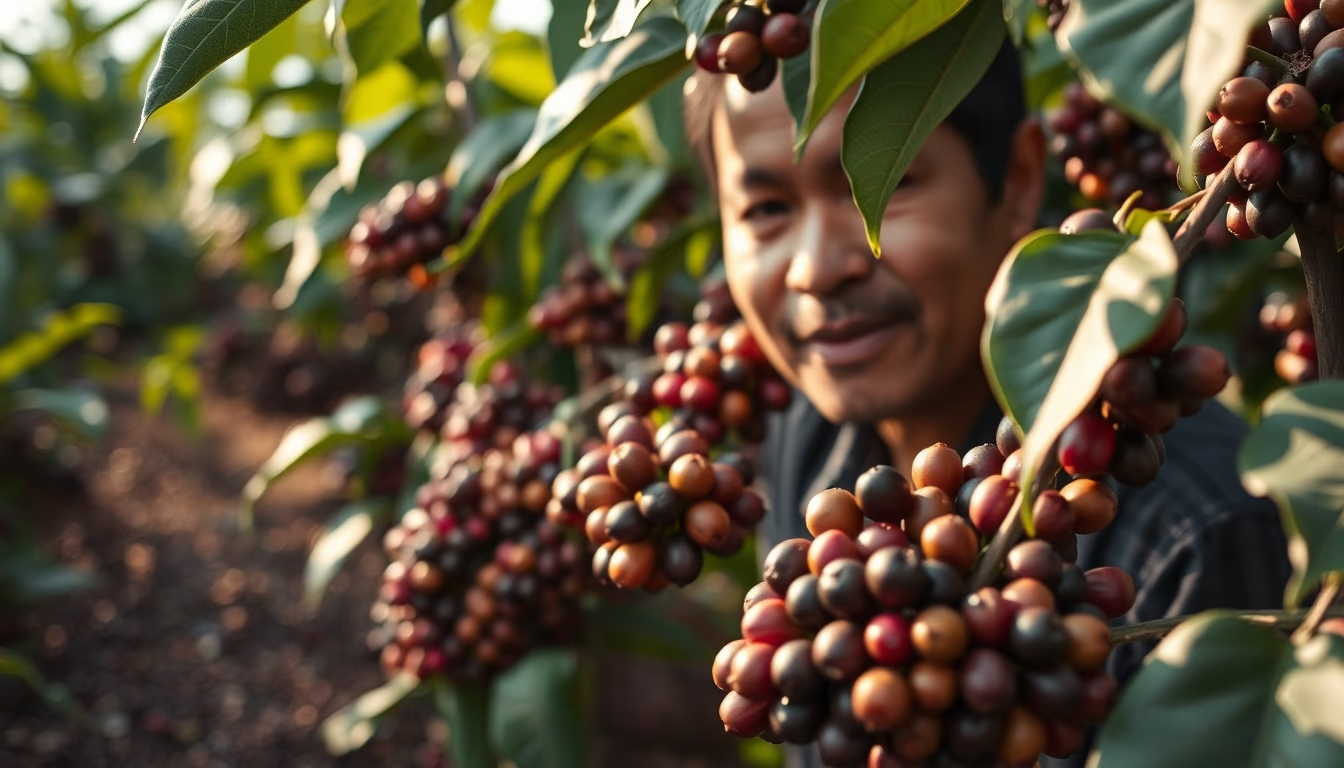
Coffee harvest on a Brazilian farm shows ripe beans and plants grown in mountain system.
About this subject
Brazilian coffee farming is the world's largest, responsible for about one-third of global production. Coffee plants (Coffea arabica and Coffea canephora) are mainly cultivated in the states of Minas Gerais, Espírito Santo, São Paulo, and Bahia. Planting occurs at altitudes ranging from 800 to 1,200 meters, where mild climate and thermal amplitude favor bean development.
Coffee trees take three to four years to produce their first significant harvest. Each plant can yield between 0.5 and 1 kg of processed coffee per year. Manual harvesting is still common in mountainous regions, allowing selection of only ripe fruits. In Brazil, harvest season runs from May to September, depending on the region.
Brazilian coffee is known for its full body and low acidity, often used in blends. Arabica species predominates in higher altitudes, while robusta is grown in lower, warmer lands. Brazil has also developed rust-resistant varieties such as Catuaí and Mundo Novo.
Coffee production has significant economic and social impact, generating millions of direct and indirect jobs. The country is the leading exporter, with destinations like the United States, Germany, and Japan. Additionally, Brazilian coffee is certified by sustainability programs such as Rainforest Alliance and UTZ.
Frequently Asked Questions
What is the difference between arabica and robusta coffee?
Arabica coffee (Coffea arabica) is grown at higher altitudes, with a smoother and more aromatic flavor. Robusta (Coffea canephora) is more resistant to pests, has more caffeine, and a bitter taste, commonly used in instant coffee and blends.
How is coffee cultivation done in Brazil?
Cultivation starts with planting seedlings in nurseries. After 6-8 months, they are transplanted to the field. Harvesting can be manual or mechanical. The beans undergo processing (dry or wet method) before roasting.
Is Brazilian coffee sustainable?
Yes, many producers adopt sustainable practices like shade use, water recycling, and certifications (Rainforest Alliance, UTZ, Organic). Brazil also has programs to combat slave labor in coffee farming.
Direct URL
https://pub-c7d6a6ea828543ac903a74a341ccb2e1.r2.dev/imagens/coffee-farm-beans-plant-documentary-photography-p2.avifHow to credit
Include a visible link back to UtilizAí. Copy one of the snippets below:
<a href="https://xn--utiliza-eza.com/en/midia/imagens/coffee-farm-beans-plant-documentary-photography-p2">Coffee farm beans plant</a> by <a href="https://xn--utiliza-eza.com">UtilizAí</a>, licensed under <a href="https://creativecommons.org/licenses/by/4.0/">CC BY 4.0</a>.
[Coffee farm beans plant](https://xn--utiliza-eza.com/en/midia/imagens/coffee-farm-beans-plant-documentary-photography-p2) by [UtilizAí](https://xn--utiliza-eza.com), CC BY 4.0
License: CC-BY-4.0